


Last year, lawmakers set in motion sweeping reforms to Act 250, Vermont’s half-century-old land use law. The reform bill, Act 181, slices Vermont into a series of “tiers” that dictate how development will be treated under the law, with more leniency for housing in some areas (Tiers 1A and 1B) and stricter environmental review in others (Tiers 2 and 3).
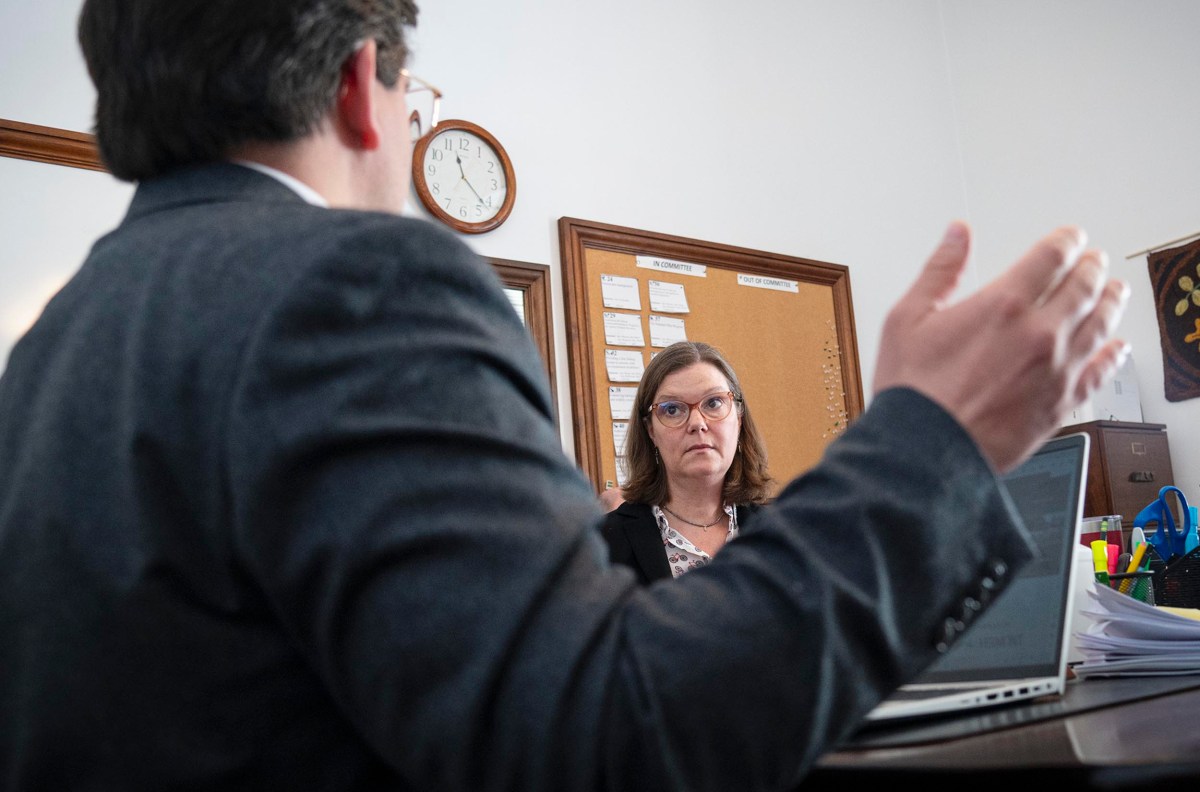
Straightforward, right? Why they didn’t just go with Tiers 1-4 will forever be the bane of this reporter’s existence. Some new members of the Senate Committee on Natural Resource and Energy were also trying to grasp the outline of these tiers on Wednesday.
Are they the same tiers used in a 2023 conservation bill, asked Sen. Terry Williams, R-Rutland. Answer: no. Do we have a map of the new Act 250 tiers, asked Sen. Ruth Hardy, D-Addison. Also no — one doesn’t exist yet, because lots of regional map-drawing and rulemaking needs to play out before the areas are set in stone.
In lieu of that visual aid, Hardy said she wanted to see “a political cartoon” of someone trying to wrap their mind around these tiers-on-tiers. Said person should be crying, said Sen. Anne Watson, D/P-Washington, motioning tears falling down her face.
“Maybe some of our media partners can make that cartoon happen,” suggested Alex Farrell, commissioner of the Department of Housing and Community Development — pointing to yours truly.
I have yet to accept the commission. Farrell joined the committee to ask its members to consider more reforms to Act 250 this year, which are part of Gov. Phil Scott’s housing proposal. The administration wants to see interim exemptions for housing (put in place before the tier system goes into effect in a few years) extended for longer, and expanded to more places.
Team Scott also wants to get rid of a “road rule” that’s meant to kick in when someone wants to build a private road beyond a certain length, a measure intended to deter forest fragmentation. And the administration hopes to take a “step back” on Tier 3, Farrell said, making the tier meant to further protect “critical natural resource areas” into a study.
There did not appear to be much appetite in the room for these changes.
“The way that we ended up with Act 181 was because it was a grand bargain” between housing advocates and environmental advocates, Watson said.
But the administration doesn’t feel that 2024 legislation struck the right balance between those interests. “These provisions to strengthen [Act 250] — from the administration’s perspective — aren’t entirely necessary,” Farrell said.
— Carly Berlin
In the know
Military retirees and lawmakers gathered Wednesday to call on the Legislature to exempt military pensions from taxation.
Gov. Scott has long proposed the idea, and this year, dual bills in the House and Senate have garnered dozens of sponsors from all political persuasions.
“Let’s make Vermont a place where military families don’t just serve, but where they can afford to stay, thrive and contribute for generations to come,” Colonel Laura Caputo, an active Air National Guard member, told a crowded Cedar Creek Room. “The economic impact of keeping these Vermonters here is clear. If they stay, they buy homes, they start businesses, they contribute to the economy for decades.”
The state estimates the tax exemption for retirees and their survivors would cost about $4 million annually. Critics worry the tax break could help people who don’t financially need it. The proposal’s proponents argue it would keep more former servicemen and women in Vermont, helping meet the state’s dire workforce needs, especially considering a majority of other states already offer an exemption.
—Ethan Weinstein
As Vermont prepares for March Town Meeting voting, many once- or twice-flooded communities are dealing with lingering pools of red ink — and a cloud of questions about whether the Federal Emergency Management Agency will uphold past promises to cover 75% to 90% of cleanup costs amid President Donald Trump’s call for cuts.
To date, FEMA has awarded Vermont more than $100 million for 2023 flooding and $10 million for 2024 damage, its website reports. The agency won’t provide specifics about individual municipalities “for privacy reasons” and adds only that reimbursement timelines “will vary by weeks or months” depending on the complexity of an application, according to a statement.
But town clerks and treasurers had a lot to say. Read about it here.
— Kevin O’Connor
Bathroom backup
A plugged pipe in the Mezzanine bathrooms caused plumbing problems Wednesday. In the morning, a notable stench emanated from outside the House Government Operations Committee. The clog impacted the cafeteria’s bathrooms as well due to connected piping, and the men’s bathroom remained closed in the afternoon.
Department of Buildings and General Services staff were hard at work fixing the problem throughout the day.
— Ethan Weinstein
