



Updated at 3:10 p.m.
ST. ALBANS — Steven Tendo, a Ugandan asylum-seeker living in Colchester whose plight has drawn widespread attention in recent years, can stay in the U.S. for at least the next six months, federal immigration officials told him Tuesday morning.
Tendo had feared he would be detained at a mandatory check-in with U.S. Immigration and Customs Enforcement officials Tuesday at the agency’s office in St. Albans, just a day after the inauguration of President Donald Trump, who has long promised stepped-up deportations and on Monday launched a sweeping immigration crackdown.
But Tendo — who is eligible to be deported because his application for asylum protection in the U.S. has been denied — was instead allowed to leave freely after meeting with law enforcement inside the office alongside one of his attorneys.
He emerged from the building, smiling, after spending about 15 minutes inside. A crowd of some 75 people had gathered outside in the bitter cold to show support for him, engulfing the building’s front sidewalk and spilling over into the parking lot.
“I am just so warm — even if it’s freezing — that you guys came for me,” Tendo told the crowd, over cheers. “You’re going to make me do great things in Vermont.”
The crowd ranged in age from young children to older people and included congregants from Tendo’s church in Colchester; members of a union at the University of Vermont Medical Center, where Tendo works; as well advocates from the immigrant rights group Migrant Justice and a local asylum-seeker support network.
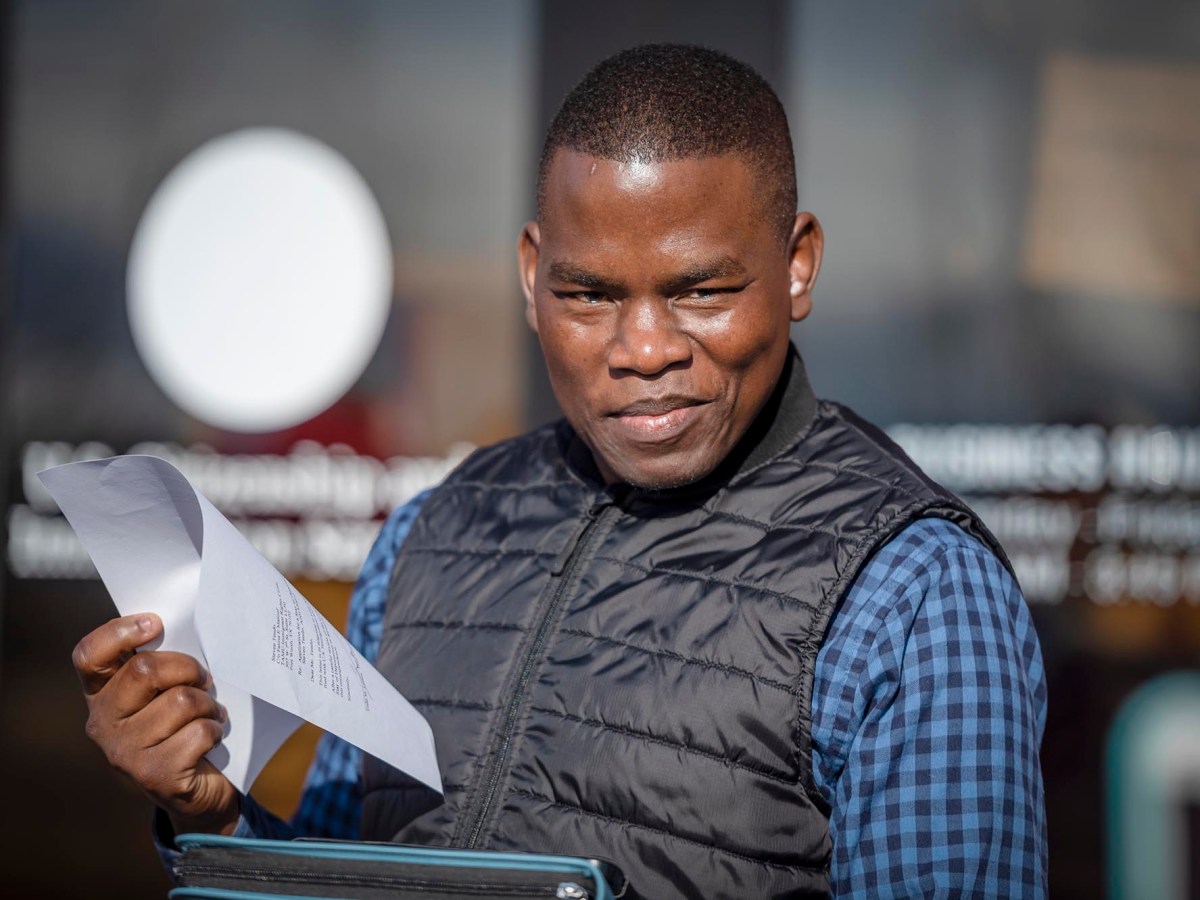
Some in the crowd held signs and handed out flyers with slogans including “Let Steven Stay!!” and “Vermont Needs Steven Tendo.”
“He is a face of what goes on for many people,” said Rachel Cogbill, president of the Central Vermont Refugee Action Network, which supported Tendo after he moved to the state in 2021. She noted that the large crowd, which turned out on short notice, “shows how clearly Steven does make friends, and become included, and become valued in different communities.”
Tendo had received a letter Friday telling him to report on Tuesday to the ICE office. His attorneys didn’t know exactly what to make of the letter, they told VTDigger in recent days, in part because Tendo had checked in with the office just two months earlier.
All non-U.S. citizens who face potential deportation have to check in with ICE at least once per year, even if immigration officials don’t plan to detain them at that point.

“We kind of assumed the worst — given that Steven does have a deportation order,” said Brett Stokes, one of Tendo’s lawyers, after reemerging from the building, pointing also to Trump’s inauguration Monday as a source of his and others’ uncertainty.
Describing the interaction inside, Stokes — director of a Vermont Law and Graduate School clinic that provides pro bono immigration law services — said the check-in appeared to be a result of officers’ confusion over exactly how frequently Tendo was supposed to check in with the agency, rather than some effort to detain him.
Tendo is now set to check-in every six months, rather than once a year, as he’d previously understood he was supposed to, Stokes explained.
Speaking to the crowd, Tendo said he appreciated how the officers inside had treated the situation, contrasting it with how, he said, he’d been treated by ICE in other states. Tendo is in the process of suing the government over how, he alleges, he was mistreated while in the agency’s custody in Texas. (Tendo was nearly deported while in custody in 2020, though ICE later granted him a reprieve, releasing him amid pressure from international human rights groups and dozens of members of Congress.)


Tendo fled his native Uganda in 2018 after he was brutally tortured and members of his family were killed because government forces there viewed an advocacy organization he founded as a political threat, according to federal court records and Tendo’s own accounts. Tendo still runs the organization today from his home in Mallets Bay.
He has said repeatedly that deporting him back to Uganda would be “a death sentence.”
Tendo’s asylum application was denied in 2019 after a federal judge argued that there were inconsistencies in the story of how and why he got to the U.S. Tendo disputed that ruling, arguing the inconsistencies had nothing to do with why he needed protection. His attorneys appealed the ruling multiple times, but none of the efforts were successful.
Since Tendo moved to Vermont, ICE officials have twice granted requests by his attorneys to hold off on deporting him. The agency has not yet issued a formal decision on his lawyers’ latest such request, which was submitted on Friday.

In the most recent request, Tendo’s attorneys argued that he should not be deported because of both his ongoing lawsuit against the feds and the fact that he needs access to crucial healthcare in the U.S.
Tendo’s lawyers are now, also, working on a request to U.S. officials to reconsider his application for asylum on the basis that conditions in Uganda have become even more dangerous for Tendo as of late. That could put Tendo on a path with more options, Stokes said, including the possibility of obtaining a work visa.
Getting Tendo’s asylum case reopened is “really our main battle — and struggle — at this point,” Stokes said.
