


Updated Oct 9 at 1:17 p.m.
The Agency of Natural Resources has finalized a new plan for managing the Worcester Range, 18,772 acres of state-owned land in central Vermont that includes beloved landmarks such as Elmore State Park, Mount Hunger, Perry Hill trails and Stowe Pinnacle.
More than 1,350 comments on the plan from members of the public highlight the increased interest and tension that has surfaced in recent years around the management of Vermont’s forests, particularly related to timber harvesting.
The 394-page document outlines the state’s intention to support a number of different purposes for the land in the next 20 years. That includes expanding recreation and hunting opportunities, enhancing wildlife habitat, preserving and expanding carbon storage and sequestration processes, and buffering lands from flooding and harvesting timber.
The management blueprint has elicited a spectrum of reactions from advocates, experts and members of the public who participated in the planning process. While people who advocate for preserving more forests say there’s too much logging planned for the land, timber harvesters wanted to see more of it designated for logging.
The plan sets aside 9,961 acres, or 54% of the management unit’s total area, to allow “natural processes to shape the landscape.”
But state officials have also designated 1,928 acres of the area, about 10.3%, for potential logging operations over the next two decades, a piece of the plan that has become a focal point of debate.
Tony D’Amato, director of the forestry program at the University of Vermont’s Rubenstein School of Environment and Natural Resources, argues that both forms of management “are needed.”
He thinks about how to “balance all these different goals and values” related to forests, “from carbon to biodiversity to resilience.”
Doing that on public land, with a lot of oversight, he said, is a “great opportunity, even though I know it certainly gives individuals pause, like, ‘wow, we’re going to cut state land?’”
A wildlife highway
The Worcester Range is one of Vermont’s largest contiguous habitat blocks, according to the Agency of Natural Resources, spanning the towns of Elmore, Worcester, Middlesex, Waterbury and Stowe.
The mountains act as a bridge between the northern Green Mountains and the Northeast Kingdom, and it’s an important piece in a broader landscape that allows wildlife to migrate “between the Adirondacks and western Massachusetts all the way north and east to Maine, New Brunswick, and the Gaspé Peninsula,” the plan states.
The landscape’s various elevations allow for “relatively unhindered movement of species,” the document states, which “facilitates climate resilience by allowing species to move and adjust ranges in response to climate change.”
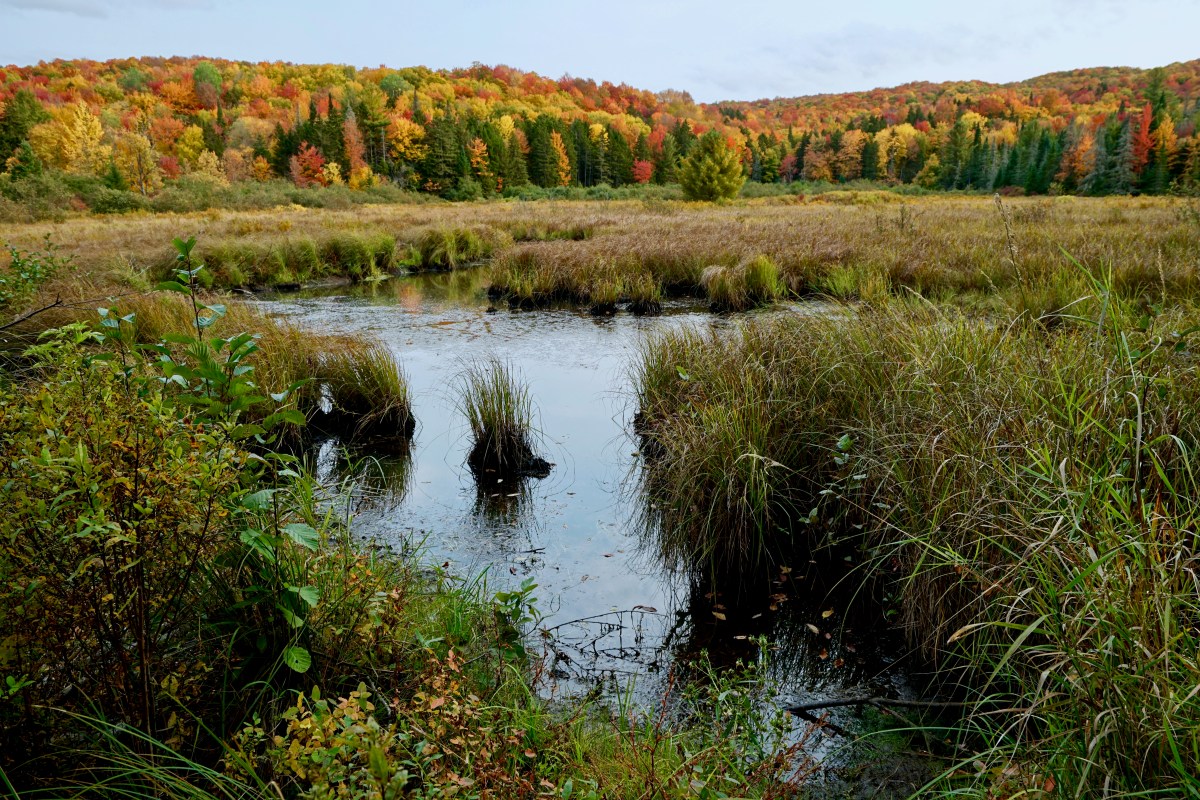
The Worcester Range sits adjacent to thousands of acres of land that have been conserved through easements, including the privately-owned Worcester Woods and the Woodbury Mountain Wilderness Preserve, which are both more than 6,000 acres.
State officials haven’t updated the area’s management plan since the late ‘80s, according to Brad Greenough, a forester with Vermont’s Department of Forests, Parks & Recreation who worked on the Worcester plan. Despite that, in recent years some timber harvesting has taken place there, he said.
From 1980 until 2013, loggers completed a total of 15 timber harvests covering 720 acres, along with a seven-acre harvest that took place in 1961, the plan states.
The proposed increase in logging activity is possible, in part, because the state of Vermont acquired land that was previously private. The new state property has opened up both that land for harvesting and land the state already owned, but was inaccessible because of the surrounding private land, according to the management plan.
Broadly, Greenough thinks the changes outlined in the plan won’t be noticeable to many members of the public. He noted the state has a new focus on managing forests so they adapt better to increasingly extreme weather and soak up more carbon dioxide from the atmosphere, helping to mitigate climate change.
A tricky balance
Environmentalists, foresters and scientists often debate whether forests can benefit from sustainable timber harvesting practices. Some practices have specifically been developed to increase the rate at which the forest soaks up carbon from the atmosphere and to create more diversity in different parts of the forest.
Many of Vermont’s forests were harvested in the 1800s, when European settlers cleared the land for agriculture. Scientists consider less than 0.1% of land in New England and New York to be occupied by old growth forests.
With such a wide area of land cut at around the same time, the current goal of sustainable harvesting practices is to “diversify the forest conditions, and in many cases, restore some of that complexity to forests that historically would have been there under the influence of natural disturbances,” D’Amato, with UVM, said.
D’Amato is partnering with the state and the Northern Institute of Applied Climate Science to conduct research on land within the Worcester Range. First, they’ll assess how climate change and other stressors, such as disease and invasive species, are threatening forests. Then, they’ll develop strategies to address those stressors and monitor the results.
For example, loggers might create canopy gaps to make space for new, younger trees that “might respond differently than a mature tree” to an event like a windstorm, D’Amato said. Creating space may also encourage different types of species to grow that could “have different responses to drought, or might be not susceptible to a given insect or disease,” he said.
D’Amato sees a need to strike a balance between actively managing the land and leaving it alone to let nature’s processes play out.
One of the “beauties of public land,” he said, is that the planning process allows officials to balance different priorities, “as opposed to maybe commercial timberland, where the primary objective that might might be focused more on economics, or maybe on a national park, where the primary emphasis might be preservation,” he said.
In this instance, D’Amato thinks the state got it right.
Others, including members of the advocacy group Standing Trees, argue that forests are healthiest when left alone, and that forests on state lands best serve taxpayers when they aren’t logged.
Zack Porter, executive director of Standing Trees, pointed to a map of the area included in the plan that shows private land nearby, much of which is included in the state’s Current Use program. The program gives landowners who own forests a cheaper property tax rate for leaving the land undeveloped, and unless they’re enrolled in a new, selective category of Current Use, most are required to conduct regular timber harvests.
“The vast majority of what we’re looking at here is managed for timber on a regular basis,” Porter said. “There is just no reason why we should be introducing roads, skid trails and logging into that landscape. It makes no sense. We are practicing forestry all the time in the landscape surrounding the Worcester Range.”
Porter also noted that, while the state protected more than half of the area from logging, that area is “the highest elevation, the steepest slopes, the places that were never going to get logged anyways.”
“That is typically what we have protected in this country,” he said. “It’s what we have protected right now in Vermont and the Worcester Range is unique because it contains a lot of mid- and even lower-elevation forest land that is not the kind of forest that’s protected by and large across the region and across the country.”
Porter said his organization is “planning a variety of action” to oppose the plan, and that they are planning to “use whatever tool we can to protect these special places.”
Meanwhile, some loggers were disappointed the state didn’t designate more of the land for logging. Dana Doran, executive director of Professional Logging Contractors of the Northeast, said while members of his organization “understand and respect what the (state) has done,” they “don’t feel like it’s enough.”
He noted that much of the wood harvested from state lands is likely to stay within the northeast region.
“From our perspective, any and all harvesting is positive, just because it has so many unique benefits and it meets the multiple use mandate of public lands in the state of Vermont,” Doran said.
Expecting trouble
Porter also expressed concern about the process the state used to create the plan, which he said should have provided more opportunity for public engagement. The public should be able to provide feedback throughout the life of the plan as various pieces of it are implemented, similar to the federal U.S. Forest Service’s process, Porter said, rather than keep public comment isolated to the creation of the plan.
Some residents who live near the Worcester Range management area also took issue with what they described as limited opportunity for input.
Greg Labarthe and Gretchen Saries live in Worcester, “right in the shadow of the Worcester mountains,” below a forested area where some logging is planned, Labarthe said.
Labarthe and Saries said they aren’t wholly opposed to logging, and they mostly trust state regulators to ensure logging is done sustainably. Still, they had questions about the environmental impacts of logging, and found that it was difficult to get answers to their questions.
A meeting held by the state in Worcester, they said, didn’t help.
“They were not coming with an interest to hear what we had to say about it, they came expecting trouble, so they shut us down,” Saries said. “I think we were a little more put off by the process that they presented to our community, as opposed to the actual work that they are proposing to do.”
Al Freeman, a climate forester with the Department of Forest, Parks and Recreation, helped assemble the Worcester Range plan. She acknowledged that the state is walking a line between people who want an array of different objectives to be prioritized on state lands.
“We don’t want to maximize any one objective of things like carbon or timber,” she said. “Single objective management really can lead to an unbalanced approach, and so our team really did take time to use our expertise and be integrative and try to approach this with a balanced mindset.”
Editor’s note: Due to a publishing error, part of this story was originally omitted.
