

This commentary is by Rep. Michelle Bos-Lun, a democrat representing the Windham-3 district in the Vermont House.

I read Carly Berlin’s report on the perception by some that many who are unhoused in Vermont came here recently from out of state. That has not been my observation.
I have worked as a case manager with unhoused individuals, both fifteen years ago (exclusively with youth) and also last year in Brattleboro. Fifteen years ago, I worked with young adults aged 16-21 and had no clients from out of state. In 2023, I worked with individuals aged 19-65.
I worked in four different placements in Brattleboro (filling in as needed until permanent staff could be hired with a local service provider). Over six months, I worked with individuals who were mostly unhoused (and a couple dozen who were in a transitional housing setting and had been recently housed), and I was only aware of a handful who came to Vermont from out of state.
All but one of these had pre-existing connections to Vermont. For example, one individual grew up in Vermont, moved to another state as a young adult and came back unhoused during the pandemic. These individuals were recorded in our paperwork as coming from out of state, but really they were coming home.
This was true for all but one individual who heard Vermont was nice and came and ended up unhoused. Only this one person out of over a hundred people that I did intakes with or reviewed files about was truly from out of state without strong Vermont connections.
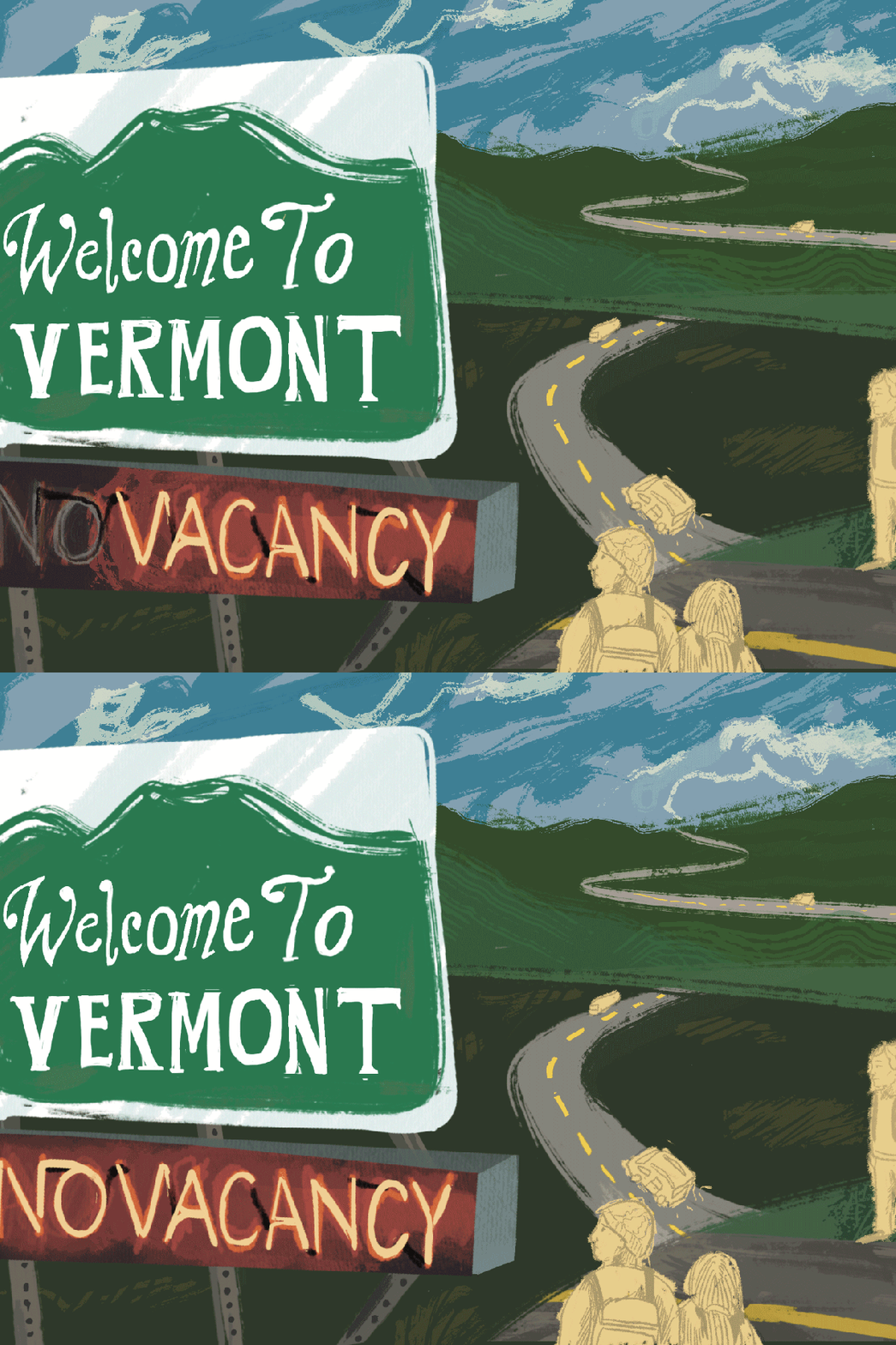
I am currently a state representative in the Vermont House (I was one of the 17 House Dems and Progressives who voted against the House budget in 2023 because it provided an inadequate safety net and transition time for individuals housed in hotels to find new housing). Housing Vermonters is a priority both on a humanitarian level and because it is important to stabilize communities. It is important to me to address this issue as an elected official and because I am a fellow human who cares about people.
Desperate people sometimes do desperate things, and that can be difficult in our communities. Many unhoused individuals are also completely law-abiding, although this is becoming more challenging as some communities make regulations banning unhoused people from many public spaces. If there are no shelter beds, and you aren’t allowed to sleep in public spaces or to set up a tent, where can you go?
A housing-first model helps unhoused individuals get stable housing while providing needed supports to move towards stability and independence. This model has been effective in many places and is also much more affordable and supportive for individuals and communities than the motels. But we don’t have enough housing to meet these needs at the level that could transform our communities and help stabilize lives and neighborhoods. In places like Brattleboro, this is hard for those who are unhoused and also hard for business owners and community members.
I introduced legislation to increase permanent supportive housing and to standardize tiny house regulations to make that route an easier option. I also introduced legislation to prevent rental gouging (where rents are doubled or even tripled, and those who can’t afford the higher rent lose their housing).
These policies and more are needed to help Vermont move from its current status as having the second-highest per-capita rate of homelessness in the U.S. Vermont needs more housing and rental regulation. This will help individuals and the communities where many are struggling.
Thank you to Carly Berlin for researching this issue and helping Vermonters understand that the people struggling to find housing in Vermont — camping, on the streets, in shelters or temporarily sheltered in hotels — ARE Vermonters. They are us. They are our neighbors, and they need options.
I hope we in communities around the state can work together to create and implement supportive housing solutions, like has been done successfully in places like Rutland with their program to house homeless veterans. Our communities and the individuals in them will all be more stable when permanent supportive housing is available. The Legislature has work to do as well: both developing more housing and implementing other policies such as anti-gouging and limits for landlords with high numbers of short-term rentals.
We also need to prioritize residential recovery programs. For those who face the dual challenges of being unhoused and experiencing substance use disorder, transitioning to stability is especially challenging. I know individuals who were ready to go into treatment but no beds were available when they were ready.
When there were beds, they were for only a 14- or 21-day program. Individuals who came in unhoused would return to the streets or the woods after treatment. We need step-down and transitional programs like Jenna’s Promise & Dismas House, which provide support for those newly in recovery.
There are no easy answers, but blaming the problem on out-of-staters does not help and is not accurate. Increasing division and otherness is never a route to a good solution.
Let’s keep working to end homelessness and build healthy communities together.
