

Burlington’s Champlain Parkway is finally open. Part of it, at least.
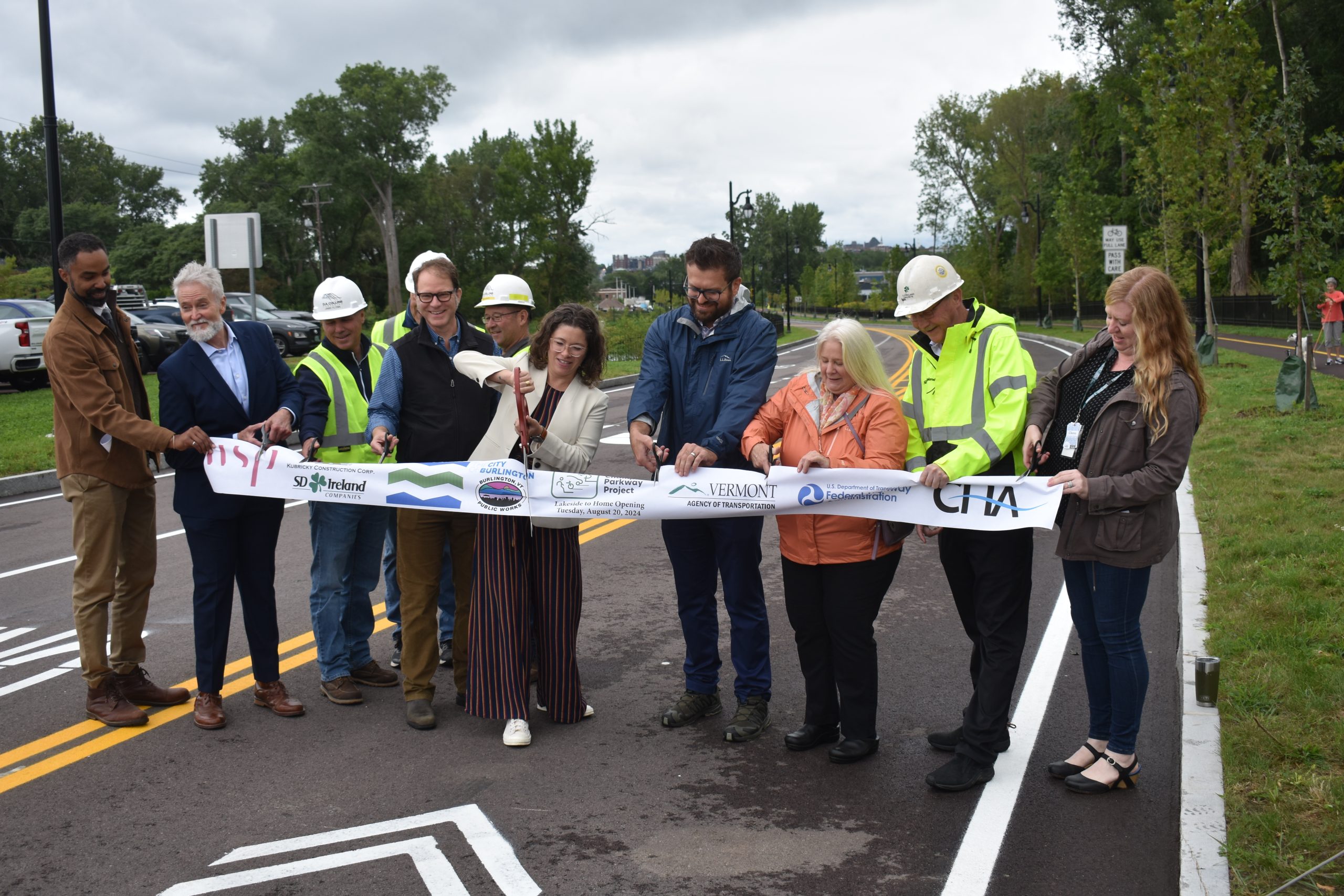
On Tuesday, officials from Burlington and the state and federal governments cut the ribbon on the middle segment of the Champlain Parkway project, a roadway design decades in the making and first envisioned for the area in 1965.
The two-lane, 25 mile-per-hour street connects Home and Lakeside avenues and features shared-use pedestrian paths, thousands of feet of new water and sewer lines for the area, and a stormwater detention pond that officials say will absorb sediment being discharged into Lake Champlain.
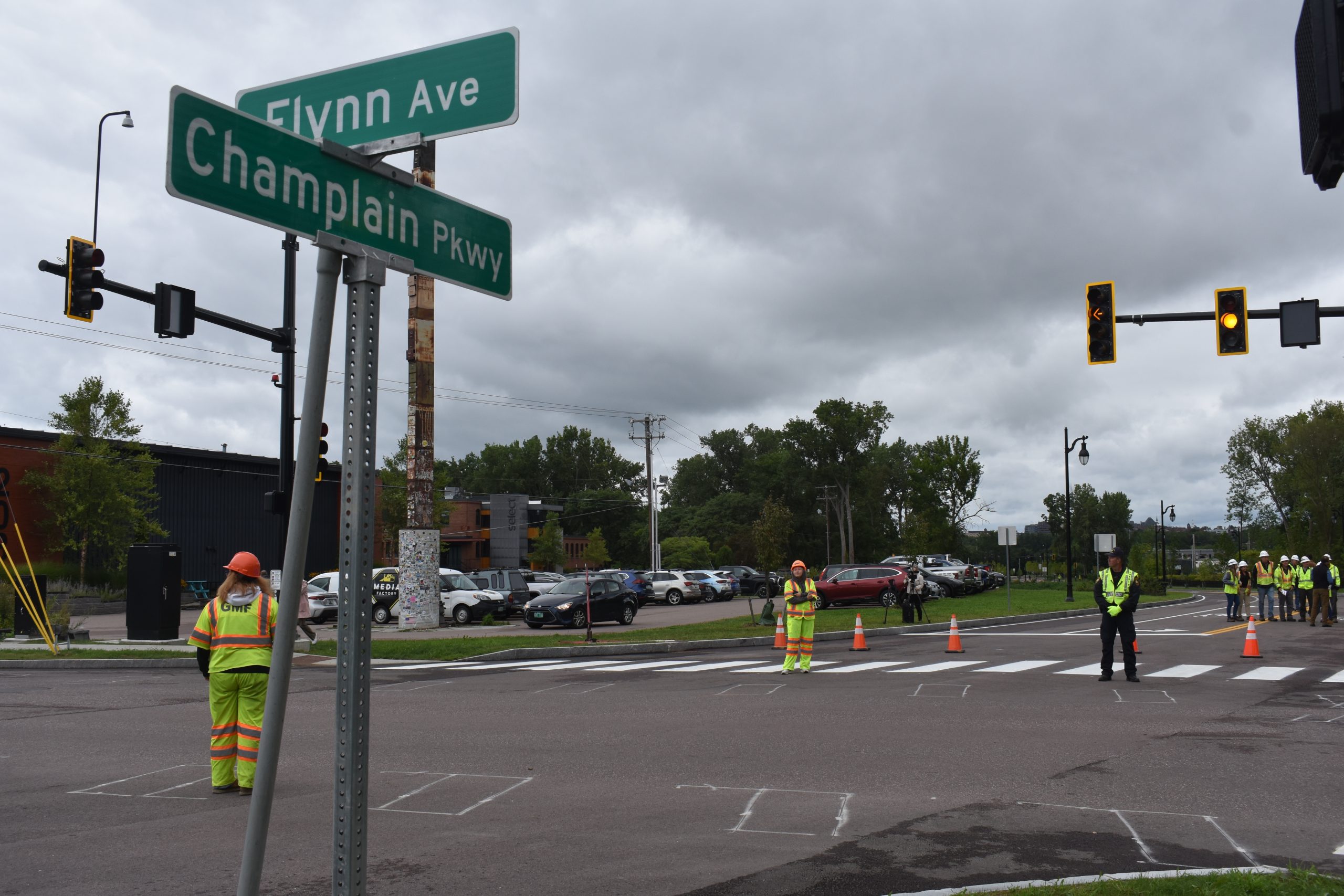
Before cutting the ribbon — and flipping the switch for traffic lights at the Flynn Avenue and Champlain Parkway intersection — officials touted the project as key to furthering housing and business development in the city’s South End and along the Pine Street corridor, while alleviating truck traffic near Champlain Elementary School.
The parkway, once fully built out, will direct cars from Interstate 189 in South Burlington through the city’s South End, helping alleviate traffic flows northbound on Pine Street, Shelburne Road and St. Paul Street. The route briefly joins Lakeside Avenue before connecting northbound on Pine Street towards the city’s downtown area.
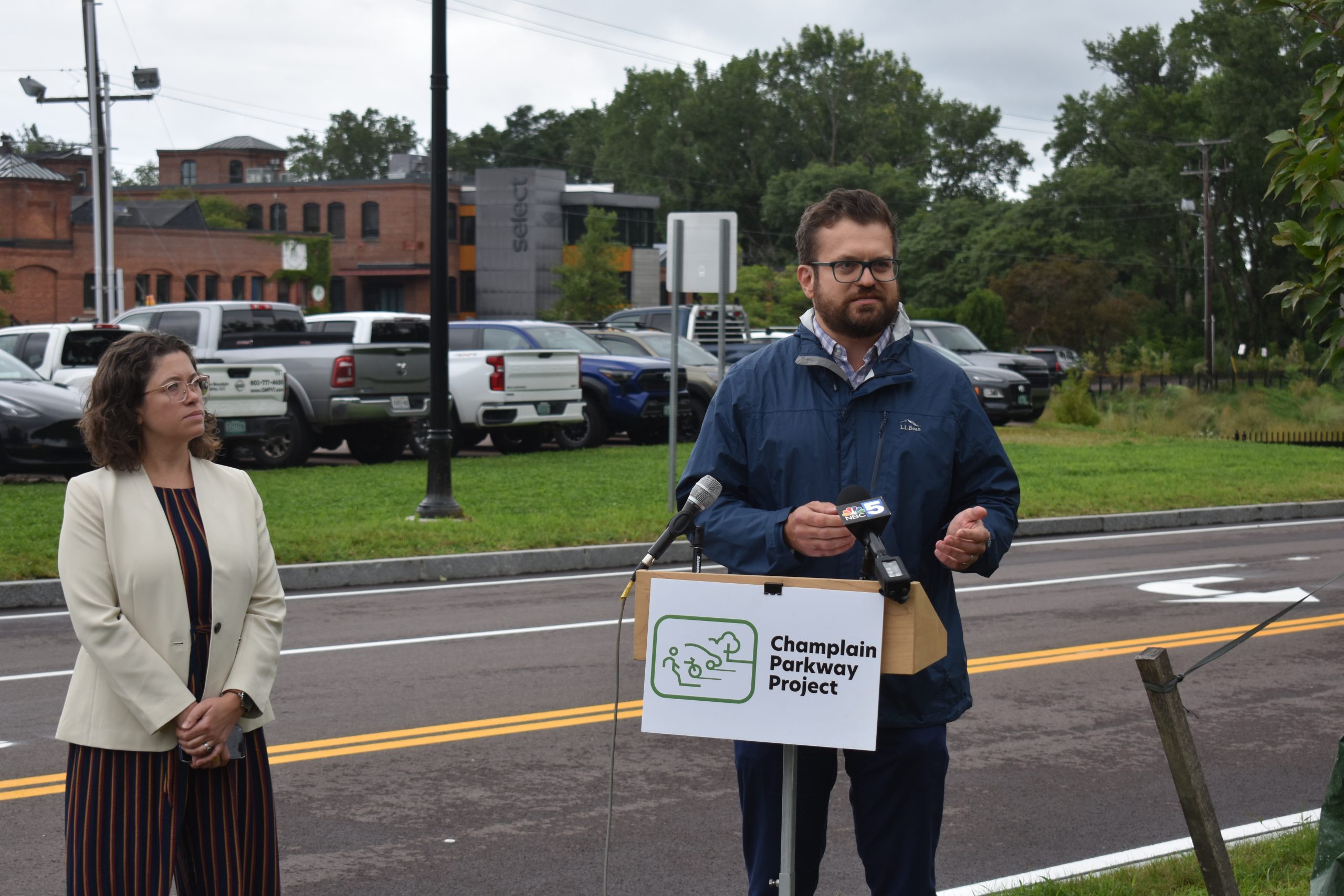
Burlington Mayor Emma Mulvaney-Stanak called the Champlain Parkway a “generational” project, one that was “first envisioned before many of us were even born.” Burlington’s City Council President, Ben Traverse, said that the completion of the middle section — the first of two phases of construction for the full roadway — represents a “huge leap forward in finally living up to the parkway promise to former, current and future Burlingtonians.”
“For many years, this project has taken up significant bandwidth from our hardworking engineering staff, and as we near its completion, we will see more capacity to pursue new and forward-looking projects for our community,” Mulvaney-Stanak said. “We will take the lessons learned from this project to improve community engagement and advance infrastructure projects that make Burlington a walkable, bikeable and climate-resilient community.”
The project was initially envisioned 58 years ago as a four-lane highway called the “Burlington Beltline.” That project would have taken Interstate 189 traffic along the city’s waterfront and past downtown.
But that plan was eventually scrapped, and in recent years, the project was “right-sized” to be more pedestrian friendly and decrease the volume of traffic to move away from a “reliance on carbon-based, single-user car transportation,” Mulvaney-Stanak said.
While the project’s advancement was celebrated, city officials acknowledged that the project as a whole still has a ways to go.
Roadway and pedestrian improvements are still underway north of the completed tract on Pine Street, near the intersections of Howard and Kilburn streets and Marble Avenue. That work is expected to be completed in the fall.
The second phase of the project will complete the parkway’s southern portion by connecting Interstate 189 to Home Avenue — a section of the highway that was partly built in 1981 but has since sat dormant — while also making pedestrian and roadway improvements to Pine Street between Kilburn and Main streets.
The construction contract for the second and final phase was approved by the city council during their meeting last week. Work is expected to begin in late September or early October and is projected to be completed by 2026, Mulvaney-Stanak said.
Despite the project’s remaining work, the completion of the roadway’s middle section represents a milestone for a project that for years was mired by legal challenges.
A federal court case was resolved in May of 2023, when a judge granted summary judgment to the Federal Highway Administration, the Vermont Agency of Transportation and the City of Burlington while denying the same to the Friends of Pine Street.
Parts of that lawsuit centered on arguments that the parkway would disproportionately impact the Maple/King streets neighborhood, which is a racially diverse area of the city.
A separate project, the Railyard Enterprise Project, would add a new bypass road over a railyard to connect Pine and Battery streets. City officials have said previously that the railyard project will move traffic away from the neighborhood around Maple and King streets.
Chapin Spencer, the city’s Department of Public Works director, said that the railyard project is in its preliminary engineering phase and will be for the next six to nine months. He estimated that the project is three years away from construction, depending on how the project’s right of way phase goes.
For now, the completion of the Champlain Parkway project’s first phase will open the doors to new potential business and housing development in the city’s South End, officials said.
Cheray MacFarland, the director of community and marketing for City Market, said the co-op “took a big risk” in moving to their second location on Flynn Avenue “with the promise in the background from the city that they would commit to this decades-long promise of the new corridor.”
“So, we’re so excited to see it finally happen,” she said.
Michele Boomhower, the director of policy, planning and intermodal development with VTrans, said that this was “building off the recent successes” of the Shelburne Street roundabout and the Amtrak to Burlington.
“There are already proposed developments adjacent to the parkway, and the needs of the vibrant South End will shift over time,” she said. “VTrans will work to support and adapt to these transportation system needs so the city can add more housing and businesses and increase the vitality along this corridor.”
