

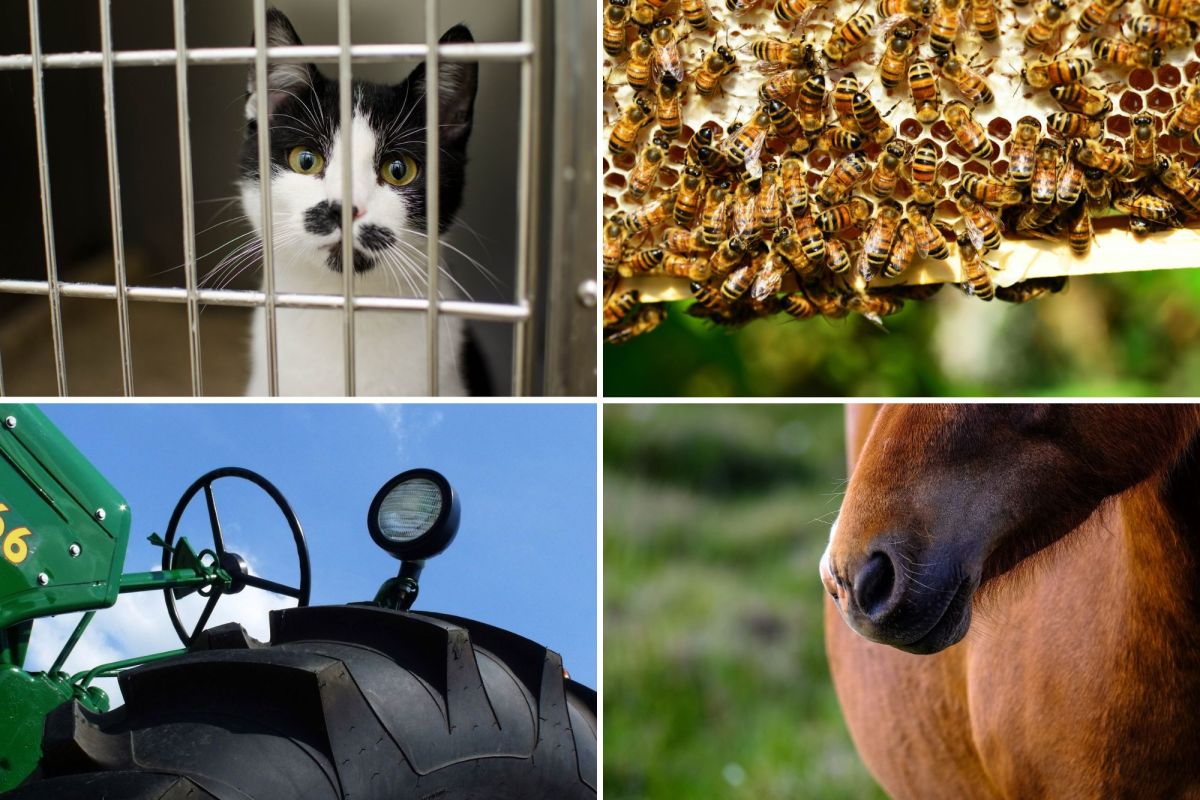
Bills related to animal welfare, pesticide use and pet stores are headed to the governor’s desk. A fourth agriculture-focused bill, which would have allowed farmers to more easily repair their equipment, lost support in its final stages and will not become law this session.
H.626 is an answer to a number of animal cruelty cases across the state and the longstanding lack of a single designated governmental entity to investigate and respond to such cases.
“This is an issue where the ambiguity ultimately creates situations where animal cruelty persists,” Sen. Anne Watson, D-Washington, told fellow senators while presenting the bill last week.
The bill would create a new Division of Animal Welfare, to be housed in the Department of Public Safety, and it designates a single employee to be the division’s director. That person would be required to develop a comprehensive plan for handling animal cruelty cases.
Watson said lawmakers opted to give the public safety department responsibility for animal cruelty cases rather than another state agency such as the Agency of Agriculture, Food and Markets or the Department of Fish & Wildlife because, “when animal cruelty happens, it often rises to the level of a crime.”
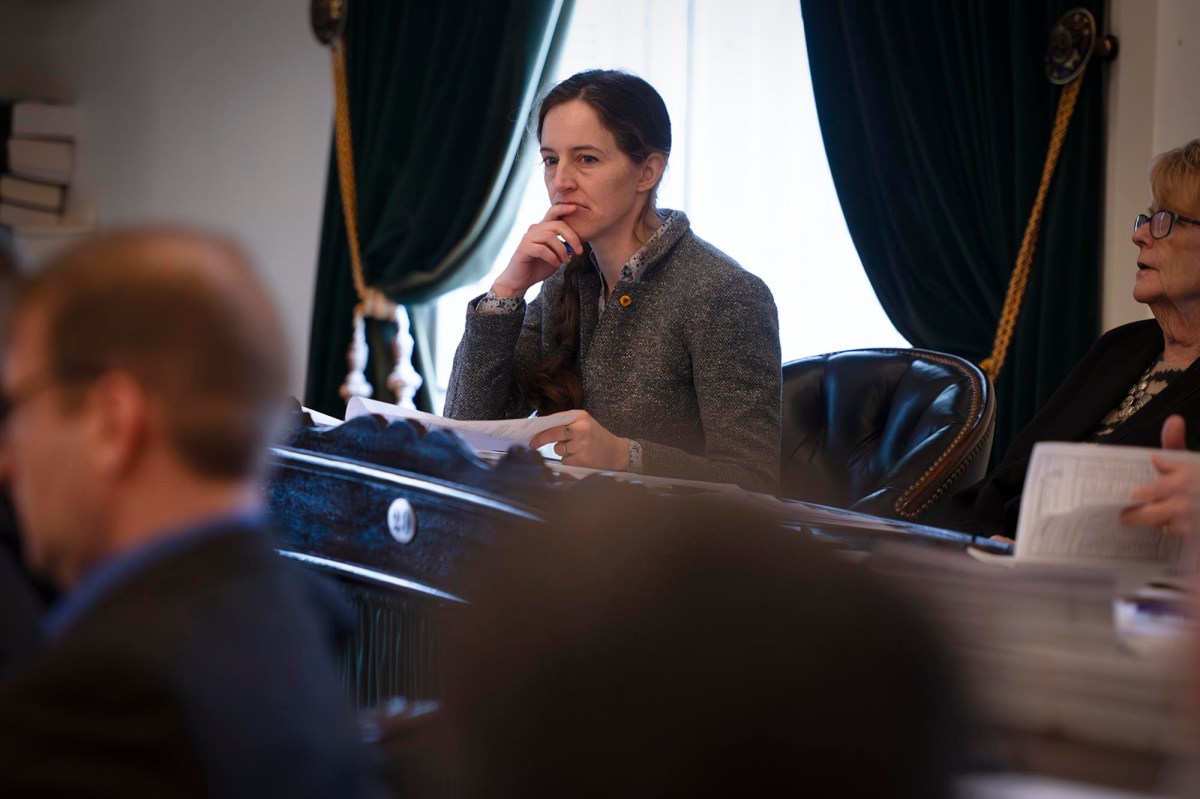
“And as a result,” Watson continued, “it needs to be dealt with with all of the standards that are expected to be seen with handling evidence in preparation for a trial.”
The bill has passed through both chambers and will soon head to Gov. Phil Scott’s desk.
H.706 would ban certain uses of neonicotinoids, a type of pesticide used to protect crops, such as corn and soy, that has been shown to harm pollinators.
The bill would ban seeds that have been treated with neonicotinoids by Jan. 1, 2029. It would also ban other uses of the pesticide, such as spraying the substance on certain types of crops or any ornamental plants, and on any crop while it’s in bloom.
The Agency of Agriculture, Food and Markets could issue an exemption order if a farmer experienced environmental or agricultural emergencies, which would involve a pest presenting “an imminent risk of significant harm, injury, or loss to agricultural crops.” The farmer would only be eligible for those exemptions if no other legal pesticide would alleviate the situation.
H.706 mirrors a similar law in New York, and lawmakers and farmers hope that the two states will produce enough demand to spur suppliers to offer seeds that are not coated with neonicotinoids. It includes a provision that would repeal Vermont’s ban on neonicotinoid treated seeds if New York’s ban is repealed.
The bill has received some pushback from the Scott administration. Members of the Agency of Agriculture, Food and Markets have expressed concern about the regulation’s potential impact on the state’s dairy farmers, who rely on corn and soybean crops.
S.301 makes a number of miscellaneous changes to agricultural law. Among them, it adds certain types of rodenticides to a list of restricted use pesticides, specifically those that include brodifacoum, bromadiolone, difenacoum or difethialone.
It also prohibits pet shops from selling dogs, cats and wolf hybrids unless the pet shop lawfully offered animals for sale prior to July 1, 2024 and meets several qualifications. The measure is intended to eliminate the sale of puppies from puppy mills in Vermont.
S.301 also bans the sale of “paws or internal organs of a black bear separate from the animal as a whole” unless the organs are an authorized taxidermy product.
In a press release, the advocacy group Animal Wellness Action celebrated the passage of the bill because of the provision related to black bear organs and stated that the measure could help reduce black bear poaching.
H.81, a bill that would have allowed Vermont farmers and loggers to independently repair their agricultural equipment, has died after lawmakers in the House and Senate failed to agree on its details.
Lawmakers introduced the bill last year, and they were quickly met with an onslaught of lobbying opposition from national interest groups and equipment manufacturers. The bill would have compelled manufacturers like John Deere, Caterpillar or Tigercat to offer the manuals, codes, diagnostics and equipment parts necessary to repair farm and logging equipment at fair market value.
“In the last couple of weeks before adjournment, a lot of language changed on the Senate end and became much more favorable to manufacturers,” Sen. Irene Wrenner, D-Chittenden North, who presented the bill on the Senate floor, told VTDigger.
House lawmakers tried to change the bill to what they had originally passed, but the Senate declined to take it up again.
