

When the week started, the House’s tax writing committee looked poised to structurally transform Vermont’s education finance system.
By Thursday, such changes seemed less certain.
And on Friday, Gov. Phil Scott’s administration entered the room, throwing out an unexpected proposal to lower property taxes this year by spreading out the tax increase over multiple years using a yet-to-be-named pot of money.
Where that money for the “deferred payable” idea could come from and what effect it might have on the state’s credit ratings remain open questions.
Craig Bolio, commissioner of the Vermont Department of Taxes, told lawmakers the administration would hash out the details if legislators were interested.
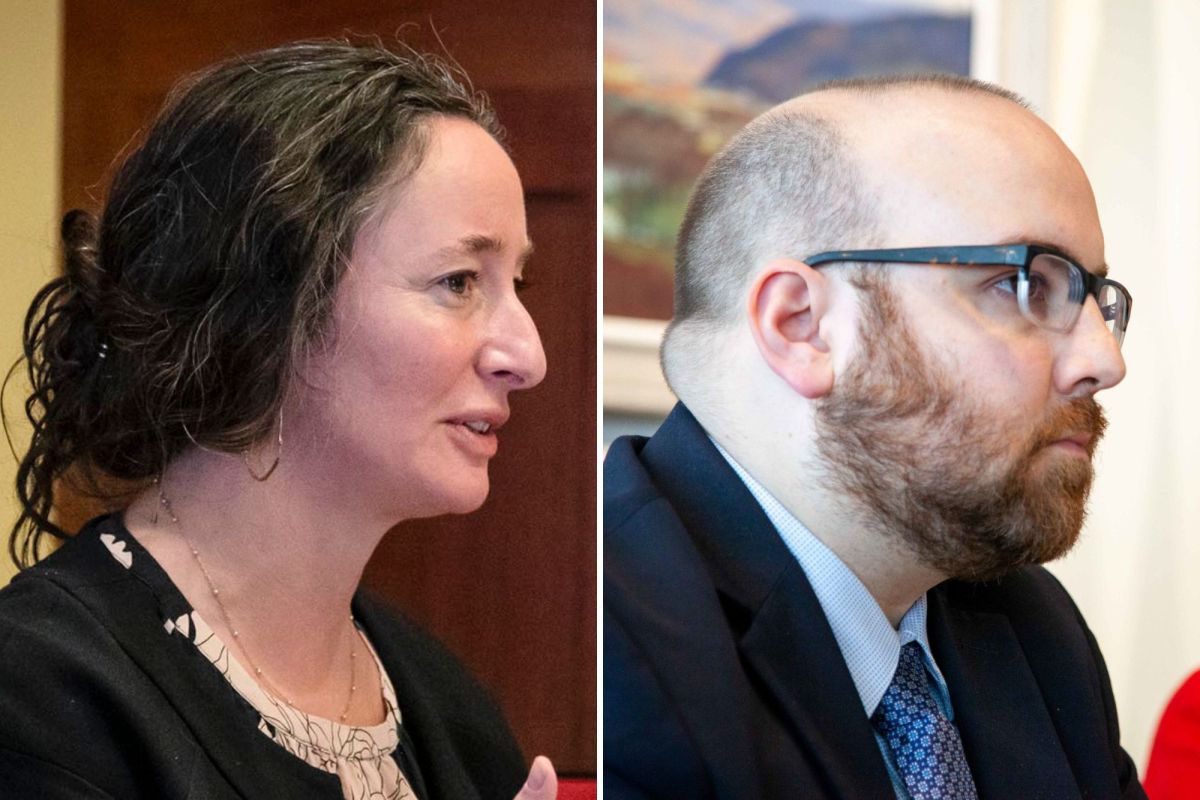
Rep. Emilie Kornheiser, D-Brattleboro, the chair of the House Ways and Means Committee, appeared startled that such a left-field idea could appear so late in the legislative process.
“I have never heard this deferred payable idea before — it is a genuinely intriguing idea — and yet we had planned to vote this bill out today. We’re going to vote it out early next week,” she said during a Friday hearing. “Do you have the mechanics figured out? Is there legislative language for it?”
“If you’re very excited, I think we would start working together on crafting the legislative language and hammering out the details that need to be hammered out,” Bolio replied, noting that the committee’s education funding bill only appeared publicly on Tuesday.
“We’ve been discussing it internally,” Bolio said.
The unexpected proposal from the administration arrived on the heels of a whirlwind week in education finance as committee members drafted the annual yield bill, which helps determine education property tax rates statewide.
This year, that bill is also likely to include policy changes and new revenue streams.
As it stands, the bill would impose what’s known as a cloud tax by repealing an exemption on the sales tax for software accessed over the internet. That decision would raise a projected $20 million annually.
The latest draft includes a 1.5% tax on short-term rentals like Airbnbs, estimated to raise about $6.5 million.
The bill also includes ideas lawmakers intend to address cost-containment and transparency, which drew vociferous disapproval from the associations representing Vermont teachers, superintendents, principals and school board members.
The bill would require new ballot language, starting with next year’s budget votes, to inform voters of the percent change in per-student education spending.
Lawmakers included language they hope will address frustration with the Common Level of Appraisal, or CLA, a town-by-town metric used to adjust property values. In practice, the change should reduce the degree to which local tax rates are impacted once the state figures out each town’s CLA.
The legislation also includes “allowable spending percentages,” specific annual growth rates each district must stay within during the next two budget cycles to avoid paying an excess spending penalty. Lower-spending districts would be able to increase spending more than their higher-spending counterparts.
But lawmakers slightly walked back the most radical consideration: to set Vermont on the path of transitioning to a system that provides each district with a base payment per student.
The bill’s so-called “educational opportunity payments” would provide school districts with money on a per-student basis, with considerations still in place to give districts more money for students who are more expensive to educate. Districts that wanted to spend more could do so using homestead property taxes, and the system would still use a statewide grand list.
In theory, the system would also allow districts to know more about their tax rates before the budget cycle than the current process allows.
Originally, lawmakers had included language that imposed a deadline for coming up with the policy specifics needed to transition to the foundation formula model. That date is now removed from the bill, which still creates a task force that would be required to come up with an implementation plan for the new system and draft legislation by Dec. 15.
‘Lightbulb moment’
This year, Scott has repeatedly pointed to his ideas from 2018 related to cost containment in education, arguing they remain applicable to the present.
So when Bolio, the tax commissioner, presented a new idea to spread out the projected average double-digit education property tax increases over multiple years by deferring payment, it took lawmakers by surprise.
Kornheiser called the tax department “profoundly collaborative” when it comes to working with her committee. “But this is not an example of that.”
“There have been many, many, many opportunities for (the administration) to bring tangible, coherent proposals to us,” she said. With her committee planning to vote out the education finance bill on Tuesday, “it’s unclear what we do with this.”
For Kornheiser, many unknowns remain about the administration’s idea, including how it would affect the state’s bond ratings and cash flow.
The proposal also mentioned “forgiveness of some or all of the deferment” for districts that meet specific metrics like improving test scores. Kornheiser said she also wanted to know more details about those incentives.
“We’d need to see legislative language and get the thumbs up from the treasurer,” she said.
In an interview, Bolio said the administration’s proposal was the product of a “lightbulb moment recently.”
“There was no situation of holding back an idea here,” he said.
Given interest shown by lawmakers, Bolio said his department, administration officials, and the treasurer’s office would expedite work on fleshing out the details: Where could the money come from to pay for deferred education spending if not property taxes, and how specifically could legislation incentivize school district behavior?
The proposal, Bolio explained, came out of “dread and concern” about impending property tax hikes.
“If you don’t do anything,” he said, “you will have the spike for everybody this year.”
