

The Vermont Senate has signed off on legislation that would create new regulations for the state’s river systems, wetlands and dams in response to last summer’s flooding.
Senators voted 24-4 to advance the measure Wednesday and gave it final approval on a voice vote Thursday. It now heads to the House.
The bill, S.213, would require Vermonters to obtain a state permit to build in a river corridor, which includes the river itself and surrounding land where water can flow during flooding. If the bill clears the Legislature — and overcomes a likely veto by Gov. Phil Scott — that new permitting process would start in 2028.
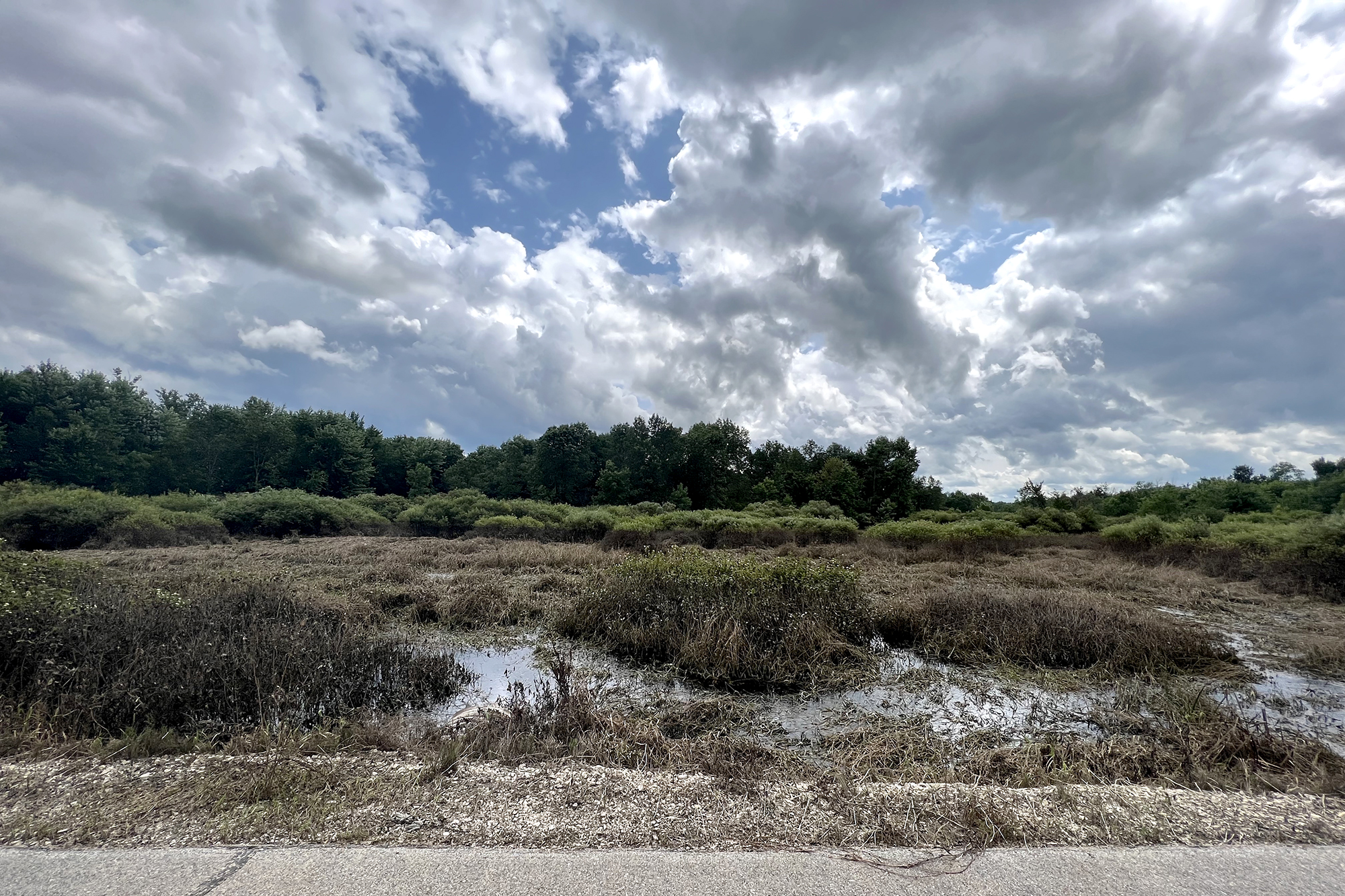
The legislation directs the state to ensure that there is a net increase of wetlands in Vermont over time and would accomplish that goal, in part, by requiring people who damage more than 5,000 square-feet of wetlands during development to restore twice as much. It would also expand the state’s power to improve dam safety.
Lawmakers who crafted the bill reasoned that the management of river systems should fall to the state government, rather than the municipalities located along their banks. Right now, regulations vary widely from one municipality to the next, but the state could look at river systems and watersheds as a more complete system.
“As Vermont continues to rebuild and recover from the devastating floods of 2023, we must do everything in our power to rebuild smarter and stronger with resilience against future flooding events at the forefront,” Senate President Pro Tempore Phil Baruth, D/P-Chittenden Central, said in a press release Thursday.
Vermont Emergency Management data indicates that 2023 flooding events damaged more than 4,000 homes and 800 businesses and led to more than $200 million in damage to public infrastructure, according to Baruth’s release.
In closing remarks to lawmakers before the vote on Wednesday, Sen. Chris Bray, D-Addison, quoted President Abraham Lincoln to explain why state government is the appropriate body to govern river corridors.
Lincoln wrote that “the legitimate object of government is to do for a community of people whatever they need to have done, but can not do at all or can not so well do for themselves in their separate and individual capacities.”
“No individual, no community, no county can successfully take on the large challenge that we’re talking about,” Bray said.
The vote was celebrated by a number of the state’s environmental groups, including The Nature Conservancy in Vermont, Vermont Conservation Voters, Conservation Law Foundation Vermont, Vermont Natural Resources Council and others. Meanwhile, it has faced opposition from Scott, who has said that he thinks the bill would “put Vermonters in jeopardy of violating laws they don’t even know exist.”
Julie Moore, secretary of the Agency of Natural Resources and a member of Scott’s administration, has said the bill’s timeline is unrealistic and that its nearly $5 million price tag does not provide enough resources for the agency to take on the tasks being assigned to it.
The language allocating funds for the work was removed by lawmakers in the Senate Appropriations Committee. But the committee’s chair, Sen. Jane Kitchel, D-Caledonia, told colleagues Wednesday that it planned to assign funds for that purpose in the future. The money would fund new positions and other resources necessary to implement the policy.
“We did make a commitment that we would do this,” Kitchel told lawmakers on Wednesday.
In an interview Thursday, Bray said this session’s funding requests substantially exceed the state’s available revenue, so appropriators need to determine how to prioritize resources. Lawmakers likely won’t know how much funding will be allocated to their priorities until the end of the session, he said, and he doesn’t expect that S.213 will receive the full $4.9 million that his committee requested.
At a press conference earlier this year, Scott included S.213 in remarks about how several of the proposed measures of this session could make housing harder to build across Vermont.
But on Wednesday, Sen. Kesha Ram Hinsdale, D/P-Chittenden Southeast, chair of the Senate Economic Development, Housing and General Affairs Committee, told lawmakers the bill’s protections would complement the state’s attempts to build more housing.
As many as 15% of Vermonters currently live in floodplains, and many of those people have low incomes or are seniors and are already more vulnerable to the impacts of flooding, Ram Hinsdale said.
“We won’t be able to determine what’s considered safe outside of the floodplain if the work doesn’t happen to determine where those floodplains are and what kind of storms we’re facing and what kind of danger that can put Vermonters in,” she said.
Correction: An earlier version of this story misstated the threshold of damaged wetlands requiring remediation.
