


Feel overwhelmed by fewer dollars and rising costs? The selectboard in the town of Tunbridge relates.
“Running a municipality has never been as challenging as it is today,” members write in their annual report. “Taxpayers are maxed out, and yet, year after year, budgets go up, mandates — funded and unfunded — multiply, extreme weather events are becoming increasingly extreme and alarmingly frequent. What’s to be done?”
Keep calm and carry on, it appears, as Tunbridge is set to debate not only a local budget (“up a tad,” the selectboard says) but also a proposed noise ordinance to protect “the comfort, quiet, repose, health, peace and safety” by prohibiting “any excessive, unnecessary or unreasonably loud noise or disturbance.”
Vermonters from northwestern Alburgh to southeastern Vernon are scheduled to decide local government and school spending, leaders and charter changes — as well as join the nation in the Super Tuesday presidential primary — as they fully return to March Town Meeting traditions after three years of Covid-19 compromises.
The state’s 28 municipalities with 5,000 or more people will ask voters to approve nearly $60 million in capital projects — a one-third drop from the $100 million wish lists they proposed in 2022 and 2023.
Smaller communities are set to consider their own wide range of local questions, from Brookfield’s call to extend $500 bonuses to its flood-fighting road crew to the Mountain Views Supervisory Union’s request for a $99 million bond to replace the current Woodstock Union Middle and High School, parts which are nearly 75 years old.
State officials can’t yet say how many school districts are planning to postpone their education budget votes to calculate the impact of the Legislature’s recent eleventh-hour elimination of a 5% cap on related property tax hikes. But cities and towns will be considering an estimated three-quarters of a billion dollars in municipal expenditures — one-third the size of state government’s $2.3 billion general fund.

Bonds and big-ticket items
Municipal budgets have been challenged by everything from inflation to last year’s historic statewide flooding. But that hasn’t stopped local leaders from proposing a slew of one-time-only requests above and beyond their regular spending.
The largest projects, according to a VTDigger survey, would pay for public safety infrastructure and improvements.
In the biggest municipal item on the ballot statewide, Swanton Village will consider a $14.8 million bond for a new police and fire station. The plan comes with complicated geography: Swanton as a whole has 6,837 people, with a village population of 2,381 (those taxpayers are voting on the station) and a rest-of-town count of 4,456 (which contracts with the village for coverage and won’t be deciding or directly responsible for the bond).
READ MORE


Hartford will see a $1.3 million plan to expand its Quechee village fire station.
Several other communities will weigh fire truck purchases, including Shelburne at $1 million (plus another $375,000 for an ambulance).
Several cities and towns are seeking to improve water systems:
— Northfield will ask for a $7.23 million bond for a new reservoir and transmission line.
— South Burlington will vote on the $5.75 million purchase of a 2.1 million-gallon water storage tank.
— Middlebury will consider $1.5 million in South Street sewer, stormwater and surface improvements (as well as a $1.2 million bond for reconstruction of Bakery Lane).
— Londonderry will cast ballots on two bonds totaling $797,700 to help fund a $7.9 million plan for new community wastewater systems in the north and south village areas of town.
— And residents in the Champlain Water District will weigh a $3.2 million reallocation of unspent improvement money for more upgrades to the system that serves Colchester, the town of Essex and the city of Essex Junction, the village of Jericho, Milton, Shelburne, South Burlington, Williston and Winooski.
Housing will appear on the ballot in St. Albans City, which is proposing a $11.4 million bond to build some 90 workforce housing units in back of City Hall and the former Bellevue property in the downtown tax increment financing (TIF) district. (Under the TIF program, the city can approve a bond and pay it off from resulting tax revenue.)
In other municipal matters:
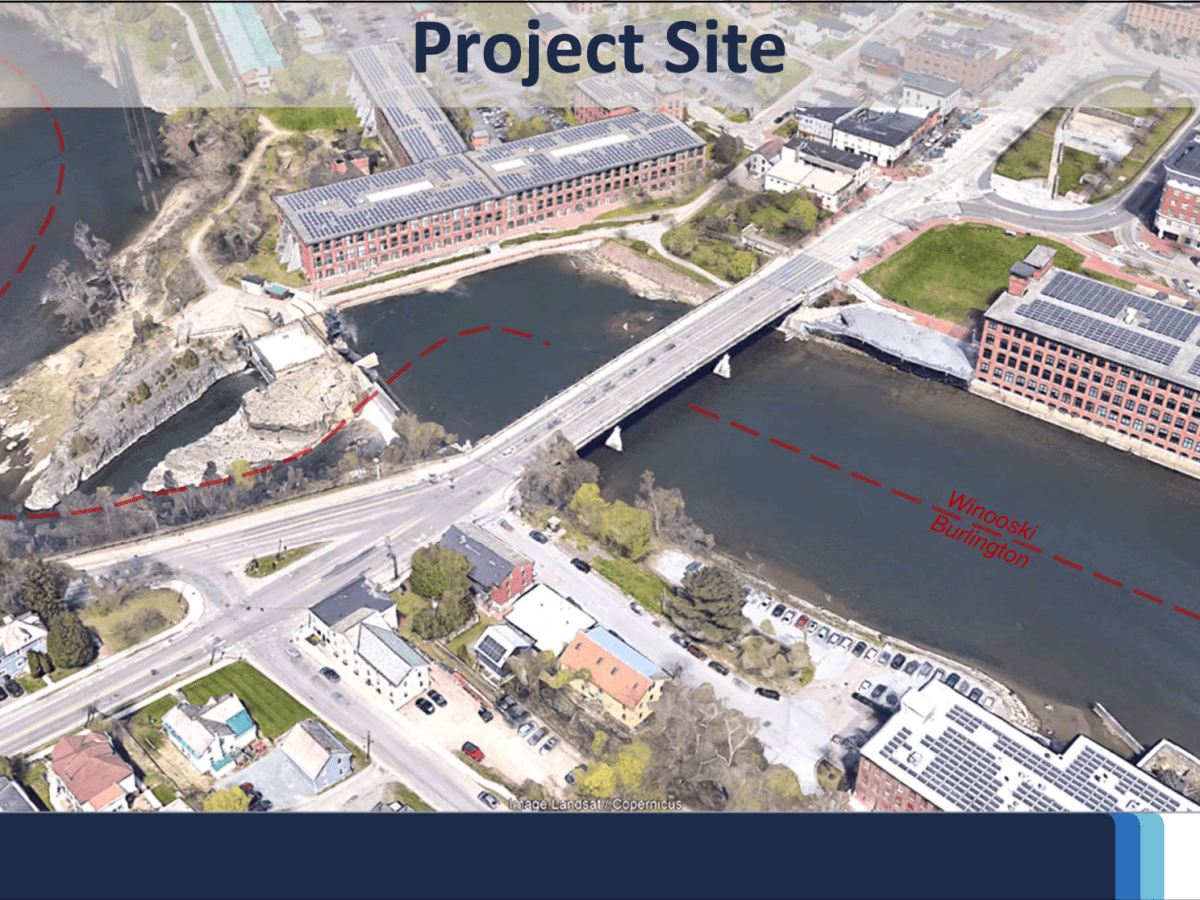
— Winooski will vote on a $4.6 million bond for its share of a proposed Burlington-Winooski bridge project for Routes 2 and 7.
— Jericho will consider a new $4.15 million town maintenance facility.
— Stowe will weigh $1.3 million for such capital projects as heating/cooling and audio/video upgrades to the Akeley municipal building, recreation path reconstruction, an emergency management building generator and flashing speed signs for Moscow village.
— And Bennington will ask for approval to convey its senior center building to developers aiming to relocate the facility into a larger renovation of the former Bennington High School.

Vermont’s 219 communities with populations of less than 5,000 report a plethora of their own big-dollar spending requests — although only four carry individual price tags of $1 million or more.
Richmond, for example, will vote on a $9.84 million set of health and safety improvements to its Town Center government building.
Wilmington will cast ballots on a $3.1 million plan to extend water and sewer lines along Route 9 east and Route 100 south.
And in two requests that come as a result of age rather than flooding, Georgia will consider a new $1.5 million Mill River Road bridge, while Hancock will weigh a $1.2 million loan for a new Texas Falls Road bridge.
As for education, Killington will consider both the Woodstock Union school bond as well as whether to study the impact of leaving the Mountain Views Supervisory Union.
And Cabot will cast ballots for the third time in a decade on whether to close its grade 9-12 high school and pay tuition for its 30 to 40 students to learn elsewhere. (The town voted to retain the school in 2013 and 2019 and rejected a merger proposal that would have closed the building in 2017.)

Charter changes, other municipal matters
Several communities will weigh different proposals to make more money.
At least a half-dozen towns will decide whether to join the current 30 Vermont municipalities that have added a 1% local option tax on sales, rooms, meals or alcohol, with proposals set for consideration in Berlin, Halifax, Hartford, Londonderry, Pittsford, Putney and Woodstock.
At least four towns — Cavendish, Highgate, Killington and Ryegate — will vote on joining the current 75 Vermont communities that have authorized local retail sales of cannabis since the state granted approval in 2020.
Andover and Sutton are set to consider joining more than a half-dozen other Vermont communities that regulate short-term rental housing, while Londonderry is asking to hire an administrator to enforce its new ordinance requiring registration of such units.
Others will cast ballots on a growing trend to add members to their governing boards and professionalize their municipal offices. Requests include:
— Expanding local selectboards from three to five members in Irasburg, Peacham, Roxbury and Underhill.
— Replacing listers with professional assessors in Arlington, Bethel, Highgate and Monkton.
— Eliminating the post of constable in Benson, Middlesex and Sharon.
South Burlington will decide whether to expand its school board from five to seven seats.
Of the eight Vermont municipalities with mayors, five will see the office up for election this year.

The state’s biggest city of Burlington could elect its first woman as mayor, with Progressive Emma Mulvaney-Stanak and Democrat Joan Shannon running alongside independent candidates William Emmons and Christopher Haessly.
In the capital of Montpelier, Mayor Jack McCullough is facing a challenge from Carlton Langston Anderson and Dan Jones.
St. Albans City Mayor Tim Smith and Winooski Mayor Kristine Lott are running unopposed, while Barre City Mayor Jake Hemmerick is set to step down when his community votes on municipal posts May 14.
Several of the state’s most populous hubs are proposing changes to their local charters:
— Montpelier will consider protecting residential tenants from evictions without “just cause” in a proposal similar to those adopted in Burlington, Essex and Winooski.
— Rutland City will vote on a citizens’ petition to mandate “no fluoride, or any chemical containing fluoride, shall be added” to the public water supply.
— Burlington will ask to raise the municipal electric department’s permitted amount of temporary loans from $5 million to $10 million, as well as to increase the police and fire tax rate about 4%, or 3 cents more.
READ MORE



As for advisory articles:
Newfane will vote on a citizen-petitioned item demanding “an immediate ceasefire” and end of U.S. weapon sales to Israel for its war against Hamas in Gaza.
Johnson will consider a potential study of merging its town and village governments.
Essex will ask a nonbinding question on whether the annual report should list the names, position titles, salaries and benefits of all municipal employees.
Brandon will vote on whether to explore hiring enough police officers to provide 24-hour coverage without relying on overtime or on-call personnel.
Richmond will decide whether the town should study the idea of building housing on the municipally owned Browns Court sports field, a rare undeveloped parcel along its local water and sewer line.
And facing problems with the continued flood closure of the Montpelier post office, neighboring Berlin will weigh whether to ask the U.S. Postal Service to create its own separate branch and zip code.
Rounding out ballots, at least three communities — Hancock, Rochester and Westminster — will vote on whether to join 135 others in signing a Declaration of Inclusion in support of diversity and equity.

What about where, how and when?
For the first time in four years, none of Vermont’s 247 municipalities have publicly announced plans to cancel in-person March Town Meetings due to Covid-19 concerns, according to a VTDigger survey, although many are permanently adopting supplemental pandemic protocols such as mailable ballots.
More than 10 communities will consider whether to move some or all of their voting from meetings to ballots, including Bristol, Cambridge, Cavendish, Guilford, Highgate, Jericho, Lincoln, Randolph, Sharon, Stowe and Wilmington.
Benson and Guilford will decide whether to reschedule their annual meetings to the Saturday before the first Tuesday in March, while Williamstown may move its future gatherings to the first Monday.
And Marlboro will consider returning to a meeting after recently changing to a ballot vote.
Although most Vermont communities have set March 5 votes on local government matters separate from any school questions, several have different schedules.
Barre City and Barre Town will cast ballots for the state’s presidential primary on March 5 but have moved their municipal items to May 14 as they calculate how last year’s flooding will affect costs.
The city of Essex Junction will vote on presidential primary and Champlain Water District questions on March 5 but wait per custom and charter to decide local issues on April 9.
Brattleboro will choose municipal leaders on March 5 and decide spending at its Representative Town Meeting on March 23.
Plainfield will cast ballots on local leaders on March 5 but has yet to schedule its traditional floor meeting to approve a budget as it seeks an auditor to sign off on municipal finances.
And Rockingham will vote on presidential primary and school matters on March 5 but has pushed back its floor meeting to April 1 after missing a deadline to legally schedule a gathering on the traditional date.
Election clerks advise Vermonters to check their community’s voting times and places, as some are casting municipal, school and presidential primary ballots on different days to accommodate local traditions and larger education districts.
