


Lawmakers watered down a sweeping health care bill last week, replacing a provision that would expand access to Medicaid for many Vermonters with a study.
As initially written, the bill, H.721, would have dramatically raised the income thresholds for Medicaid over the next five years, likely making tens of thousands of Vermonters newly eligible for publicly funded health insurance.
But last week, the House Committee on Health Care removed that language, instead assigning the Agency of Human Services to complete a “technical analysis” of the prospect of expanding Medicaid.
As currently written, the bill would require the agency to examine the feasibility, costs and timeline for potentially sweeping changes to the state’s Medicaid program. A report would be due by January 2025.
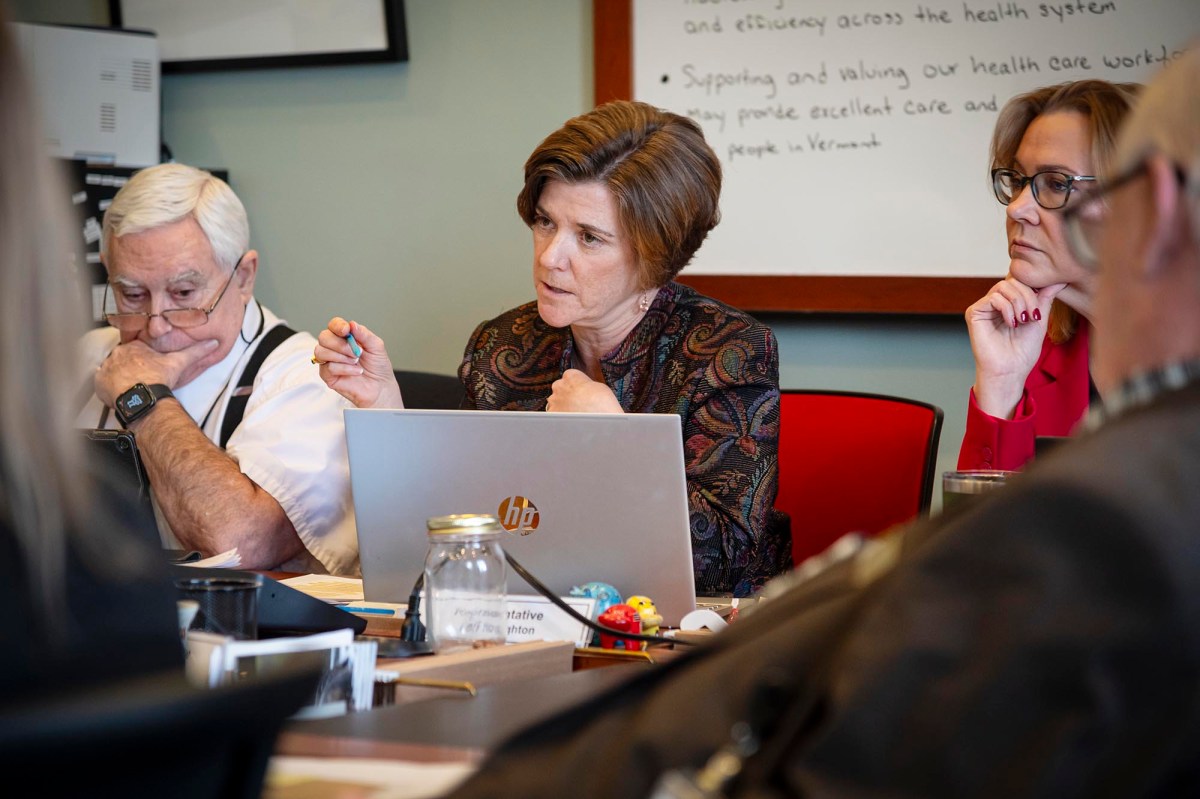
Rep. Lori Houghton, D-Essex Junction, the chair of the House Health Care Committee and the bill’s primary sponsor, said that the legislation — which would have been “such a big change” — was simply too ambitious to advance without more information.
“But you have to be ambitious to get everyone’s attention,” Houghton said.
One key part of the bill remains intact, however: an expansion of the state’s Medicare Savings Program, which advocates say would provide much-needed financial resources to older low-income Vermonters.
In Vermont, adults with incomes up to 138% of the federal poverty limit are eligible for Medicaid. That comes out to $1,676 a month for a single-person household.
Vermonters with higher incomes are also eligible for subsidized private health insurance plans through Vermont Health Connect, the state’s health insurance marketplace.
But when many Vermonters turn 65, they transition from Medicaid to Medicare, a federal health insurance program for older Americans. And on Medicare, it becomes more difficult for them to access subsidies for insurance.
Low-income people covered by Medicare are eligible for financial assistance through state-run Medicare Savings Programs. As of 2022, roughly 26,000 Vermonters were enrolled in the state’s Medicare Savings Program.
But in many states, including Vermont, those programs have much stricter income limits than Medicaid.
The most comprehensive option from the state’s Medicare Savings Program offers subsidies only to Vermonters at the federal poverty level — $1,255 a month.
That means that many Vermonters turning 65 face what advocates call the “Medicare cliff” — a sudden spike in health care costs at an age when people often need care more than ever.
“Most people think that Medicare is free,” Emma Zavez, an analyst with Vermont’s Office of the Health Care Advocate, told committee members in January. “You worked, you paid into the system, the system is now going to take care of you. Unfortunately, that’s not true.”
Lawmakers are still figuring out exactly where they should set Medicare Savings Program income limits. But the provision has drawn support from a range of stakeholders, including Vermont’s hospitals, teachers union, advocacy groups and BlueCross BlueShield of Vermont, the state’s largest private insurer.
Houghton, the chair of the House Health Care Committee, said that language is still a priority. The bill is scheduled for a possible committee vote this week.
“This is a really important one for me,” Houghton said. “It is helping older Vermonters keep money in their pockets — people who live on very low income, who are probably trying to decide between health care and food.”
