
Earning one’s driver’s license is an American rite of passage. While we may think of it as a teenage milestone, it’s also a critical one for immigrants who come to the United States later in life.
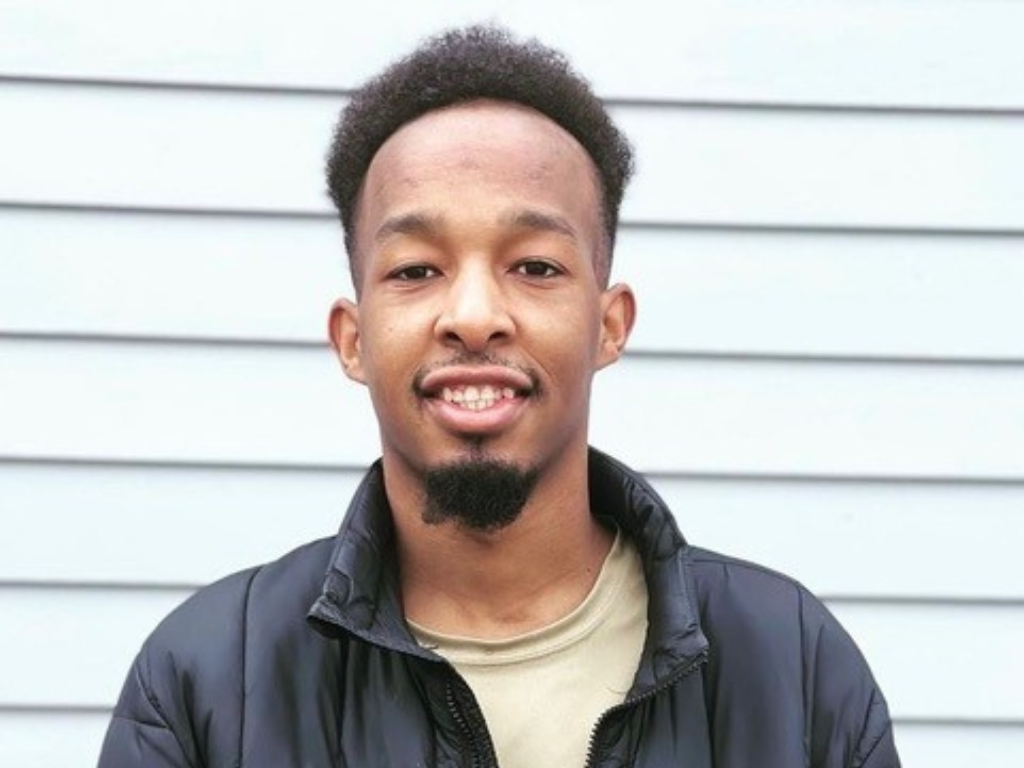
“Getting your license is a necessity. It opens doors and opportunities,” says Aden Haji, founder of Haji Driving Academy, a Burlington-based driving school that specializes in helping New Americans merge more fully into American society by earning their driver’s license.
“I always ask my clients why they want to learn to drive. Sometimes it’s to further their employment, sometimes to get their children to school and activities. And some say they’re tired of asking others for rides.” Whatever the case, Haji says, “Wanting that sense of freedom and mobility is very understandable.”
That feeling is one Haji remembers from his own parents, who arrived here from Kenya back in 2003 as part of the first wave of Somali/Bantu refugees to emigrate to Vermont. Haji, the oldest of six children, was six years old at the time. Even at that age, he recalls, “It was a challenging transition, learning to navigate all of the cultural and educational aspects.” And for adults, he points out, the responsibilities of working and caregiving are layered on top of that cultural transition—which usually includes learning how to drive.
So, after teaching several friends and family members to drive and receiving positive feedback, Haji says “a light bulb went off in my head. I kept hearing about people wanting to learn how to drive, and I realized I could put my life experience into that work. I felt like that was my calling.”
According to the company website, Haji Driving Academy emphasizes working with diverse groups whose cultural and linguistic needs are often overlooked in driver’s education. One obstacle is the language barrier, which Haji understands firsthand. When he can’t communicate with his clients in his additional languages—including Somali—his experience as a one-time new American himself often sets clients at ease. “I ask the people I’m driving with to share the driving terms they know in their language, and we get to learn from each other,” he says.
Sometimes, he says, clients have a learning curve if they come from a congested city environment, where roads were crowded with cars, pedestrians and animals all at the same time, or when their native country drives on the left. “When they come to Vermont, many of them have to ‘rewire’ themselves, which can be anxiety-inducing for some. It takes some time to adjust.”
Some of his clients also have deeper-rooted anxieties, which driving can bring to the surface. “For them, I really try to understand where that fear is coming from. Many people have trauma in their background. I try to help them uncover where that’s coming from and help them come to closure. I enjoy helping people overcome those burdens from their past.”
In fact, Haji’s educational background is in this area, having majored in anthropology at UVM. “I didn’t know exactly what I was going to do with my degree at the time. But being able to teach people from various backgrounds, that’s definitely within the realm of anthropology,” he says, noting that he’s taught people from Thailand, Vietnam, Togo, Congo, Afghanistan, Brazil, Jamaica and the Caribbean.
“I really enjoy the time I spend with people in the car. I feel like I get to travel without leaving the car,” Haji says. “In addition to teaching them, I learn a lot as well.”
In fact, continuous learning has been a big part of Haji’s journey. When he started researching what it would take to open a driving academy, he was surprised to learn how much training was required. He ended up accomplishing his dream with the help of another education organization—VSAC.
“There are courses I had to take in order to become certified,” Haji explains. Thanks to partial financial support from VSAC’s Advancement Grant—which supports adult students by funding short-term training opportunities that lead to job or career growth—Haji was able to complete those courses faster than he might have otherwise, had he financed the tuition entirely on his own.
“Receiving the VSAC Advancement Grant was so helpful for me, and it’s also been a huge step forward in making drivers’ ed more accessible to people who need that support,” says Haji, adding that several of his students have also received funding for his driving course under the same grant program.
Haji’s academy offers several course options, he says, from full-service “0-to-60” instruction, to a five-hour package designed for those who already have driving experience, and just need to prepare for the Vermont road test. And if they need a vehicle to take their test, they can rent Haji’s Jetta for a few hours.
While Haji himself is the only instructor at the moment, he intends to hire others down the road, and hopefully add some additional vehicles, equipped with the additional passenger-side foot-brake and extra rear-view mirror for the instructor. As the business grows, Haji is also looking for ways to integrate more eco-friendly practices into the driving school, from participating in community workshops on sustainability and fuel efficiency, to instilling sustainable driving habits in his students.
“I’m really grateful for VSAC’s partnership,” says Haji. “They’ve been so helpful, both for me and for many of my students. It’s been quite a ride.”
This story is produced by Vermont Student Assistance Corp., created by the Vermont Legislature in 1965 as a public nonprofit agency, to advocate for Vermont students and their families to ensure that they achieve their education goals. Our vision is to create opportunities for all Vermont students, but particularly for those—of any age—who believe that the doors to higher education are closed to them. We begin by helping families save for education with Vermont’s state-sponsored 529 savings program. To help Vermonters plan and pay for college or career training, our counselors work with students in nearly every Vermont middle school and high school, and again as adults. Our grant and scholarship programs attract national recognition, and our loan programs and loan forgiveness programs are saving Vermont families thousands of dollars in interest. Visit vsac.org to learn more.

