


Talk of public safety — and a perception that Vermont is less safe than it has been in the past — was a central tenet of Republican Gov. Phil Scott’s budget address to lawmakers this week, and has been a major focus of policy conversations in Montpelier so far this year.
In his speech, Scott called on members of the House and Senate to “solidify our place as the safest state in the country” and urged them to pass legislation that would increase penalties for certain crimes and could keep more people held in jail.
“Our policies and lack of accountability leave us vulnerable to major drug traffickers who see Vermont as, quote, ‘a destination state,’” Scott said, citing a memo from the Agency of Human Services. “Let’s make sure our laws aren’t doing more harm than good.”
Speaking to reporters after Tuesday’s speech, House leaders including Speaker Jill Krowinski, D-Burlington, accused Scott of sowing fear with his comments, repeatedly referring to the governor’s address as “long on fear and short on hope.” She later pushed back against some of the governor’s proposals, such as adding new crimes to the list of those for which juveniles can be charged in adult court.
Other lawmakers and advocates have also come out strongly against holding more people in jail — in many cases, for often minor infractions such as violating conditions of pretrial release. They have questioned whether the governor’s budget proposal — which calls for the lowest increase in state spending in several years — provides the resources required to truly address the challenges facing the criminal justice system.
“The consequences that we have in law are sufficient. It’s the matter of getting them imposed that is critical,” said Rep. Martin LaLonde, D-South Burlington, who chairs the House Judiciary Committee. “And the consequences do not have to be incarceration.”
But lawmakers on both sides of the aisle have also expressed support for some of the governor’s proposed initiatives, such as funding for additional mental health crisis workers within the Vermont State Police. In the days since his speech, several legislative leaders have said they see common ground with Scott on both the need to bolster accountability in Vermont’s justice system and to expand treatment options statewide for people who have substance use disorders.
‘More people doing the work’
Underpinning much of the public safety debate this year is the state’s stubborn backlog of pending court cases, which numbers more than 14,000. There is consensus, LaLonde said, that reducing this backlog — and, crucially, the amount of time people wait between being charged with an offense and facing consequences — is key.
While officials have said there’s no single cause for the backlog — which existed prior to the Covid-19 pandemic, but was greatly exacerbated by it — they’ve pointed to judicial positions that stayed vacant for months and a dearth of both prosecutorial and defense staff as clear contributing factors.
Overall, Scott’s 2025 budget proposal includes slightly larger increases — between roughly 4% and 5% — to the budgets of the Judiciary, state’s attorneys and the Vermont Defender General compared to many other facets of state government.
Scott’s budget would fund two new superior court judge positions, which administration officials said would help the Judiciary chip away at its backlog. The judges would likely act as “floating” judges, officials have said, with one serving at multiple courthouses across northern Vermont and another serving the state’s five benches dedicated to individuals with substance use disorders, known as “treatment court dockets.”
The Judiciary is “very grateful” for the proposed two positions, said Teri Corsones, Vermont’s court administrator. But Judiciary officials had also pitched the administration on funding 10 new judicial assistant positions to provide support to judges on the bench — something that didn’t make it into the governor’s proposal.
Calling that number the “bare minimum” needed to ensure each county can work through its backlog, Corsones said she plans to continue to advocate for funding those positions.
She acknowledged that there are a “myriad of competing demands,” and that the governor has been adamant that money and resources are limited.
Still, “we feel that these positions are needed in order for us to process cases as efficiently as possible and as timely as possible,” Corsones said. “When there’s no more work that can be accomplished in the work hours of the day, the only way to add to that is to have more people doing the work.”
‘Unintended consequences’
In his speech Tuesday, Scott told lawmakers that he wants to revoke measures he signed into law in 2018 making it harder for judges to hold people accused of certain crimes on bail before they face a trial. And he said he “moved too far and too fast” when he signed legislation that same year meant to divert more cases to juvenile courts.
These policies have “had unintended consequences,” he said, and were a mistake.
“I may have been wrong,” Scott told lawmakers. “I’ve supported, and signed, some of the very legislation that I’ll ask you to change today.”
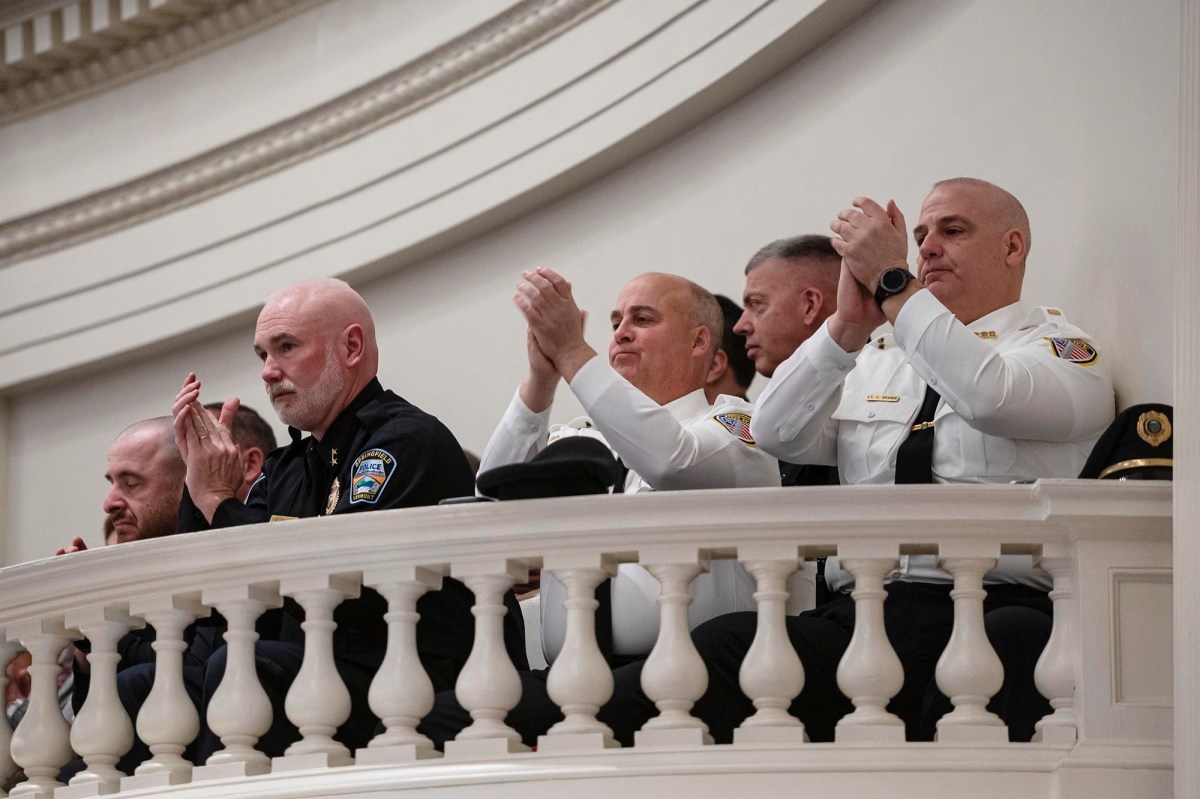
Scott also turned his attention to conditions of release, stating that they “aren’t effective” and listing examples of several individuals who accumulated many charges for violating conditions of release, including one Rutland man with 18 such charges. At one point, he gestured to a group of sheriffs and police chiefs watching him speak from the balcony of the House chamber, saying that at least one of them had asked, “at what point do you decide things have to change?”
Lawmakers are already considering policies aimed at deterring people from violating their conditions of release or from committing other crimes while waiting for a trial.
Earlier this week the Senate Judiciary Committee began to discuss S.287, a bill that would adjust some of the bail reform measures Scott signed in 2018. That includes revoking a $200 cap on the amount of a bail that a judge can impose in certain misdemeanor cases.
Sponsored by three Republican senators, the bill would also task judges with considering any existing violations that a person has when setting that person’s new conditions of release.
The Senate panel is also weighing legislation that would toughen penalties for people who traffic or sell illegal drugs — another change the governor would like to see.
‘Reverting to tough-on-crime policies’
In the House, lawmakers are weighing a bill that would increase the penalties for some retail theft offenses by giving prosecutors the ability to combine multiple misdemeanor charges into a single felony. This could help alleviate the court backlog, LaLonde said, by reducing the number of lower-level cases going before judges.
The committee is also considering a bill that would create a new pre-charge pathway for offenders to access the state’s court diversion program, as well as a bill that would reinstate Vermont’s “work crew” program as a possible sentence for minor offenders. The program was discontinued by the state Department of Corrections last year, he said.
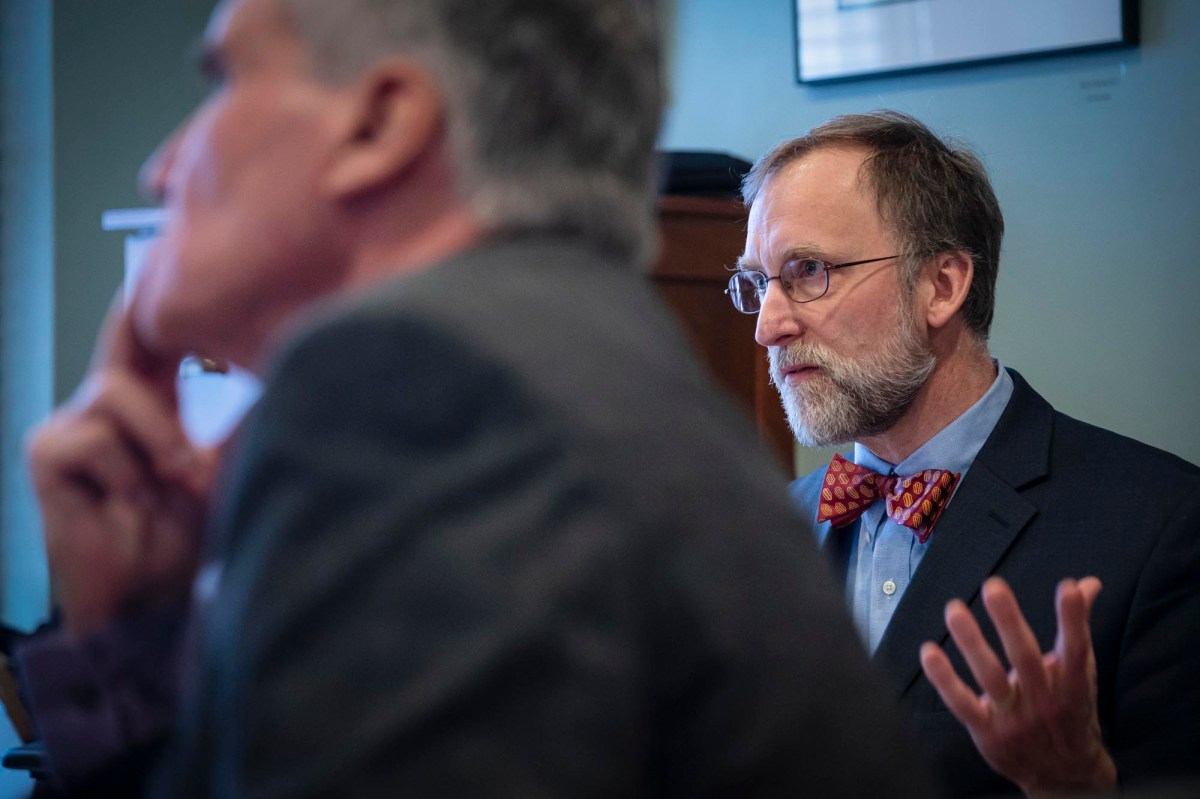
LaLonde said he thinks incarceration is the right solution in some cases. But he would rather see the governor and the Legislature allocate resources to help the state’s criminal justice system operate more efficiently, rather than focus on increasing penalties across the board.
“What stuck out to me on the budget address is that there was a lot of talk about juvenile justice, and the crime that’s happening,” he said. “And there was no talk whatsoever as far as, what are the resources that we’re putting towards this?”
At least one advocacy organization is raising concerns about both the governor’s proposals, and the general direction of some of the legislation being discussed.
Falko Schilling, a lobbyist for the American Civil Liberties Union of Vermont, said that policies that keep more people in jail are “misguided” and will not have a deterrent effect. He pointed to data from the corrections department showing that, as of the end of 2023, people detained pretrial made up a higher percentage of the state’s incarcerated population than they did before the pandemic. Still, public concern over people being released on personal recognizance hasn’t ceased, he noted.
Schilling added that he has heard more discussion about policies that would toughen penalties for both minor and major crimes in both the House and Senate judiciary committees this year so far than during any legislative session in his recent memory.
“When it comes to the discussion on public safety right now, too much policy is being made based on anecdotes. We need to actually be looking at the numbers,” he said. “Not just reacting based on fear — and reverting to tough-on-crime policies that have created many of the problems that we’re seeing today.”
Corrections: A previous version of this article contained errors in how Gov. Phil Scott was quoted and paraphrased.
