


Welcome back to Power Lunch, a semi-regular edition of Final Reading where I, your intrepid reporter, set out to chat with Statehouse movers and groovers about anything but politics. (ICYMI, check out our inaugural Power Lunch here with Phil “Swiftie” Baruth. A must-read, if I do say so myself!)
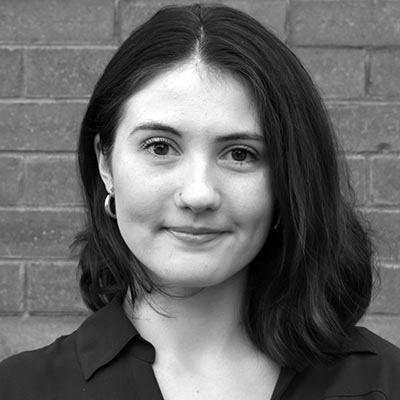
Today, we’re hearing from Sen. Irene Wrenner, D-Chittenden North, an enigmatic woman (*gestures toward The Great Jethro Tull Incident of 2019*) who, among many things, loves to puzz. Specifically, the Essex (NOT Essex Junction) senator loves crossword puzzles — not solving them, but making them.
“I was a kid and I used to make up word puzzles,” Wrenner told me on a brisk January afternoon over a latte (me) and apple juice (her). “My mom’s an English teacher. My dad’s a preacher. So they both deal with words a lot…. As a kid, I was a reader and an introvert.”
And a puzzler, so it goes. As a child, Wrenner began crafting home-made word searches — her mother has over the years sent her examples of her earliest works, “really rudimentary things,” she said — then graduated to crafting her own crossword puzzles.
Come 1993, Wrenner made for herself a pretty sweet side hustle out of the hobby, years before side hustles were even a thing. She began drawing up crossword puzzles with custom clues and in custom shapes upon request.
At the time, she explained, she had young children, and crafting crosswords “didn’t pay a salary, by any means,” but offered income for work she could do at home. She promoted her small biz, Personal Puzzles, placing ads in magazines in order to draw clients. She still maintains the gig, using the same self-admitted “ancient website” for the business, adorned with Comic Sans font.
Over the years, her clients have ranged from the corporate (a paint can-shaped puzzle for Benjamin Moore) to the local (a 25th anniversary celebratory crossword for Vermont Public) to the political (DEAN, in big block letters, for former Gov. Howard Dean’s 2004 presidential campaign).
This summer, she crafted a puzzle that, I’m sure, will delight Final Readers: A 2023 legislative session-in-review puzzle, in the shape of the Statehouse. (Not to brag, but I completed the puzzle in pen with no Googling. *hair flip*)
Wrenner then took her Statehouse puzzle to the streets, door-knocking in her district to chat with voters. The puzzle was a good icebreaker with voters answering the door, she said.
“That was a real, to me, nice, easy introduction to either what’s going on in the Statehouse… or just to understand that I’m a different kind of public servant,” Wrenner said. “Like, I have a sense of humor. I don’t always have to present you with my view of the world, or (make you) hear my accomplishments.”
— Sarah Mearhoff
In the know
In a letter directed toward school boards and superintendents on Friday, the two leaders of the Legislature’s tax committees warned of the “unintended consequences” of the state’s newest education finance law, Act 127, which, they suggested, could have districts trying to spend “free money.”
Put simply, the law intended to direct education money toward students who need it more by providing schools with more money to educate students who are more expensive to teach.
To soften that change, Act 127 capped increases to the homestead property tax rate at 5%. (The cap does not consider the effects of the Common Level of Appraisal, which can further increase taxes.) Through the new law, however, districts can increase per pupil spending up to 10% annually without further state-level review.
But now, lawmakers and the Scott administration fear school districts are packing extra spending into their budgets during a rare time when those increases won’t necessarily be directly felt by all of their taxpayers. Current predictions indicate a “majority” of districts will hit the 5% cap.
— Ethan Weinstein
On Friday afternoon, the Joint Information Technology Oversight Committee voted to formally release $30 million in funding for a new IT project for the state’s unemployment insurance information system.
The project will completely overhaul the current decades-old system, which has repeatedly experienced severe technical problems, including a recent system failure in December, which impacted roughly half of Vermonters applying for unemployment benefits.
Lawmakers on Friday expressed their anxieties about its ability to survive while the new system gets built.
“I’m really concerned that if we have a four-year period in which we’re relying on this (current system) — that I don’t have an awful lot of confidence that this isn’t going to blow up,” Sen. Randy Brock R-Franklin said in Friday’s hearing.
Officials from the Department of Labor and the Agency of Digital Service, which is overseeing the implementation of the project, said that they were working to shore up the current system. Their contingency plans for the worst case scenario — in which the current system fails catastrophically and irreparably — could include temporarily switching to paper filing or even partnering with another state to use their system, they told lawmakers at the meeting.
— Habib Sabet
On the move
The Vermont Senate on Friday supercharged a flood recovery bill through its typical stages of passage in an effort to pass it into law as quickly as possible.
S.160, the chamber’s first completed bill of the session, aims to relieve local municipalities of their school tax burdens to the state if they abate flood-affected residents’ property taxes this year. According to Sen. Ann Cummings, D-Washington, who chairs the Senate’s finance committee, S.160 is modeled after similar legislation passed in the wake of Tropical Storm Irene — “so this is not new. It’s been done before.”
Without S.160 in place, local municipalities would be on the hook for school taxes owed to the state for tax-abated properties decimated by the floods — a cost burden that “doesn’t seem quite fair” for cities, towns and villages ravaged by this summer’s storms, Cummings said on the floor.
— Sarah Mearhoff
A bill in the Senate Health and Welfare Committee proposes to overhaul the Green Mountain Care Board, shifting some of its powers to the Agency of Human Services and eliminating others.
Among other changes, S.211, backed by chair Sen. Ginny Lyons, D-Chittenden Southeast, would task the agency with developing a method for evaluating performance and quality across the health care system, involving a list of significant tasks currently being performed or contemplated by staff at the care board.
The bill would also effectively require private health insurers to participate in Vermont’s health care reform efforts, which for now effectively means working with OneCare Vermont, the state’s only “all-payer” accountable care organization.
On Friday morning, the bill drew a cool reception from the Green Mountain Care Board and Blue Cross Blue Shield.
All in all, the bill would make “really fundamental, structural changes to how we do things,” Owen Foster, the chair of the care board, told the committee Friday morning.
“Historically, the Care Board has been treated independently, without influence from the administration,” Foster said. “And in my experience of the Care Board, that’s been really a rigid, bright-line, very carefully followed rule. And, I think, a good one.”
Sara Teachout, a spokesperson for Blue Cross Blue Shield — a private insurer that declined to contract with OneCare Vermont in 2022 — was even harsher.
“Splitting these decisions among the different agencies of state government and the Green Mountain Care Board is a recipe for failure,” Teachout said.
— Peter D’Auria
On the campaign trail
In a rare step into presidential politics, Republican Gov. Phil Scott on Friday offered a plea to Vermont’s neighbors to the east: Don’t vote for former President Donald Trump. Instead? A former Trump official.
Scott has kept relatively quiet on national politics as the country plunges into the 2024 election cycle, but with New Hampshire voters hitting the polls on Tuesday for their hotly anticipated first-in-the-nation presidential primary, Scott piped up.
“America has a decision to make, and our friends and neighbors in New Hampshire have an opportunity to showcase their deep-rooted independent streak,” Scott said in a campaign press release Friday afternoon. “After years of controversy, violent rhetoric and growing polarization, the very last thing we need is four more years of Donald Trump.”

Scott’s choice of the pack: former South Carolina governor and Trump-nominated United Nations ambassador Nikki Haley. Scott referred to Haley, who came in third in Iowa’s first-in-the-nation caucuses this week, as “our only chance to ensure America has the choice it deserves in November.”
— Sarah Mearhoff
Button-gate
As yesterday’s E-board meeting came to a close in the Governor’s Ceremonial Office, a scene caught my eye from across the room: Scott spox Jason Maulucci, fiddling with his blazer. Upon closer inspection, it became clear that his button fell off and he was trying to… tie it back on?
Maybe it was time to retire the blazer, Maulucci said to me when confronted. I’m sorry — trash a whole blazer because of a single fallen button? I was under the impression that the gov’s staff values fiscal responsibility.
Maulucci followed up with me today, confessing that the stray button became “a whole thing.” He became the office punching bag du jour, even drawing criticism from Gov. Dad, himself.
In what I can only imagine was a scene akin to that one from Cinderella where the mice and birds sew her a dress, I’m told that Secretary of Administration Kristin Clouser swooped in with a stitch kit and taught the poor thing how to mend a button. Now he claims to be a pro.
— Sarah Mearhoff
What we’re reading
As climate shocks worse, U.S. disaster agency tries a new approach to aid, New York Times
Scott taps Ed McNamara to chair Public Utility Commission, VTDigger
