


A recent study has found that Vermont nonprofit arts and culture organizations generated $158.6 million in economic activity in 2022 — supporting 2,712 jobs and generating $34.8 million in tax revenue for local, state and federal governments.
“Creativity, as everyone in this room knows, is essential to the cultural and economic vitality of our state,” said Susan Evans McClure, executive director of the Vermont Arts Council. “It’s great to have these statistics and numbers to support the incredible work that our creative community does.”
Evans McClure announced the results of the study Wednesday afternoon to a roomful of artists, activists and community members at the headquarters of Burlington City Arts, a Burlington-based arts nonprofit. The state-level study, Arts and Economic Prosperity 6, is part of the sixth iteration of a nationwide impact analysis of the nonprofit arts and culture industry conducted every five years by Americans for the Arts, a national nonprofit.
In Vermont, three organizations — BCA, Vermont Arts Council and Paramount Theatre in Rutland — worked together in the field to perform surveys of organizations and audiences that were analyzed in the report.
Although the results focus exclusively on 120 Vermont-based nonprofits — excluding economic activity generated by private, for-profit organizations like South Burlington’s Higher Ground and individual artists, they offer insight into the role that the arts play in the Green Mountain State’s economic development.
“Vermont is a very special place and indeed a special place for the arts,” said Joan Goldstein, commissioner of the Vermont Agency of Commerce and Community Development. “What’s good for the arts is good for Vermont. The arts make our lives better and the economy stronger.”
Of the total generated, around $103.2 million was due to direct spending by the nonprofit arts and culture organizations themselves, and $55.4 million came from event-related expenditures by their audiences.
The ratio of Vermont organizational spending to audience spending, approaching two to one, is markedly different from the same comparison nationally, which was closer to the one-to-one ratio found nationally. The report estimates that nationwide nonprofit arts and culture organizations generated $73.3 billion through direct spending and $78.4 billion in audience spending.
Americans for the Arts warns that its methodology did change for this most recent version of the study, so direct comparisons to previous years “are less reliable.”
Still, for what it’s worth, the total economic activity Vermont arts and culture nonprofits generated in 2022 represents an increase of over $30 million since 2015, when the study was last conducted. Despite the economic gains, the sector supported about 1,500 fewer jobs in 2022 compared with the study, which was published in 2017, a decline of about 36%.
“We realize that the pandemic and post-pandemic is still being felt throughout the state, just because you don’t snap back in a minute,” Goldstein said.
The report emphasized that arts and culture events hosted by nonprofits have served as a huge draw for areas throughout Vermont, with 25% of total event attendees traveling from outside of the hosting county to attend.
Of the almost $160 million generated statewide by Vermont arts and culture nonprofits, $93.8 million was generated by organizations in Greater Burlington alone, where 30% of attendees came from out of Chittenden County.
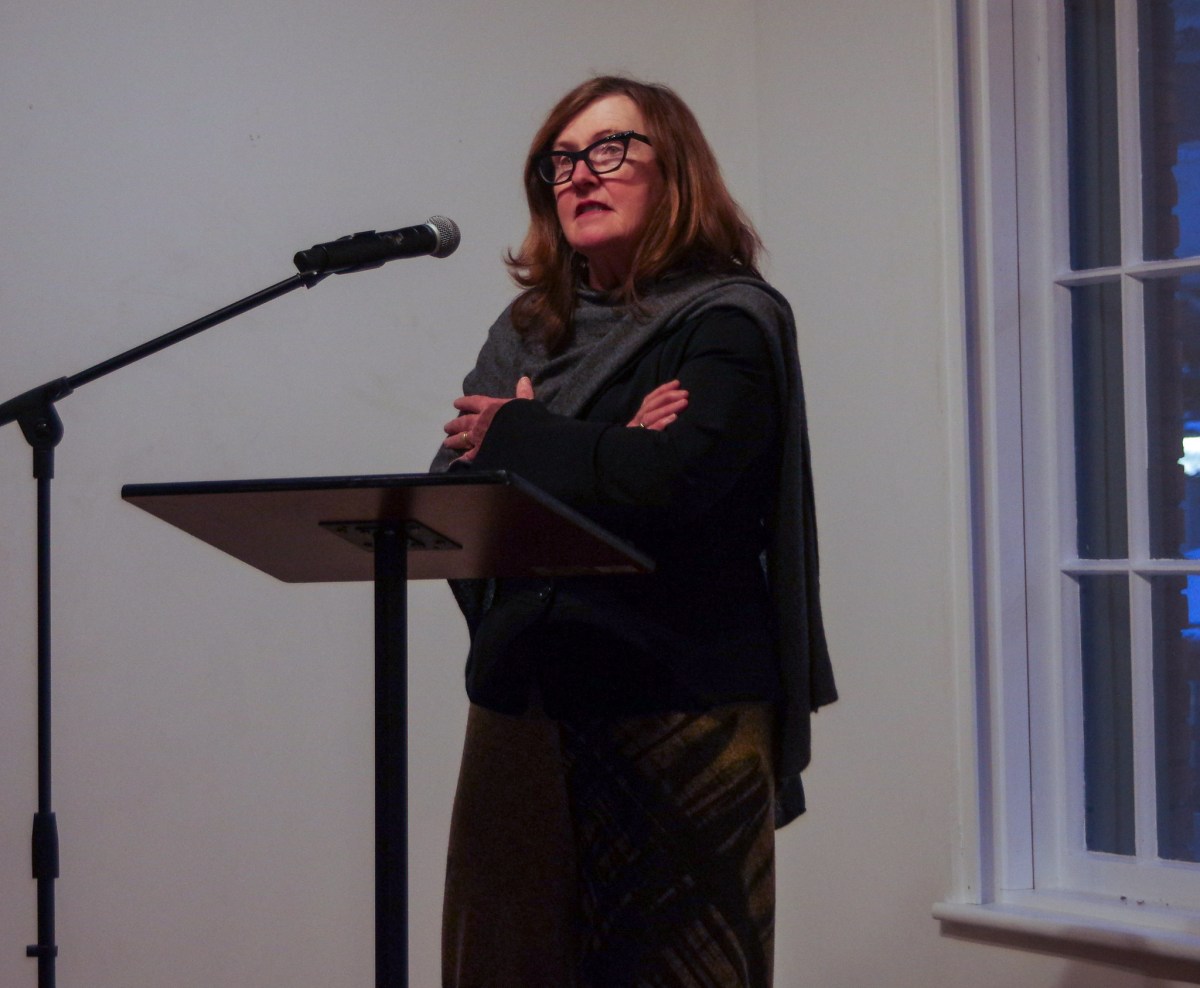
“The arts sector is wildly misunderstood, and with this data — and others that we are collecting — there is nothing but opportunity,” said Doreen Kraft, executive director of Burlington City Arts. “(The members of) this sector, including you all, are the architects of community pride in belonging and of creative solutions that we need in an ever increasingly complex world.”
An earlier version of this story misspelled and omitted part of Susan Evans McClure’s name.
