



On the last Friday of muzzleloader season, Nick Fortin parked his truck in the snow on the side of a logging road in the Wenlock Wildlife Management Area, deep in the Northeast Kingdom. Donning waterproof muck boots, warm-and-quiet wool pants and a bright orange hat, he headed out on foot to track deer through the brush, mud, rivers and snow of the “big woods.”
While most know hunting in Vermont as sitting in a tree stand or a ground blind, a smaller number of residents practice the more ambulatory art of tracking deer through large swaths of forest, called the “big woods.”
“If I’m on a track all day long, and I never see a deer, that could still be a great day,” said Fortin, the Department of Fish & Wildlife’s head deer biologist. “At any moment that deer is in front of me: Your adrenaline’s up all day. You’re excited all day. Some of the coolest areas I’ve ever found, some of the coolest things I’ve ever seen, have only been because I was on a deer track.”
The practice has deep roots in the state. The late Larry Benoit of Duxbury was featured on the cover of Sports Afield in September 1970 with the headline “Larry Benoit — Is He the Best Deer Hunter in America?” The Duxbury hunter’s fame — and that of his whitetail-tracking sons, known as the “Benoit Brothers” — only escalated from there.

However, the landscape for this traditional way of hunting has changed since the Benoits began traversing the state in search of trophy bucks. As more property owners close their land to hunting and climate change affects snow conditions, big woods deer trackers face new challenges.
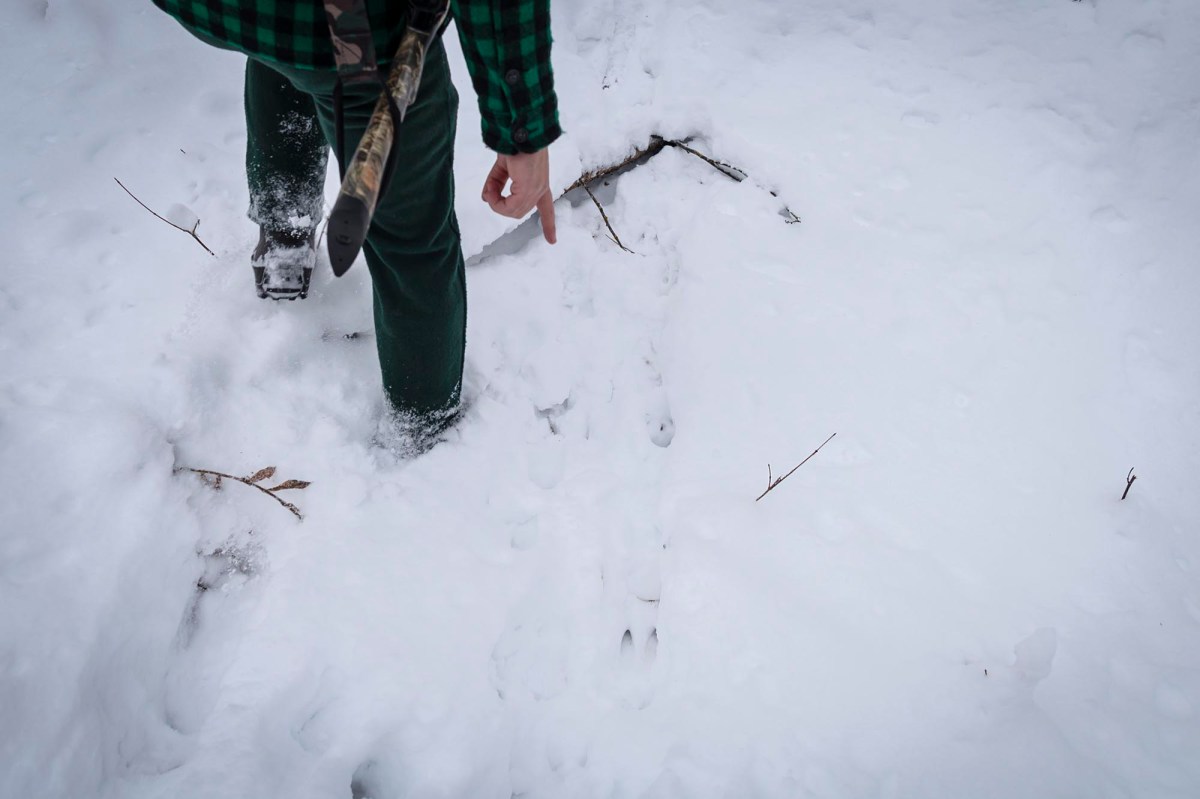
The concept is simple. One locates a track and follows it over hills and valleys, hopefully finding the deer that made it. But in practice, tracking requires keen observation skills, a knowledge of the natural environment and a healthy dose of patience.
Once a hunter figures out which deer track to follow, a complex decision-making process is set in motion. Hunters will spend time assessing how old the track is, if it was made by a doe or a buck and the animal’s approximate size to determine whether the prints are worth following.
Trackers often spend days walking in the woods — sometimes never coming upon a deer or even finding a track. Over the course of a day, they devise various plans based on conditions and previous knowledge of an area, including where other hunters might be tracking.
Rodney Elmer, a tracker and taxidermist based in Northfield, taught himself how to track big bucks in the backwoods of Maine during the early ’90s.
“We just did what Vermont kids do, especially back then,” he said. “We started out small game hunting and, eventually, following rabbits around and chasing them turned into bigger rabbits with antlers.”
Elmer, who now has a podcast and films tracking videos with his hunting partner and his three sons, said that land access has changed dramatically over the more than three decades that he’s tracked in the state.
“It’s pretty hard to find any space where you can go and not walk through somebody’s property and have them get upset about it,” he said. “The land ethics of when I was young, when the boys were young and right now — all three of those are completely different than they used to be. Walking through your neighbor’s property whenever you felt like it because you were doing your thing … the culture has changed.”
While Elmer will sometimes hunt in smaller areas, he more often heads to Vermont’s public lands or goes out-of-state to the bigger swaths of woods in New Hampshire and Maine.
According to Fortin, those who stay in Vermont are mostly relegated to large parcels of public land: the Green Mountain National Forest, state parks, and the Silvio O. Conte National Fish and Wildlife Refuge with its associated Wildlife Management Areas and commercial timberland with public access.
“In most of Vermont today, you really can’t track because you inevitably run into a property line that’s posted,” Fortin said. “Deer have big home ranges … 10-plus miles a day is not uncommon on foot. Ten-plus miles in a place with 47 different property owners is not something you can do.”

Fortin — who has worked as the Department of Fish and Wildlife’s deer project leader since 2015 — grew up in Derby, hunting in the large stretch of land by the Silvio O. Conte Fish and Wildlife Refuge. His family still maintains a camp in the area, and Fortin returns often during hunting season.
As he walked through about half a foot of snow in the wildlife management area, it made an audible crunch, the noise traveling far — too far — through the calm woods.
“Good tracking snow is quiet,” Fortin told the reporter he let tag along. “And a good tracking day — what most hunters call a ‘killing day’ — is a little bit of a wind which masks some of the noise.”
According to Fortin, decent tracking snow is becoming increasingly rare during the state’s hunting season.
“We’ve had very little snow in muzzleloader season,” Fortin said. “It’s been very, very weird. And rifle season — regular deer season — snow is a luxury at this point.”
Fortin said the Northeast Kingdom only had decent tracking snow on a handful of days during the most recent regular season, which ran from Nov. 16 to Dec. 1. Some days, he didn’t even bother trying to hunt.
Elmer agreed that snow is crucial for tracking, and the amount and type of snow in Vermont in recent years has at times posed difficulties. However, he said he and his crew can sometimes circumvent the challenge, tracking even when the ground is bare by using previous years’ knowledge to head to places where they’re likely to find deer. However, they often head to other states that have better snow conditions.
Fortin admits that while the snow conditions may be slowly changing for the worse, winter still comes — especially at more northern latitudes.
“We’re still going to have some snow, at least in parts of the state,” he said. “(Deer tracking) may not be something we can do for the entire three weeks that we have to hunt, but a couple of days a year you’re going to be able to do it.”
Despite deepening barriers, tracking is still gaining new adherents.
Jennifer Gonye of Underhill, a nurse at the University of Vermont Medical Center, took up deer tracking during the 2022 season. She grew up around lots of hunting in Richford but did not develop an awareness of tracking until about a decade ago when she was living in Waterbury and came across a roommate’s book written by the Benoit family.
“I enjoy a lot of activities in the outdoors, but none make you slow down and take note of your surroundings like hunting does,” Goyne wrote in an email. “It absolutely demands you give as much attention as you possibly can to the natural world. You must take note of the wind, the elements, the signs, your surroundings, your own safety, and so on. It is quite an exercise in being present.”
Elmer also pointed to an appeal beyond just bagging a deer.
“It takes a lot out of your heart. It takes a lot of your legs, and by the end of the day, most people would say ‘I’d rather just go to Wisconsin and sit over a pile of corn and shoot one,’” he said. “But I’m looking for that adventure and the freedom of the space that I love.”
