
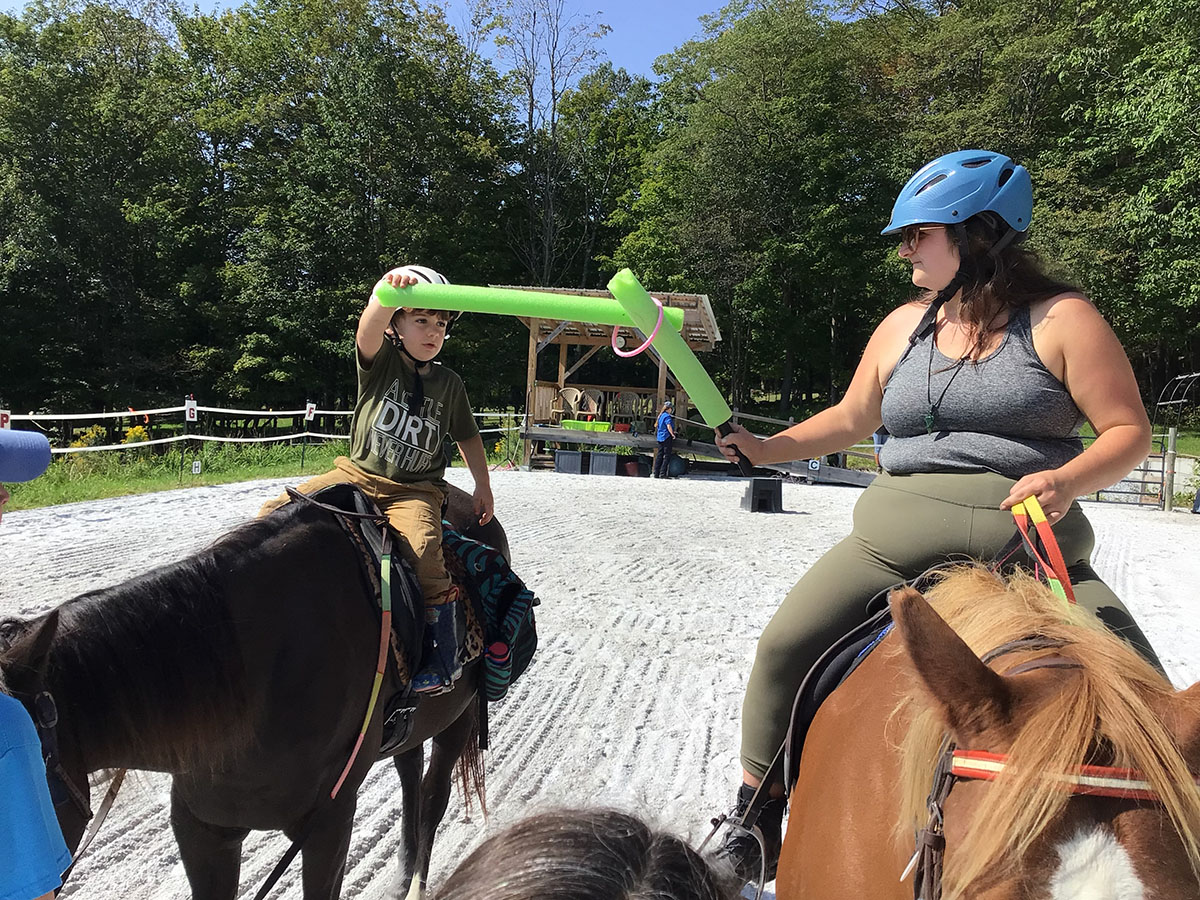
A new collaboration between Community Care Network – Rutland Mental Health Services and the Reinbow Riding Center has introduced Equine Therapy as a successful intervention for families seeking help with emotional or behavioral problems. Located in Belmont, Vermont, the Reinbow Riding Center is a therapeutic facility that combines the gentle presence of horses with therapeutic activities to foster emotional growth and resilience.
Equine therapy is an experiential treatment method that uses the connection between people and horses to process through emotional and behavioral challenges. The outdoor environment and use of multiple senses lend a unique, positive dimension to the experience.
“Horses are keen observers and are sensitive to movement and emotion,” explains Lauren Norford, Program Manager for CCN-RMHS’ Early Childhood Services. “They often mirror a client’s behavior or emotions, conveying understanding and connection that allows the client to feel safe.”
When the staff of the Reinbow Riding Center approached Rutland Mental Health Services to partner on a new parent/child program, Early Childhood Clinician Lisa Goodrich was assigned to work with the program’s first clients. “They wanted someone who was comfortable with horses, and who could also do family work,” Norford explains. “Lisa was a perfect fit.”
Mary and her son A.J. were invited to participate in the new program this past summer. Three-year old A.J. was displaying some behavioral issues at home, creating a stressful dynamic. As a parent, Mary was anxious to build a healthier and more positive bond with her son.
During their 8-week program, mother and son participated in activities such as grooming, feeding and riding, often requiring them to work together and communicate with each other to creatively problem solve. Goodrich supervised each weekly session, setting goals and following up with feedback.
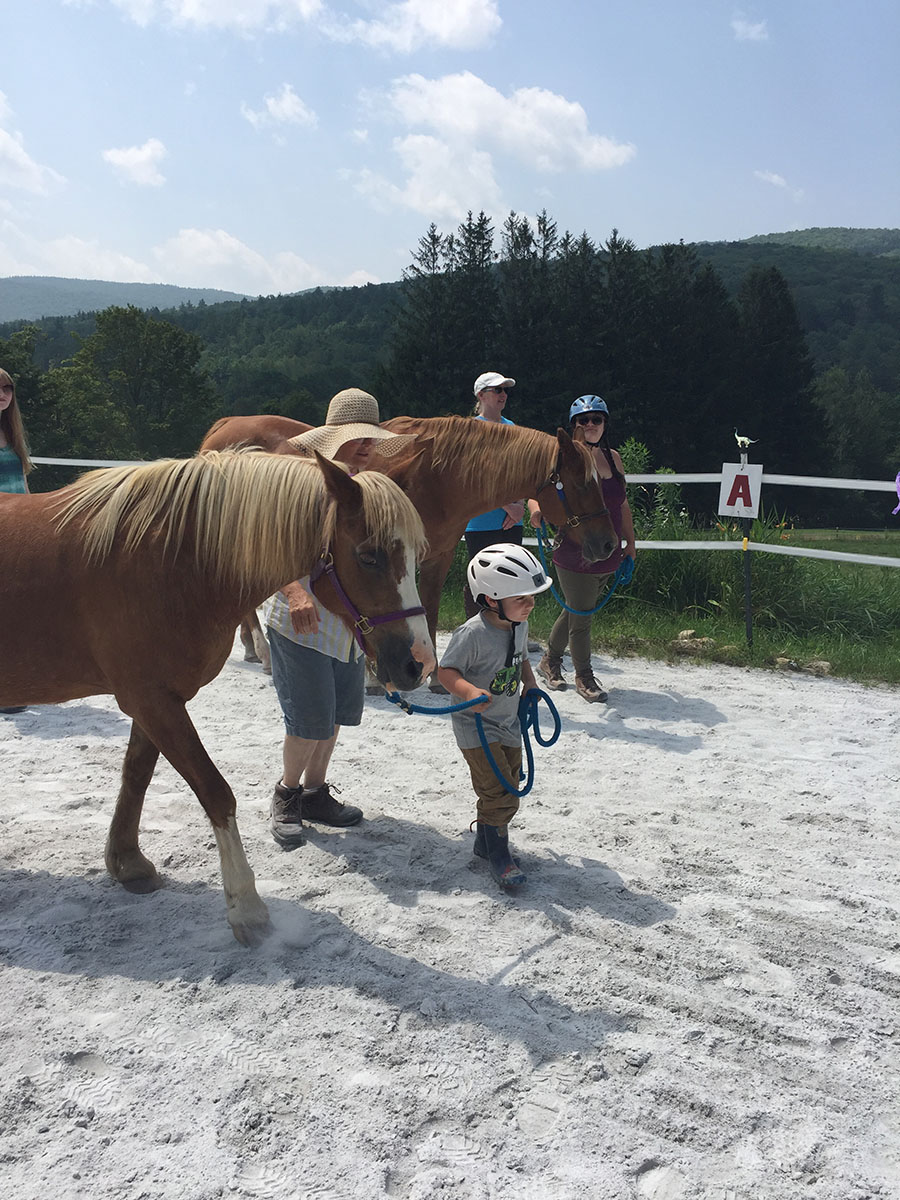


“A key part of this therapy involves being aware of your emotions, and seeing the effect of those emotions on your horse,” says Goodrich. “You can’t hide from the horse. If you’re feeling down, or anxious, the horse is going to pick up on that, and respond accordingly. So you have to be aware of your emotions and learn to regulate them.”
For Mary and A.J., the 8-week session was transformative. A.J. is a better listener now, and his confidence has grown. Mary feels a stronger bond with her son.
“It actually blew me away how well we worked together,” says Mary. “This experience has created a solid foundation of how I want to navigate life with my son. It has given me confidence in what I can do as a mom and how well my son and I can work together in the face of any challenge. I have immense gratitude for everyone involved with making this happen – it was above and beyond my expectations and wishes.”
“I feel honestly like I made better and faster progress with this family and their relationship using horses than I could have in an office environment,” says Goodrich. “The assessment that we did shows that their closeness actually increased, and that was of the goal of the whole thing.”
The Reinbow Riding Center operates from May through October. Norford is looking forward to introducing more families to the program next summer. “When we see this kind of success with one family, naturally we want more families to benefit.”
More information is available at www.reinbowridingcenter.org.

About Community Care Network – Rutland Mental Health Services
The mission of Community Care Network is to enhance the health and well-being of our communities, individuals and families through responsive, innovative and collaborative services. The programs of Community Care Network serve more than 3,000 people each year throughout Rutland County.
To learn more about Community Care Network, including Rutland Mental Health Services and Rutland Community Programs, visit www.rmhsccn.org.
This article is part of a collaboration produced by members of Vermont Care Partners. Vermont Care Partners is a statewide network of sixteen non-profit, community-based agencies providing mental health, substance use and intellectual and developmental disability support.

