


ST. ALBANS TOWN — The small, white and green trailer is unassuming from the outside. Perched at the top of Bellevue Hill above downtown St. Albans, it’s accessible only by a narrow, uneven road that winds gradually up to a clearing at the summit.
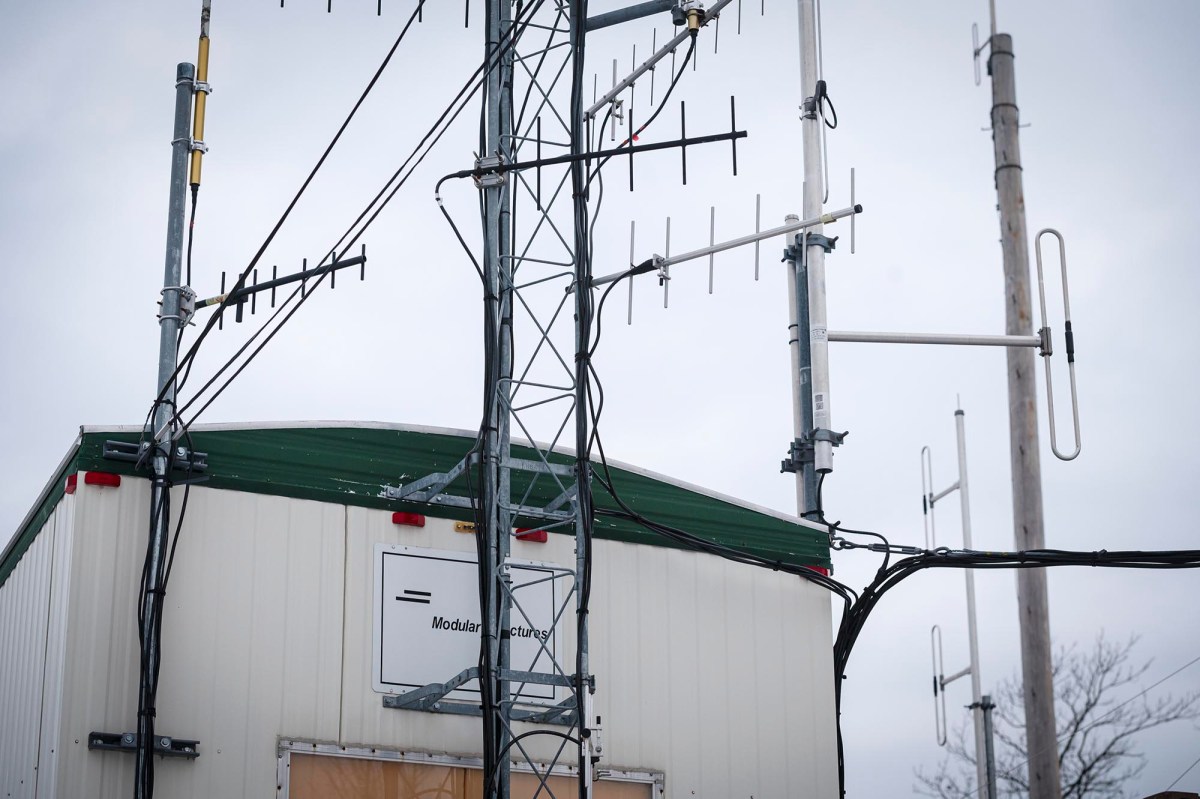
The large antennas jutting out from the trailer’s roof, though, hint at the critical infrastructure kept inside: computers and other technical equipment that keep one of Vermont’s six 911 call centers up and running, 24 hours a day, 365 days a year.
Two miles downhill at the St. Albans Police Department headquarters, 911 dispatchers answer calls from the 15 municipalities in Franklin County, and then some. Last year, the center — called a public safety answering point, or PSAP — handled nearly 25,000 calls, according to data from the state board that oversees the 911 system.
But the trailer that links these dispatchers with the outside world is in ailing shape and likely years overdue to be replaced, according to Maurice Lamothe, the city’s police chief.
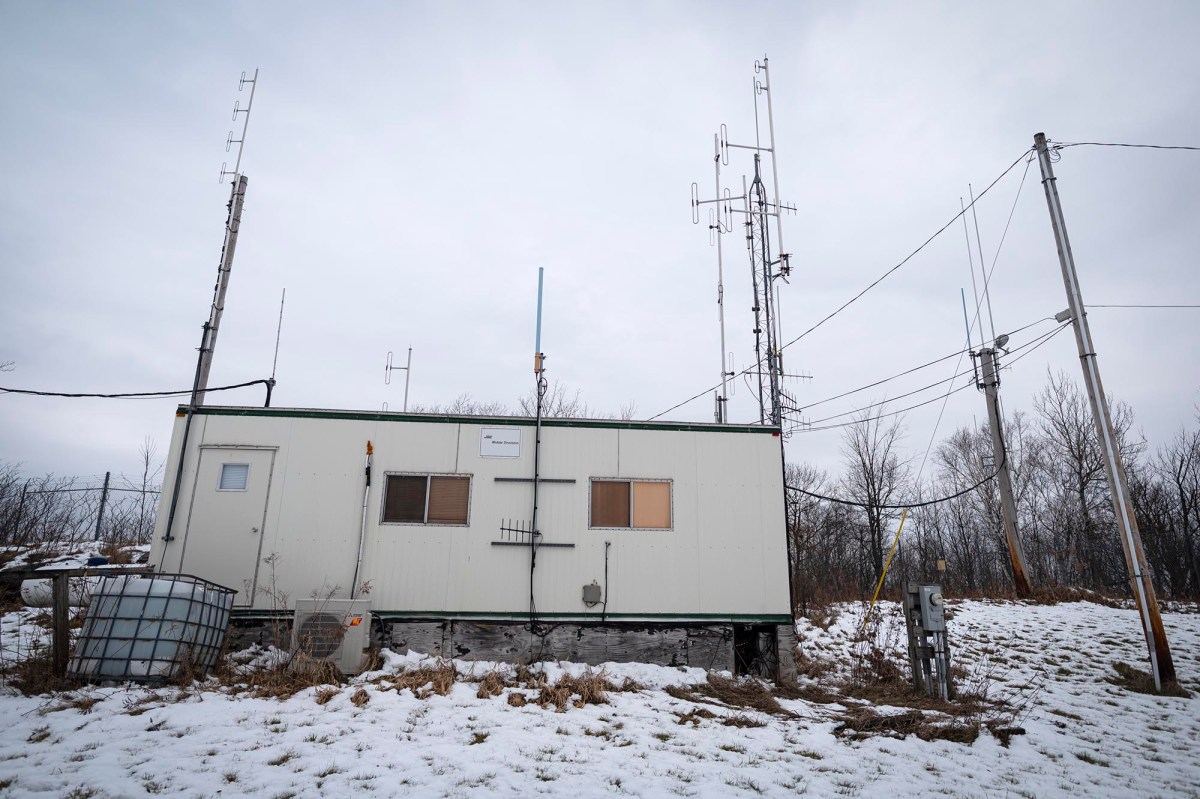
The trailer, designed to last about a decade, is now roughly 15 years old, the chief told local officials at a meeting in late October. And it is so poorly insulated that officers have to drive up to the facility multiple times a day during the summer to let in fresh air, he said. If they don’t, the equipment could overheat, bringing operations at the 911 call center to a halt.
“It’s that bad,” Lamothe said, equating the structure with the trailers used for temporary offices on construction sites. “And if it goes down, we’re done. I mean, we’re done.”
Even in the dead of winter, Lamothe said, the city has to run two heat pumps into the trailer just to keep it cool enough. The chief was adamant that the city — which owns the trailer and the equipment inside — has been able to keep the system functioning safely, but said it’s long been a challenge for his staff.
Lamothe flagged his concerns during a meeting with officials from the city and town of St. Albans, where they were discussing the proposed budget for a newly expanded police department that’s set to begin serving both communities next summer.
But while officials know the trailer needs to be upgraded or replaced, it’s unlikely that would happen for at least another year, said St. Albans City Manager Dominic Cloud. The city has other public safety initiatives it intends to prioritize — top among them, Cloud said, increasing the police department’s headcount before patrols begin in the town.
Operating the public safety answering point — as well as a regional dispatch network to connect the state’s 911 call centers with first responders — costs the city about $700,000 a year, according to Cloud. About $90,000 a year in state funding for the 911 system offsets some of this cost, he said, but the expenses fall largely to the city.

Statewide, two other municipal police agencies — Shelburne and Hartford — serve as public safety answering points, as does the Lamoille County Sheriff’s Department, according to state data. But in a majority of towns, 911 calls are routed primarily through call centers at the Williston or Westminster Vermont State Police barracks.
Vermont’s 911 call system has built-in redundancy, according to the state’s 911 board, meaning calls can be transferred to a different answering point to get a dispatcher on the phone more quickly — even if the call center is far from where an emergency happens. Lamothe noted that the St. Albans Police Department regularly fields 911 calls from southern Vermont communities, too.
One major hurdle to improving the infrastructure in St. Albans is that the city needs approval from the Federal Aviation Administration — which owns the property atop Bellevue Hill — to build anything new, Cloud said. The federal agency has stipulated that the city cannot build a permanent structure on the site, Cloud said, further limiting local officials’ options.
Locals are likely familiar with the large, white radar dome on Bellevue Hill, which sits just a stone’s throw away from the trailer and has long been used to track aircraft.
In response to a question, Lamothe said he doesn’t think it would be realistic for the city to relocate its 911 infrastructure, citing the cost and logistics of doing so. He noted, though, that the city wants to build any new public safety communications infrastructure elsewhere, starting with an ongoing project at nearby Georgia Mountain.
There, work is nearly complete on a new communications tower that will bolster the range of the city’s emergency dispatch network, which many first response agencies across Franklin County pay to access. The tower is located roughly in the middle of the four large wind turbines that span the Georgia Mountain ridgeline.
While 911 calls are routed through a public safety answering point, the dispatch network allows 911 call centers to communicate with first responders, such as local town fire departments, as they respond directly to local emergencies.
The chief said he hopes the tower will be up and running by the start of the new year.
“It’s such a better location,” Lamothe said in an interview. “What makes sense, to me, is to buy new equipment as we need it — and then put it at the tower.”
Correction: An earlier version of this story misstated the name of public safety answering points.
