

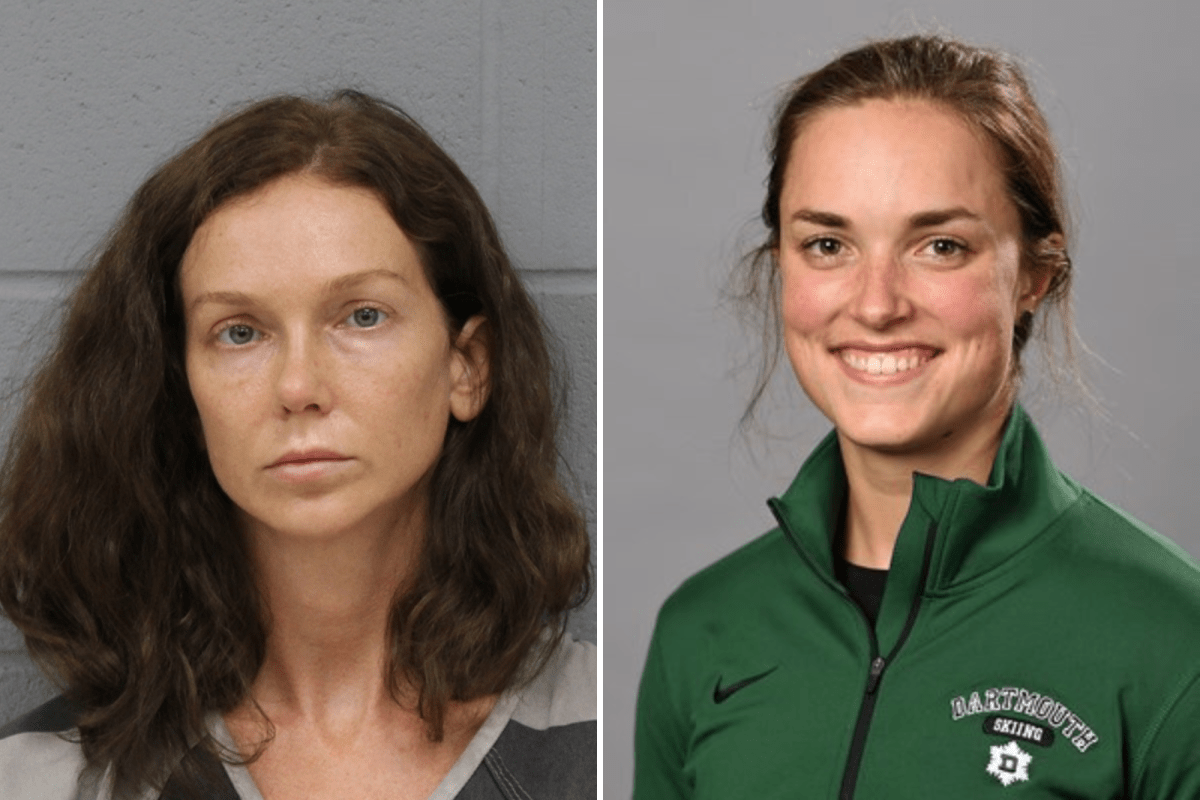
A Texas woman who prosecutors said was fueled by jealousy was convicted Thursday of first-degree murder in last year’s shooting death of a world-class cyclist from Vermont.
The jury began deliberations early Thursday afternoon and returned its verdict only hours later in a case that drew national attention.
Kaitlin Armstrong, 35, faces up to 99 years in prison when she is sentenced for the May 11, 2022, murder of 25-year-old Anna Moriah “Mo” Wilson of East Burke, a rising star in gravel and mountain cycling.
It was not immediately clear when Armstrong would be sentenced.
The judge in the two-week trial in Austin, Texas, limited video broadcasting of the proceedings to the opening and closing remarks and the verdict.
Prosecutors contended that Armstrong killed Wilson in an East Austin apartment out of romantic jealousy as both women were at one time involved with cyclist Colin Strickland.
Armstrong went on the run for more than 40 days after the slaying, according to prosecutors, eventually flying to Costa Rica using her sister’s passport to get out of the country.
In Costa Rica, investigators alleged, she spent more than $6,000 on plastic surgery to hide her true identity and had dyed her red hair brown. She was arrested on June 29, 2022, by the U.S. Marshals Services at a hostel on the western coast of Costa Rica, where she was leading yoga classes.
Closing arguments in the case took place earlier Thursday, as jurors heard from the competing attorneys that Armstrong was either a cold-blooded murderer who shot and killed Wilson or the victim of a slew of assumptions by investigators bent on pinning the death on her.
Travis County prosecutor Rick Jones began his closing argument Thursday by telling the jury that Armstrong shot Wilson three times, including shots to her face and head.
“And for good measure the defendant walked up to her and put another bullet right in the heart,” Jones told jurors.
He played audio captured from a nearby residence in which three gunshots can be heard as well as a woman’s screeching voice. “The last thing Mo Wilson did was scream in terror,” Jones told the jurors.
Rick Cofer, one of Armstrong’s attorneys, told jurors that the prosecution’s case lacked direct evidence and was built on assumptions and confirmation bias by inexperienced investigators who zeroed in on Armstrong right away to fit an “easy story” of a “spurned, jealous lover.”
He disputed that portrayal of his client by the prosecution, telling jurors, “She had to be portrayed as a jealous psycho to create the motive.”
Strickland testified that Armstrong was not a jealous girlfriend, Cofer said in his closing argument.
“Who brought up jealousy first? The Austin Police Department, Detective Richard Spitler,” Cofer said of an investigator in the case. “He first said that ‘J’ word because it was a great theory.”
The jurors, however, sided with the prosecution, returning their verdict just hours after they were sent off to deliberate.
Wilson was a graduate of Burke Mountain Academy, a top training school for elite ski racers, and went on to Dartmouth College in Hanover, New Hampshire, where she joined the ski team.
Wilson had also taken up mountain and gravel cycling and was a rising star in the sport.
Wilson, according to an Austin police affidavit, had a short relationship with Strickland, also a competitive cyclist. Strickland told police he and Armstrong were broken up at that time he was with Wilson, but had since gotten back together and were living in the same residence in Texas.
While in Texas for a cycling competition, Wilson went out swimming and dining with Strickland shortly before her death, according to the affidavit.
Police said they believed Armstrong’s vehicle arrived at the scene of the murder within minutes of Strickland dropping Wilson off at the East Austin apartment where she had been staying.
Shell casings from the scene of the shooting matched those from a test firing of a handgun that police said they later seized from Armstrong’s home. Also, DNA consistent with Armstrong’s was found on Wilson’s bicycle at the scene, according to the prosecution.
Jones also played for the jurors video footage taken about three weeks before the trial that he said showed Armstrong trying to flee from sheriff’s deputies who had taken her from the jail, where she has been held since her arrest, to an outside medical facility.
Jones said Armstrong wasn’t just running away from the officers.
“She’s running from you and you and you and you and you and you and you,” he said as pointed to the people in the jury box.
