


BENNINGTON — One evening in the fall of 2019, a man in his early 20s joined the Mission City Church’s weekly group meeting for people in recovery. The man, who came with his sponsor, had just left a drug rehabilitation center. He’d been treated for opioid use disorder.
He was on a good path but was worried his sobriety wouldn’t last because of his housing situation. He had nowhere to stay.
John Rogers, Mission City Church’s then-executive pastor in Bennington, remembers the man saying, “I’ve got to move back in with my brother, and he’s my dealer.”
The man wished he could instead move to a recovery residence — a group home for people who’ve just left rehab and are strengthening their sobriety before living on their own — but Bennington County didn’t have such housing. Rogers recalls the man saying that, if he lives with his brother, “I’m gonna use again … I’m gonna die.”
Rogers didn’t know anything about recovery residences then, but he was so affected by the man’s statement that he decided to start learning. In 2020, he joined the board of the Vermont Foundation of Recovery, which currently runs eight recovery homes around the state. He advocated for opening a recovery residence in Bennington.
Now, a national historic property in downtown Bennington is being transformed into a recovery residence for women — which will be the county’s first recovery housing, according to the Turning Point recovery center in Bennington. It will become the Vermont Foundation of Recovery’s ninth site, expected to open by the summer of 2024.
“This is, really, giving them a foundation of how to live sober,” said Ralph Bennett, a Turning Point Center recovery coach \who is also coordinating the construction of a separate men’s recovery residence in Bennington. “Housing is the missing piece.”
The recovery residences closest to Bennington right now are in Rutland, Brattleboro and Springfield, at least an hour away. But besides the problem of distance, advocates say there currently aren’t enough recovery housing beds to meet demand.
The Vermont Foundation of Recovery has residences in St. Albans, Essex Junction, Morrisville, St. Johnsbury, Rutland and Barre, which can accommodate a combined 56 men and women. But the organization’s leaders say they usually have 30 to 40 prescreened people on their waiting list.
Squire House, a two-and-a-half story house on Bennington’s North Street, will become the local women’s recovery residence. The Vermont Foundation of Recovery will run the home’s programming. It will be leasing the building from Shires Housing, a local nonprofit housing developer, which purchased the property in May 2022 as part of its collaboration with the recovery residence operator.
“It’s such a proven tool in the toolbox to support folks in recovery to maintain their sobriety,” said Cat Bryars, executive director of Shires Housing.
She said the project has received funding support from the state and federal governments, private foundations, the Preservation Trust of Vermont and members of the local community.
Squire House, constructed around 1887 in the Queen Anne architectural style, was last used as office space several years ago. The building’s main sections have now been redesigned to house up to six women in single- or double-occupancy bedrooms. The residents will share a kitchen, dining room, living room/meeting room and several bathrooms.
In addition to the group home, Shires Housing is also repurposing a smaller section of the building into two apartments. Those units are meant for residents who are farther along in their sobriety and want to live with their children.

“Maybe one of their goals is, ‘I want to get custody back of my child,’” Rogers said. “We’ll be able to accommodate that.”
The project planners specifically sought a property downtown so residents will be close to service providers, such as the hospital, recovery center and fitness centers. The central location is also crucial to residents who don’t have vehicles.
The residence, which will be run by a house manager, will have a substance-free policy. Mission City Church is organizing groups of volunteers to offer support to incoming residents. Residents are expected to stay there for approximately a year while contributing a portion of their income to the household.
These financial contributions help prepare residents for successfully living on their own once their program ends, said Melissa Riegel-Garrett, a board member of the Vermont Foundation of Recovery. People who are not yet working will do volunteer work.
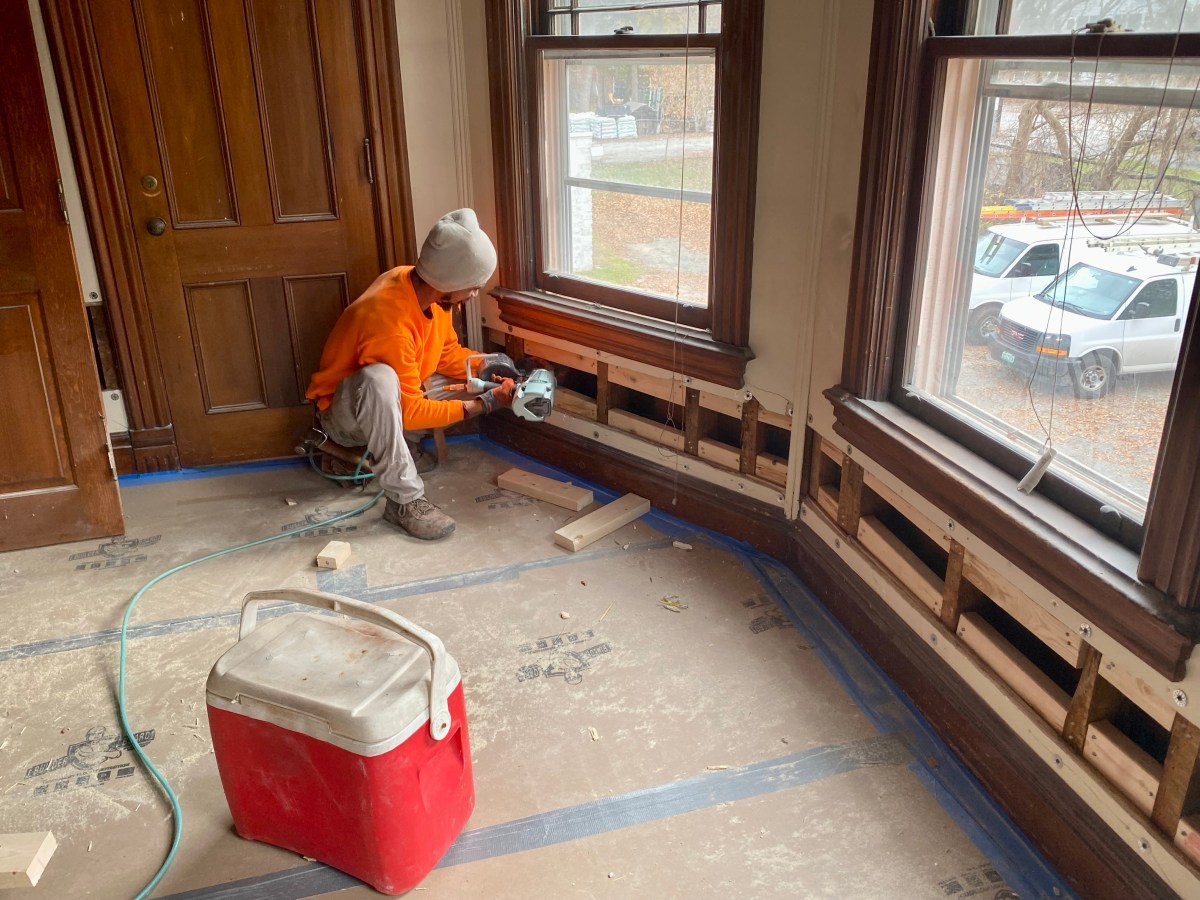
On Monday morning, construction workers were about a month into the renovation, which is expected to wrap up next May. They’ve begun sectioning off the main rooms, fixing up old walls and adding electrical wiring while maintaining the building’s historic character.
Original features of the house, such as the woodwork and ceiling design, speak to its lavish origins as the home of Frederick Squire, an influential entrepreneur in 19th-century Bennington.
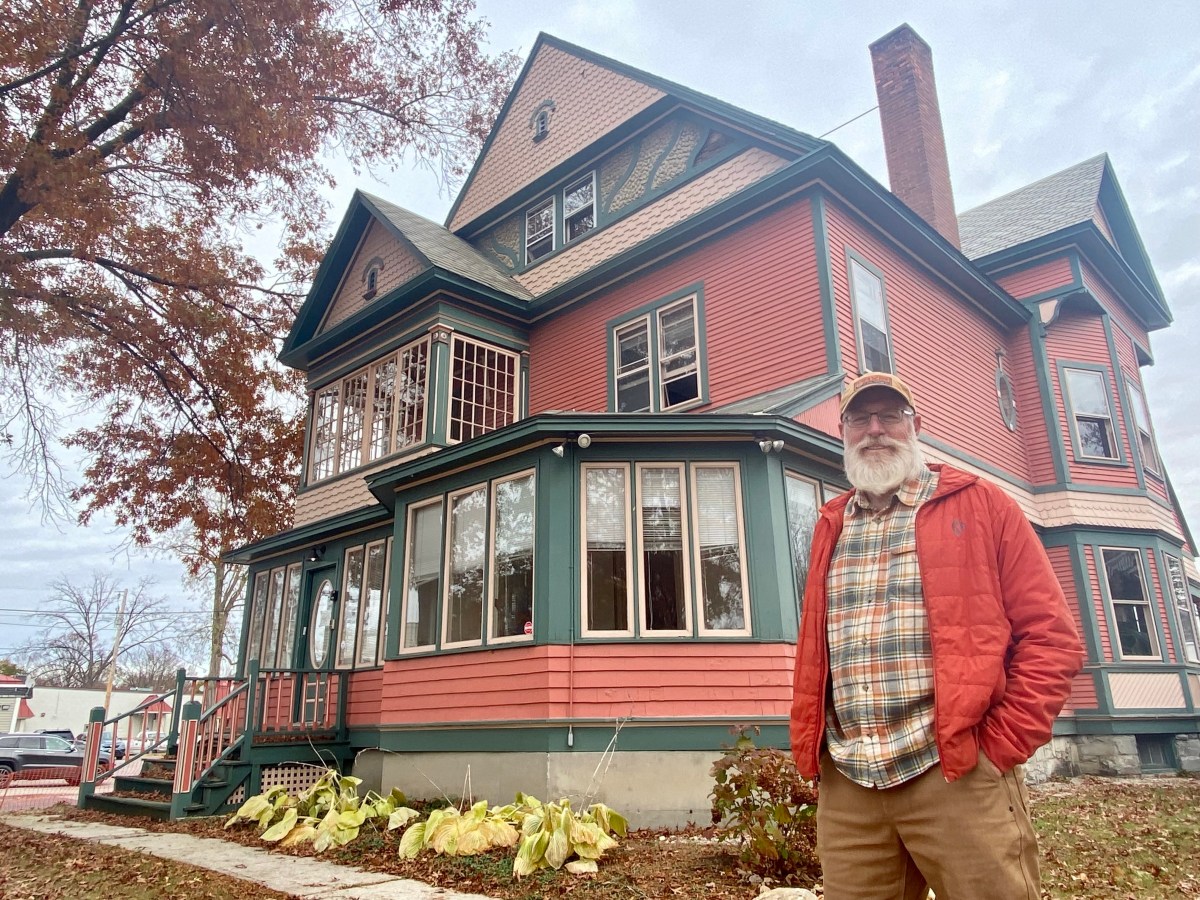
Rogers suggested Squire House as the site for the women’s home because he said its character alone can communicate to people in recovery that they’re worth the fight to overcome addiction and rebuild their lives.
“Their self-worth is really low. Everyone’s telling them they’re addicts and not worth anything, and they start to believe it,” Rogers explained during a tour of the building. “So you give them a home and a dignified space, and even just the environment says, ‘You’re of value.’”
