

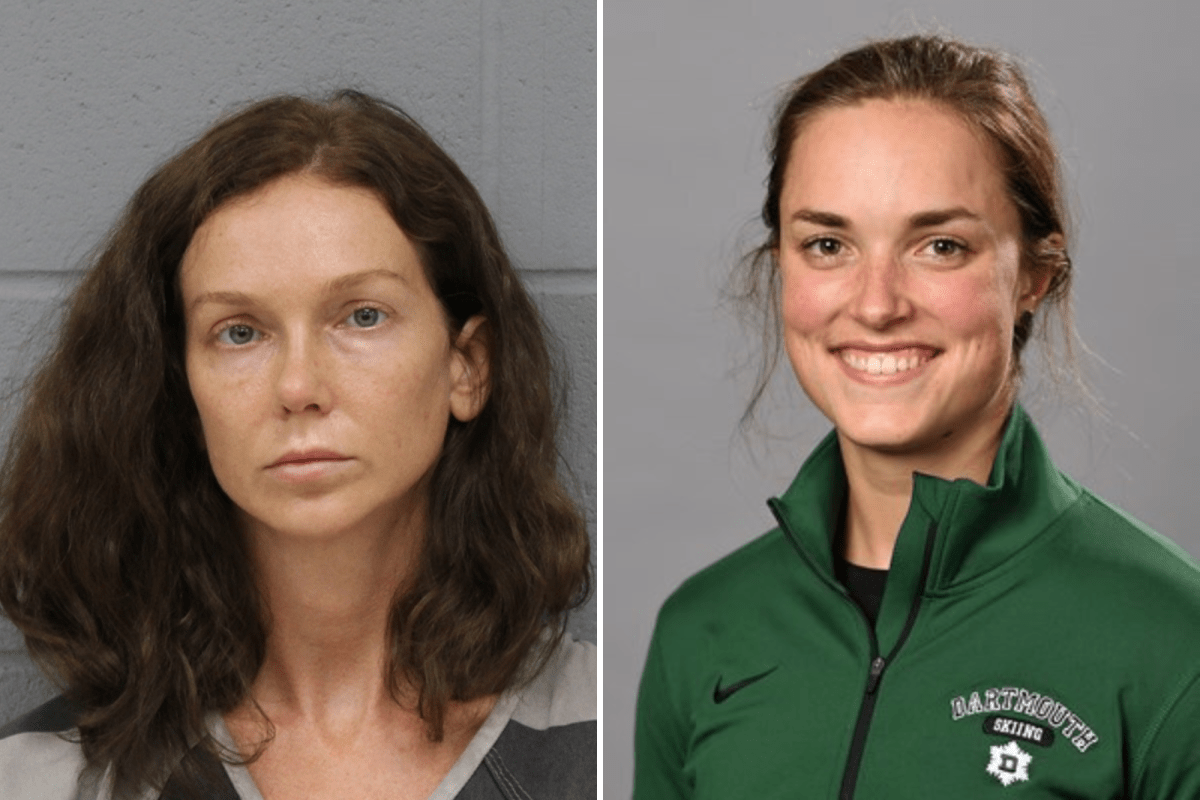
A trial in the murder of Anna Moriah “Mo” Wilson, a 25-year old Vermonter and star cyclist, began in Texas on Wednesday morning.
Kaitlin Armstrong is accused of murdering Wilson out of romantic jealousy on May 11, 2022. Both women were at one time involved with fellow cyclist Colin Strickland, according to investigators.
Local police reported that Wilson had been shot and killed in an East Austin apartment on the evening of May 11. Surveillance cameras captured Armstrong’s black Jeep circling the property leading up to the slaying, according to police.
Following Wilson’s killing, Armstrong went on the run for more than 40 days, first flying to New York City before using her sister’s passport to fly to Costa Rica, according to Texas prosecutors. While there, Armstrong spent more than $6,000 on plastic surgery in an attempt to conceal her identity, investigators said.
On June 29, 2022, Armstrong was arrested at a hostel on Santa Teresa Beach in Provincia de Puntarenas on the western coast of Costa Rica, the U.S. Marshals Service announced at the time.
On Wednesday, Travis County prosecutor Rickey Jones began his opening statement by noting the cycling achievements of Wilson, who grew up in East Burke and skied at Dartmouth College.
“She got into a sport called gravel racing, and in three short years, she became one of the best in the world at it,” Jones said.
Wilson had arrived in Austin, Texas, for a nearby gravel race, and had met up with Strickland while in town, Jones said. In the hours before her death, Wilson had been out swimming and dining with Strickland, he said.
The prosecution laid out its plan for the trial, including presenting a timeline of Armstrong’s whereabouts, the forensic and GPS evidence it plans to introduce, and the witnesses to help support its case.
In his opening remarks, defense attorney Geoffrey Puryear focused on the concept of “reasonable doubt,” which is the state’s burden of proof, saying evidence in the case was circumstantial.
“Why are we here?” Puryear posed, addressing the jury. “You heard the state say this is an open-and-shut case.”
But no witnesses saw Armstrong commit the murder, and the state’s reliance on DNA and ballistic evidence was less than absolute, Puryear said.
“Ballistic science isn’t a science at all,” he said.
Jones issued frequent objections to the defense’s remarks, directing his requests to the judge.
“Judge, every time you sustain, he gets up and says the same thing,” Jones said.
The judge in the case has allowed video broadcasting only of the opening and closing remarks, as well as the verdict. The trial is expected to last through mid-November.
While in prison awaiting her first-degree murder trial, Armstrong recently attempted to escape custody, according to media reports. She has been charged with felony escape in that case.
