


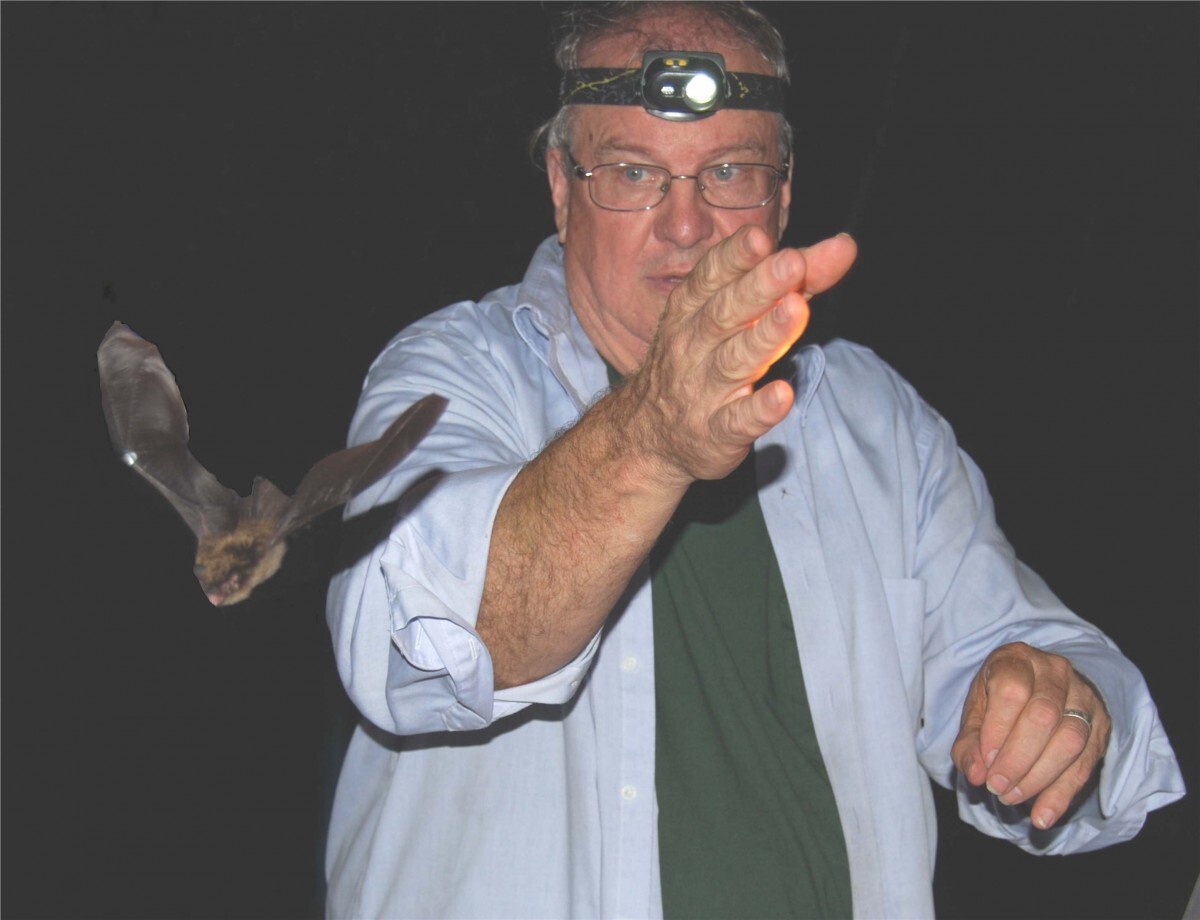
When Bill Kilpatrick completed his doctorate in zoology back in 1973, the Texan was not at all interested in finding a job east of the Mississippi.
As luck would have it, he landed a job as a professor at the University of Vermont the following year. Astonished to find that the area was not “wall-to-wall concrete,” as he initially presumed, Kilpatrick has called Vermont his home for almost 50 years.
A professor of biology at the university until his retirement in 2017, Kilpatrick has researched and stewarded Vermont’s wildlife, especially small mammals — his specialty.
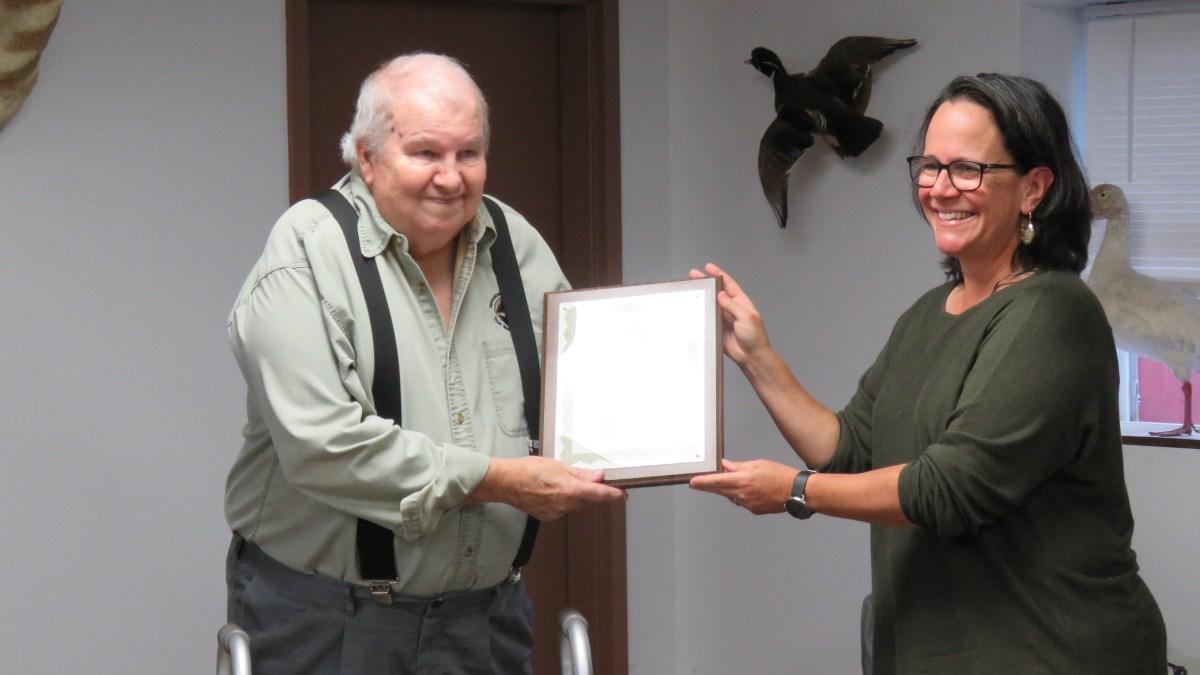
He was honored this month by the Agency of Natural Resources as a leader in preserving Vermont’s imperiled wildlife with the Sally Laughlin Award for the Conservation of Endangered and Threatened Species.
“Bill is one of Vermont’s most accomplished mammalogists,” agency Secretary Julie Moore said while presenting the award. “He’s also been essential to many of the wildlife conservation efforts here in the state.”
Kilpatrick told VTDigger the award meant a lot and that he really didn’t expect the kind words that were said at its presentation.
“I was taken off my feet to see that Secretary Moore was actually there to give the presentation,” he said. “And I was also really taken aback to see that a lot of people I have worked with from the Department (of Fish and Wildlife) were there.”
As a longtime researcher, Kilpatrick used forensic techniques — primarily DNA analysis — to study the populations of various species in a region, where they live and how closely they interact with other genetically similar species. His research also examined the amount of genetic diversity within a given species — the less genetic variability a particular species has, the less able they are to adapt to a changing environment.
In Vermont, Kilpatrick researched, taught and testified about species such as fishers, bobcats, star-nosed moles, spruce grouse and white-tailed deers. He also was the driving force behind Vermont’s first catalog of small mammals, Moore said, “many of which were largely a mystery before his research.”
That statewide survey of small mammals (who weigh less than 1.1 pounds) took place in 2011. Kilpatrick, a member of the Mammal Advisory Group for the state’s Endangered Species Committee since 1982 — and its chair since 1989 — suggested to his colleagues there that a survey be done, since none existed.
The study’s goal was to learn more about the distribution of the 23 small land mammals in the state. Among five rare species of small mammals, the survey found 19 populations of those animals that were previously unknown.
While Kilpatrick was most recently honored for his work in Vermont, he is more widely known in the scientific community for his research across the world, including in Pakistan, Iran, Mexico, Central America, Cuba and the West Indies. According to Kilpatrick, it’s much easier to get funding for understudied areas and understudied animals.
In the mountainous regions of Michoacán, Mexico, a mouse is named after him: Kilpatrick’s Deer Mouse. When he and a group of scientists were doing fieldwork in Mexico, they noticed that one particular mouse seemed to be different. When the DNA sequencing came back, it turned out to be a unique species.
“They did the great honor of naming this mouse after me,” Kilpatrick said. “For biologists, this is the greatest honor you can have. We say that it’s a greater honor to see your name in italics than it is to see your name in lights.”

However, Kilpatrick said that the scientific community is likely most impressed with his work on the discovery of the Laotian rock rat in 2005. When the rat — sometimes called the “rat-squirrel” — was first discovered, Kilpatrick and his colleagues on the project believed it was not only a new genus and species, but also a new family. However, it turned out the family did already exist, but only in the fossil record. The family was thought to have been extinct for about 52,000 years, Kilpatrick said.
“It was kind of like (finding) a living fossil,” he said. “That was a pretty important discovery.”
Despite being retired and recovering from some health problems, Kilpatrick is still reviewing and consulting with his former graduate students who are working with his colleagues in foreign countries.
“It’s hard to quit,” he said. “The work goes on.”
Endangered species conservation is important for reasons scientists still don’t even understand, Kilpatrick said.
“If one cog in the system begins to fail, then the whole system begins to fail,” he said. “That’s now one of the indicators of a failing ecosystem — when the biodiversity begins to fail.”
“I hope people open up their eyes because we need to deal with the problems of what we’re doing to the Earth now,” he said. “It’s only going to cost more later — if we can do anything later.”
This is something he has seen throughout his work over the years.
“In many many countries, in returning to them, they have been totally destroyed by man,” Kilpatrick said. “The habitat is just totally deforested.”
For Vermont’s endangered mammals over the past 50 years, however, Kilpatrick said “it’s been a pretty good story.”
Animals that he’s studied in the state have bounced back, such as pine martens’ successful reintroduction and endangered bats recovering well from white-nose syndrome.
“Most of the mammals that have been listed as endangered species have done well,” he said.
