


WESTON — Ask visitors what drew them to this picturesque yet off-the-beaten-path town of 623 people and most point to the Vermont Country Store, the nationally known emporium of nostalgic notions, lotions and potions.
Pose the same question to residents and they’ll cite a less exalted yet more essential staple: The Weston Marketplace grocery and gas stop just down the road.
“That is a fundamental part of the soul of our town,” selectboard member Jim Linville said at a meeting this month.
And that could be a problem for its owner, who’s simultaneously working to reopen the business after summer flooding while weighing a potential Vermont Emergency Management payment to raze it.
The storefront has operated for some 75 years at the spot where Main Street morphs into Route 100, just across from the Walker Farm that hosts the Weston Theater Company’s $6.3 million second stage.
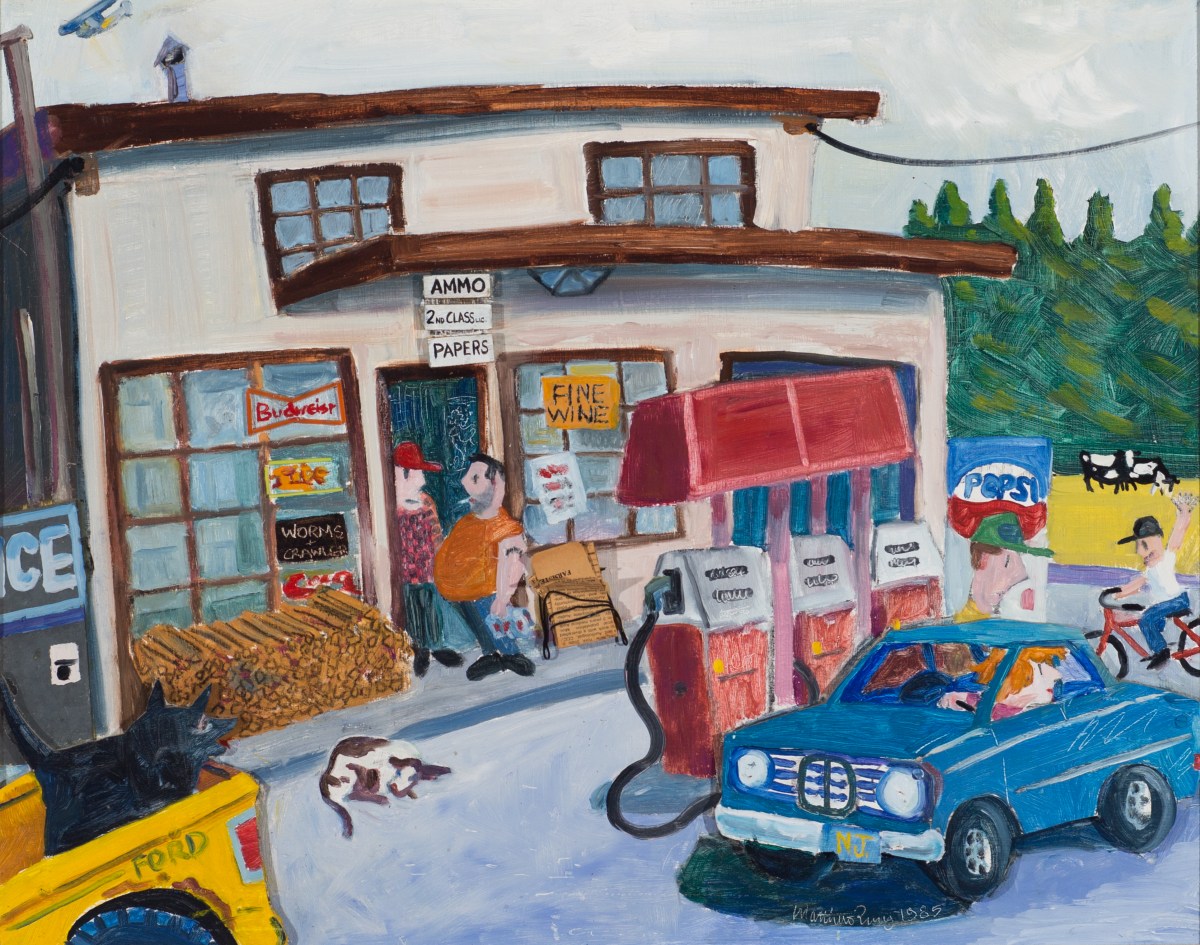
Artist Matthew Perry immortalized what once was Benson’s Garage in a 1985 painting that’s part of the current “For the Love of Vermont: The Lyman Orton Collection” exhibit at the Bennington Museum.
“I loved its signs,” said Orton, owner of the nearby Vermont Country Store. “You could buy ‘ammo,’ ‘worms’ and ‘fine wine.’ Not just wine, but ‘fine wine.’”
Current operator Mehul Dholakia — whose family also runs the Masala Corner Indian restaurant in nearby Rutland — purchased the property in the fall of 2019, adding curry and kebabs to its convenience-store fare.
“Indian food is the No. 2 seller, after gas,” Dholakia said in an interview.
The Marketplace survived a sales slump during the Covid-19 pandemic. Then the nearby West River swelled and spilled inside during record rains this past July.
“The water was deep enough to pick up huge freezers and float them around,” Dholakia said. “It took everything along with it and created a huge mess.”
Nearly four months later, Dholakia is aiming to reopen the gas pumps in the next several weeks and the grocery aisles soon after. At the same time, he’s exploring a flood buyout program run by Vermont Emergency Management.
“I want to keep all my options open,” he said. “Insurance is going to keep going up, and at some point you won’t have it. They’re not going to keep paying you to rebuild.”
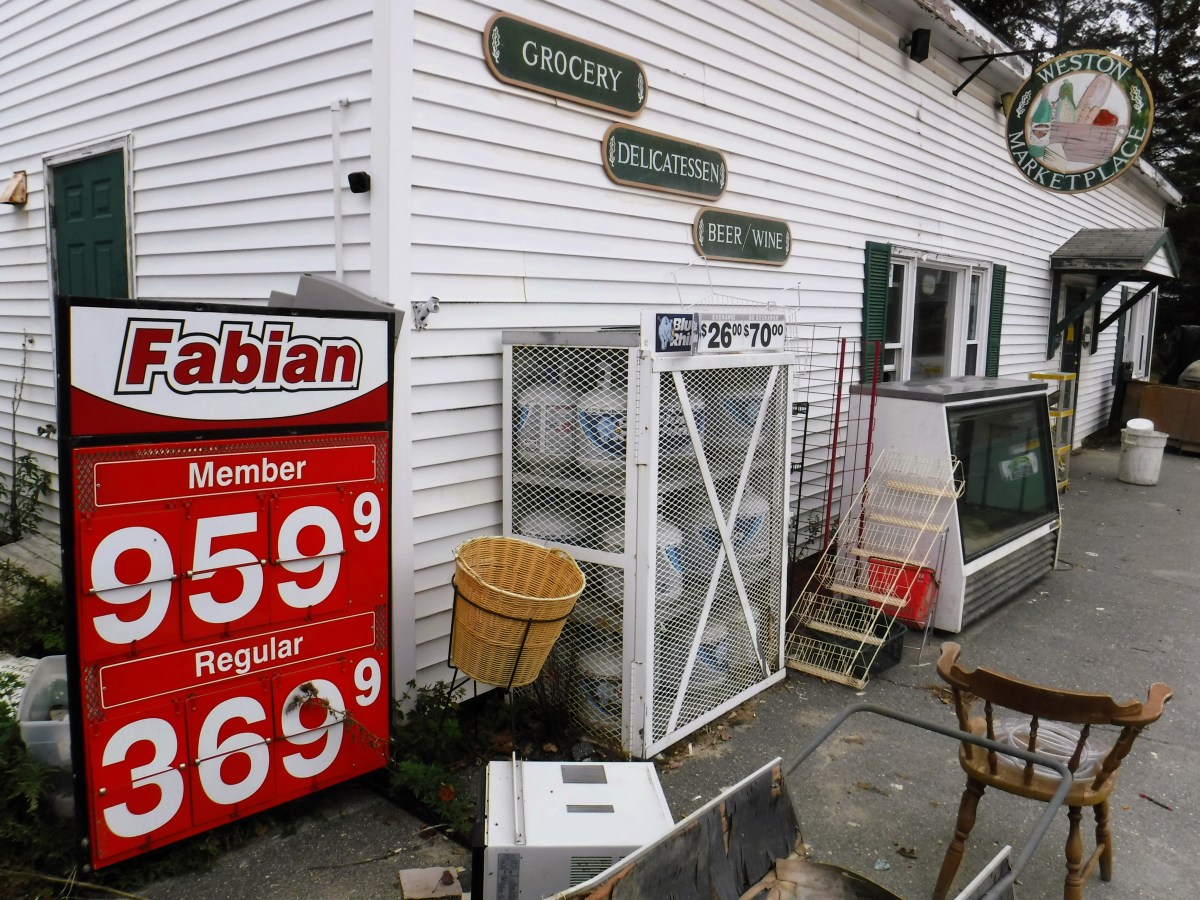
Weston’s five-person selectboard, which must sign-off on a buyout application, expressed empathy at a recent meeting. But members also voiced concern that properties approved for the program must be razed and the property reclaimed as floodplain.
“If we support the buyout, then that piece of land gets cleared and that’s it — it never gets developed again,” Linville said.
Finding another property to put in replacement fuel tanks and pave over for parking would be a challenge in a town that centers on a green created nearly a century and a half ago as part of a special act of the state Legislature.
“I just want to make sure that, if we’re going to support this thing, we go in eyes wide open,” Linville said of a buyout.
As a result, the selectboard has voted to review its section of the paperwork but reserve the right to make a final decision at a later date.
“The stakes of starting this application process are pretty low,” Linville said, “because we can get out of it.”
Dholakia, for his part, is left with more questions than answers.
“I understand their problem, but do they understand my problem?” he said. “Is it going to rain tomorrow and flood again? What’s the recourse? Build the Great Wall of China? Seriously, what do you do? That’s the predicament.”
