

This story by Frances Mize was first published by the Valley News on Oct. 23.
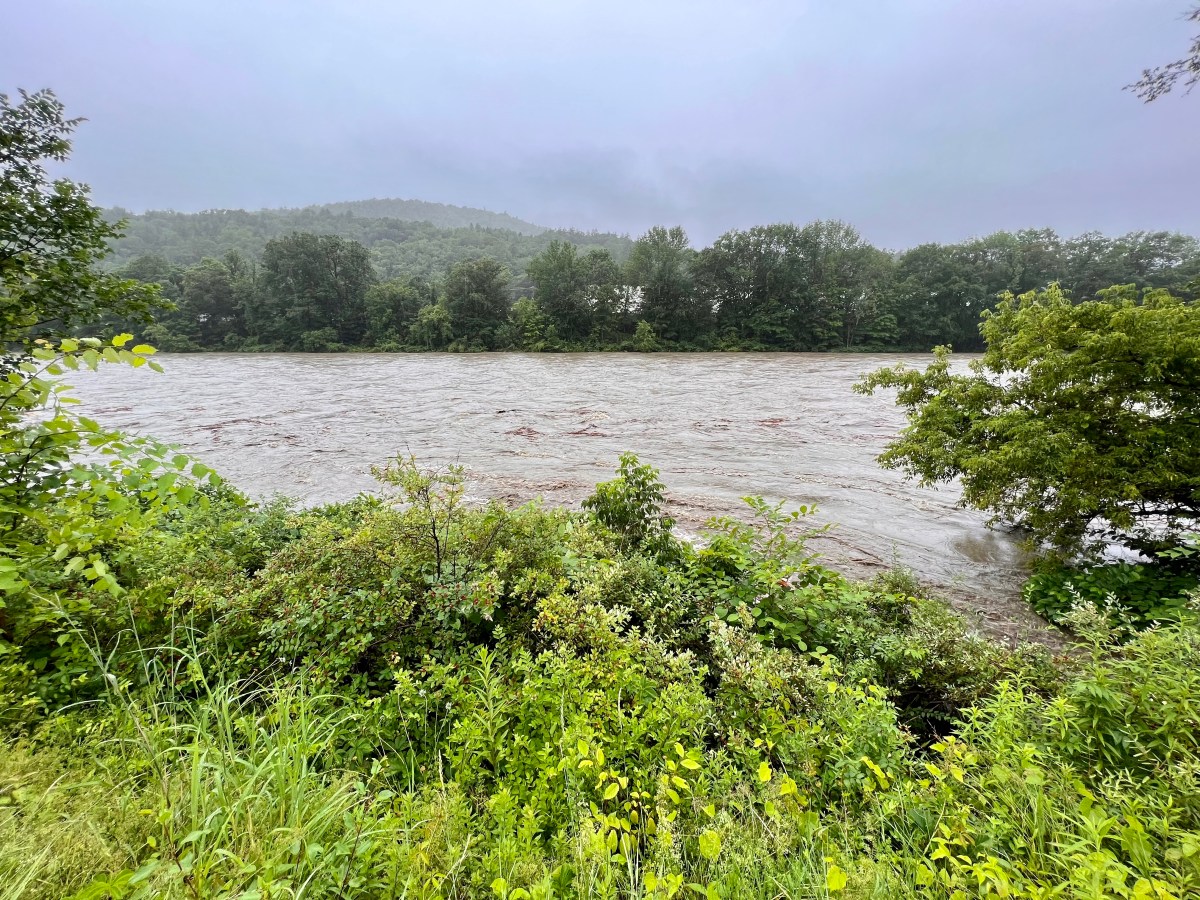
HARTFORD — As parts of the White River jumped the banks during heavy rains in early July, two neighboring tracts of empty land on Route 14 near the Hartford-Sharon town line flooded without much incident.
That’s because when Tropical Storm Irene battered the Upper Valley in 2011, the swollen river destroyed two homes at the site. They were never rebuilt.
The properties are among nine plots of land that were acquired by the town through the Federal Emergency Management Agency’s buyout program after Irene.
“In Irene, we had people who just abandoned their house,” said Kevin Geiger, planning director at the Two-Rivers Ottauquechee Regional Commission. “They walked into town hall and left their key.”
Geiger helped see through buyouts on a few sites that are “now essentially riverbed,” he said. “It’s hard to even remember where the house was.”
A longstanding federal floodplain buyout program acquires and demolishes parcels on land at risk of flooding. The property is purchased from the owner with FEMA money and transferred to the town, a land trust or another nonprofit.
The effort is meant to prevent further property damage and to relieve FEMA of future insurance payouts on properties in flood zones.
It also keeps floodplains operating like they should. Water that’s not flowing out onto permeable, receiving land becomes deeper and hungrier and more likely to damage communities downstream. Around 160 buyouts were completed across the state after Irene.
With the flooding in July, the Vermont Hazard Mitigation program has received interest from 200 property owners for buyouts, Geiger said.
The process this go-around will look different than it did 12 years ago. Created in 2021, a buyout program in Vermont, which earlier this year got a cash infusion from the state’s Legislature, is meant to implement lessons learned from Irene and ameliorate what many say can be a lengthy and frustrating undertaking.
With this recent round of interest, the new state buyout will be stress-tested alongside the standard FEMA buyouts.
After Irene, challenges of the federal program became clear as property owners navigated red tape.
The process takes an average of five years, according to a study by the National Resource Defense Council, and the administrative burden of doing gymnastics with government dollars quickly can become overwhelming for property owners and town officials.
“This is what I do as part of my job, dealing with technical issues and procedures that take a long time to go through,” said Lori Hirshfield, Hartford’s director of planning and development.
For an individual property owner who has just lost their home, it can be a huge commitment of time and resources, with hardly any immediate payoff.
“You don’t get money until buyouts go through,” Hirshfield said. “It can be two, three years later, and people are still trying to balance their books.”
After Irene, there were over 100 property owners in Hartford considered entering the program, Hirshfield said. Ultimately, only nine buyouts went through. Some dropped out because they didn’t qualify; others grew weary of the arduous process.
And as property owners wait for their land to be taken off their hands, sometimes they must continue to pay taxes or mortgages on homes that are often unlivable. Banks and towns can also agree to pause payments, but there’s no requirement that they do so.
When those supports aren’t activated, economic barriers to entry into the program remain high, said Geiger, of the regional planning commission.
For some who received the entire value of their home through the buyout, the money still wasn’t enough to relocate in the community where they lived.
It’s one of the “black holes” of the process, Geiger said.
The process should focus on keeping the people around who are bought-out, particularly when the pre-flood value of their house doesn’t stretch as far as it once did, he said.
‘Cash flow’
The state’s own buyout program, started in the wake of Irene, is designed to amend some of those issues.
Using American Rescue Plan Act funding, the state created the Flood Resilient Community Fund to bankroll “proactive, rather than reactive” buyouts, said Mary Russ, executive director of the White River Partnership, a Royalton-based nonprofit that invests in the health of the White River and its watershed
The Vermont Legislature invested nearly $15 million this year to expand the program, which is meant to “bridge the gap” left by federal buyouts, Russ said.
The federal buyout program operates based on a real estate appraisal. Many people who live along rivers do so because the land there is typically less-expensive, she said: “If you have a trailer on a quarter-acre valued at $50,000, you often can’t take $50,000 and relocate in your same town.”
To address that, the Vermont fund tries to purchase buyouts at 120% of the value of the property. Additionally, the state program doesn’t require buyout properties to be in federally defined flood zones, as the FEMA program does.
The state also recently launched a pilot program to take some burden off a town’s employees, who must navigate paperwork and manage land after it has been removed from the tax rolls.
As West Fairlee maneuvers through the buyout process, they’ve agreed to a pilot program in which the state receives the federal buyout money and then distributes it to towns, said Delsie Hoyt, chairwoman of the town’s Selectboard.
That leaves the responsibility of contracting and reimbursement with the state, Hoyt said. Alleviating the burdens of paperwork makes it “easier for towns to say, ‘We’ll facilitate this, however we can,’ ” she said. “It seems like they’ve tried to work out ways to have the cash flow, as long as your paperwork is up to snuff.”
There weren’t buyouts in West Fairlee after Irene, but two property owners have shown interest since the flooding in July, Hoyt said.
“I think it’s a good option for some people,” she said. If a home is someone’s primary asset, “brook is lapping at the footing of their building … the value of that piece of property is plummeting.”
Anything that makes the buyout program more feasible for both private property owners and towns is a win, Geiger said.
