


PLYMOUTH — Brian Studley drove more than a thousand miles this summer to take his 91-year-old mom to Camp Plymouth. The Studleys, who live in Newnan, Georgia, had been looking forward to hiking, sightseeing and relaxing in the southern Vermont state park for a week in July.
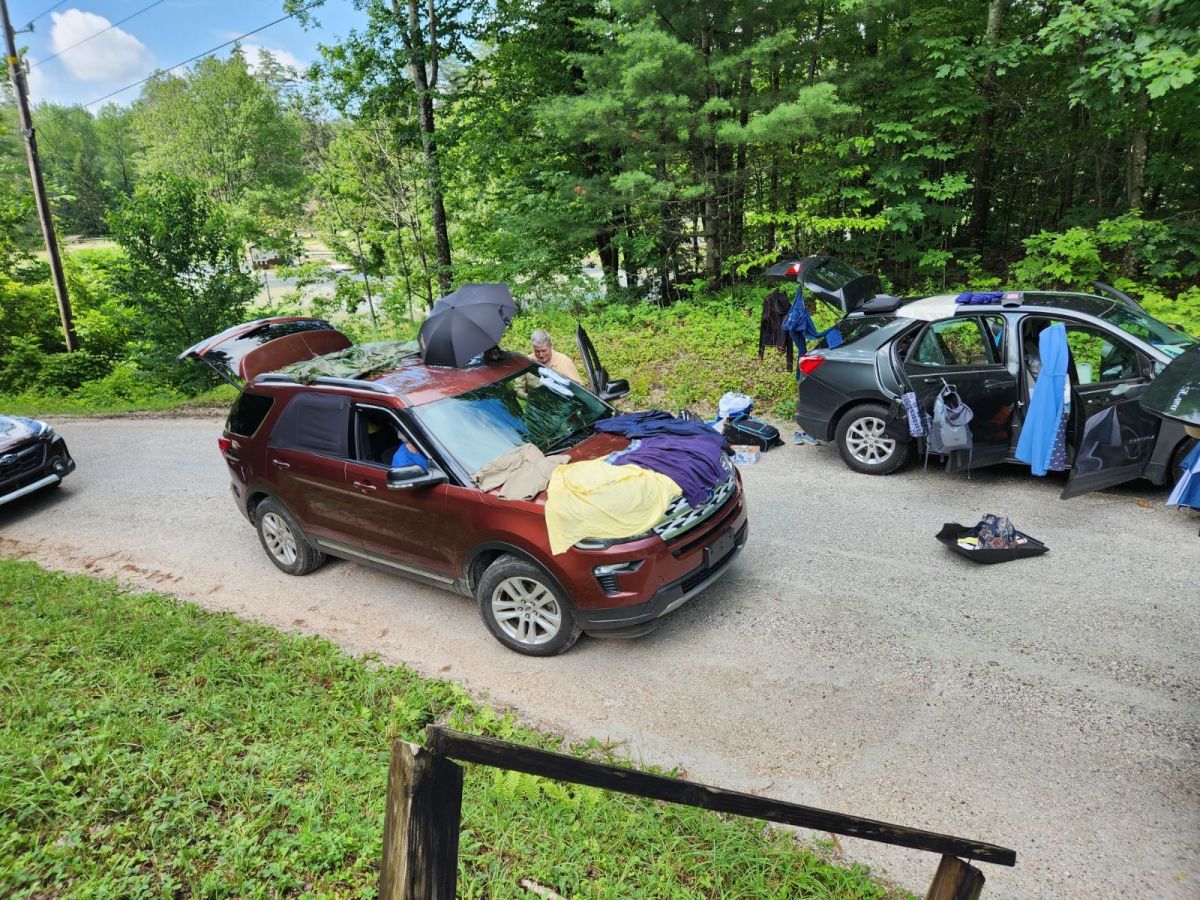
Then came the Great Vermont Flood of July 10-11, 2023, as the National Weather Service calls it. On July 10, their third night at the park, the Studleys had to shelter in their SUV — sitting on a hill by an old cemetery — as floodwaters rose around them.
Parked beside them were vehicles carrying four other park guests and the two camp managers. Altogether, 12 people were stuck at Camp Plymouth that night, watching the floodwaters climb up to 4 feet in some areas.
As Brian Studley’s mom, Patricia Studley, tried to sleep sitting up in their vehicle, he gauged whether he needed to ask emergency responders to send a helicopter to evacuate the group.
“They couldn’t get to us through boat, and they couldn’t get to us on land, so we were kind of just stuck there,” said Brian Studley, 62, “and the water levels continued to rise.”
The statewide storm, which started in the early morning hours of July 10, dumped up to 9 inches of rain in Plymouth within a 36-hour period. The ensuing flash floods caused $3.36 million in damage to town roads and bridges, according to local officials.
In Ludlow, the town that borders Camp Plymouth (and bears its mailing address), the storm led to a massive mudslide downtown; damaged homes, businesses, roads and bridges; and temporarily turned the town center into an island.
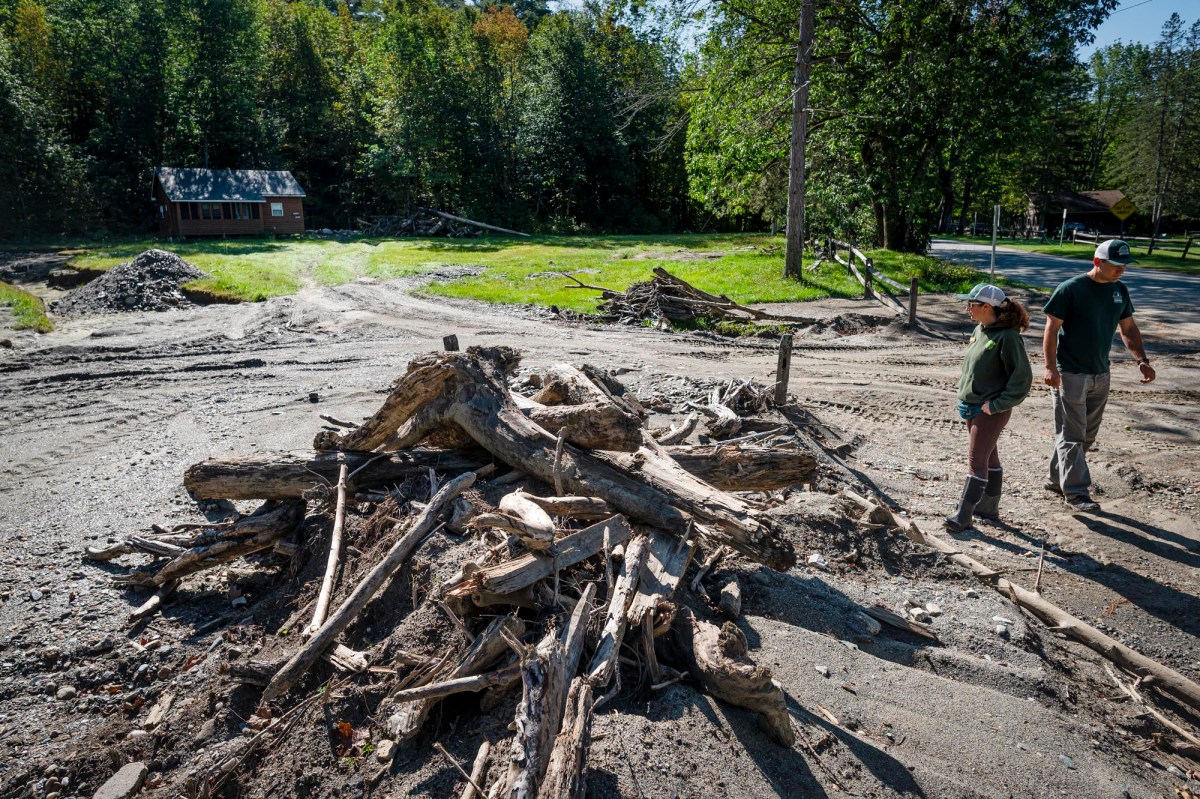
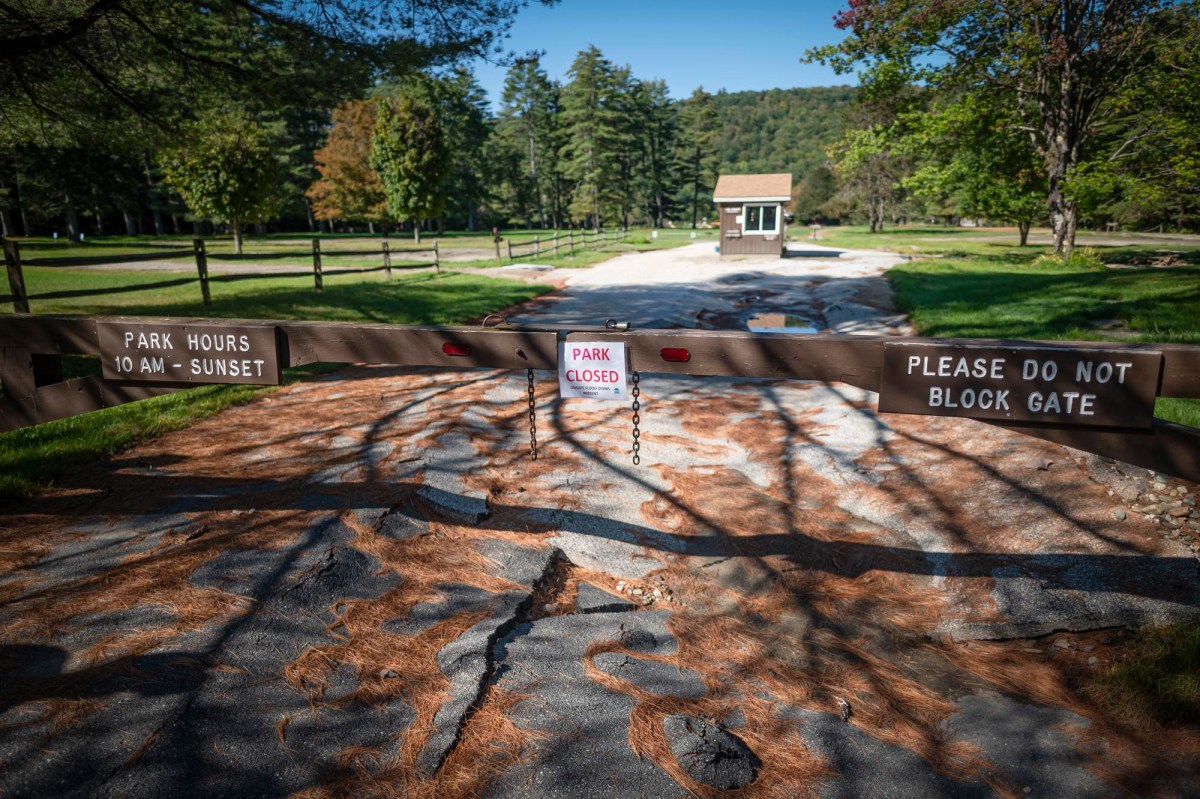
VTDigger previously reported that the July flooding caused more damage at Camp Plymouth than at any other Vermont state park, and after the waters receded, state park officials closed it down for the remainder of the 2023 season. But what’s less known is that the park itself became an island, where a dozen people and three dogs remained in limbo for nearly 30 hours during the deluge.
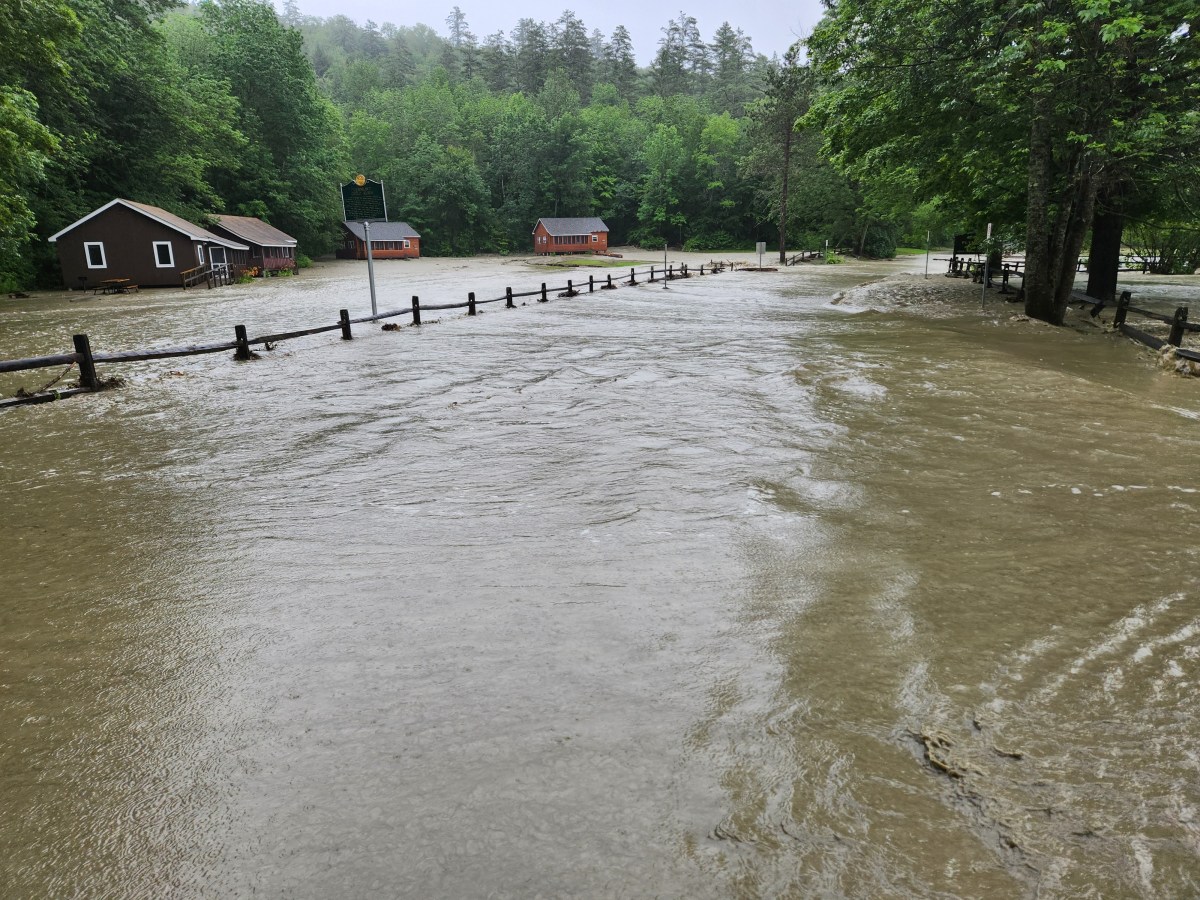
Camp Plymouth’s famed Echo Lake, on the eastern side of the park, and Buffalo Brook, which runs across the western side, both jumped their banks during the storm. By 4 p.m. on July 10, water engulfed almost the entire park, including the beach, the adjacent picnic area and playground, the parking lots, the cottage area and camping sites, the roads and bridges.
Buffalo Brook, which Camp Manager Chris Brader said is normally a trickling stream, became a raging force. He recounted seeing logs of up to 30 feet long zipping through the brook and hearing boulders crashing all day long.
“I’ll never forget it,” Brader, 41, said. “You’re just hearing this churning and scraping and roaring this whole time.”
Camp Manager Tiffany Soukup, Brader’s wife, noticed the brook rising fast around 6 a.m. on July 10. To keep people safe from the rising waters and any flood-borne objects that could injure them, the camp managers immediately directed everyone to move toward the cemetery.
Kim Plawecki Brown, a Florida resident who had met up with the Studleys the previous night, said she woke up to the sound of Soukup banging on the door.
“Move your cars now. There’s water everywhere,“ Brown, 62, quoted Soukup as saying. “She was in a hurry-up, semi-panicked mode.”
The camp managers made the first of a series of 911 calls at 7 a.m., telling emergency personnel that the storm had stranded several people inside Camp Plymouth. Local officials encouraged them to stay put as long as they were safe, since things weren’t much better in the surrounding towns.
“If you guys are safe, don’t worry. Stay where you are,” Brader said a Ludlow police officer told him. “There’s nothing we can do for you right now.”
Seven emergency responders reached the park on foot around 1 p.m. and gave the group the same assessment: Stay in place. They said the roads were still impassable, and it had taken them nearly two hours to walk a few miles into the park.
Early that evening, the four volunteer camp staffers drove their trucks to a hill just outside the park. The flood had already washed out one lane of the bridge that brought people to and from the park. The group thought positioning some vehicles past the bridge would be wise.
“It kind of gave us some options … if the bridge collapsed all the way,” Soukup, 40, said. She and Brader have worked as camp managers at multiple Vermont state parks for 12 years.
Georgette Ford, a South Dakota resident who volunteered at Camp Plymouth with her husband John, said she felt safer on the hill outside the park. It was on higher ground and farther from Echo Lake.
“I was worried watching the water rise on that little hill,” Ford, 53, said. “I was concerned that we’d be crawling up the cemetery on the hill in the middle of the night.”
The visitors and staffers stranded in the park at least had the basic necessities. They had enough food and water; in fact, they had a pizza dinner. They also were able to keep abreast of news, thanks to cellphone service and the park’s wireless internet.
But at 9:30 p.m., they lost electricity when a tree around the corner from the cemetery fell on some power lines, severing the electrical wires. “They were sparking, hitting the water and ground near us,” Brown said. “Had to stay in the car until power was completely shut down.”
Patricia Studley had seen a lot in her 91 years, but said she felt a little nervous about being stranded at the park.
“Scariest was wondering how far that water was going to come up and whether we’re gonna get caught in there,” she said. “Aside from that, I just went along with the flow.”
The following day, around 10:30 a.m., once the floodwaters began to recede, the group of 12 drove out of Camp Plymouth.
Brown said she burst out crying once she saw “civilization.”
Soukup said she felt fortunate that the guests and staffers remained calm and worked cooperatively, since disagreements tend to occur in groups of 10 or more people. “We were so lucky with our group,” she said. “That’s what we kept saying this whole time.”
Vermont’s director of state parks, Nate McKeen, said this was the first time in his three decades with the state agency that he can remember people being stranded in a park overnight.
McKeen said state park officials were primarily concerned that the Camp Plymouth group had water, food, shelter and no one had suffered any type of medical emergency. He said Soukup and Brader provided updates throughout the day, and officials trusted them to make the best decisions in consultation with local emergency responders.
“The guests and the staff did a tremendous job of acting quickly and managing the situation and supporting each other,” McKeen said.
Among state park officials, the group became known as “The Plymouth 12.”
Brian Studley, an Air Force veteran who served two tours in Iraq, said being stranded at the park was the most perilous situation he has ever faced in the U.S. “Having my mother with me kind of raised my concern level,” he said.
Given their summer plans that got upended, would he consider returning to Camp Plymouth? Indeed. Brian Studley already made reservations to come back with his mom next summer, and also plans to bring his brother, sister-in-law and probably some friends.
“Does lightning strike twice in the same place? I don’t think so,” he said. On the other hand, as a former military planner, he intends to bring a life raft next year. “Just in case.”


Correction: Earlier versions of the photo captions on this story misstated the location of Camp Plymouth State Park.
