


Updated at 3:41 p.m.
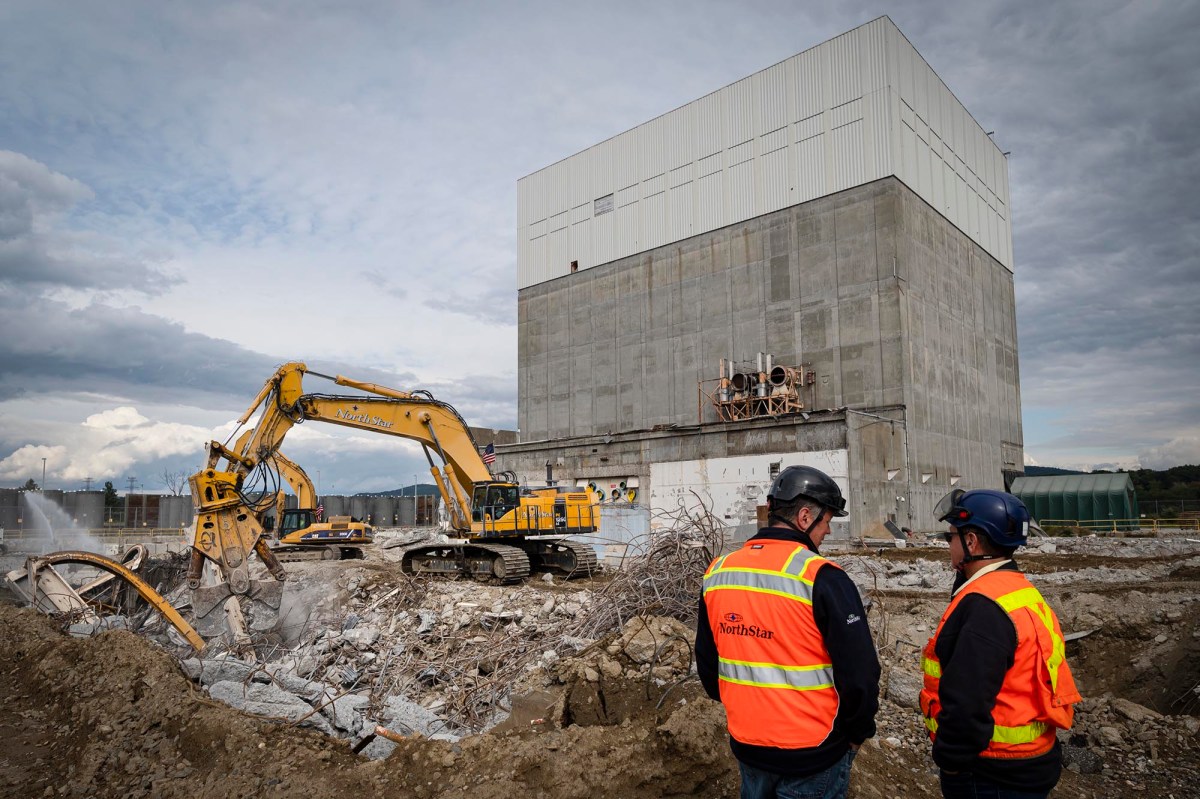
VERNON — On Tuesday, a giant yellow machine called a “concrete cracker” turned a building at the former Vermont Yankee nuclear plant into rubble.
Workers have been deconstructing the building, which formerly housed a steam turbine, for several weeks. It was one component of the boiling water reactor system that, at one time, produced 35% of the state’s electric needs.
The nuclear plant operated from 1972 until 2014, when its then-owner, Entergy Nuclear Vermont Yankee, closed the plant after it was no longer able to compete with cheaper electricity produced by natural gas power plants. In 2019, the private company NorthStar began decommissioning the plant, with a goal of completely disassembling it by 2030.
Now, the only buildings remaining on the property are offices and the tower that formerly held the nuclear reactor.
Scott State, chief executive officer at NorthStar, the company that owns the former nuclear plant, said at a Tuesday press conference that the company is still on track to have the entire property decommissioned before the end of 2026, four years ahead of schedule. All of its work so far has occurred without significant safety incidents, he said, and the project’s cost will remain within its $600 million budget.
When the work is done, the lot will appear empty, State said, with one exception: Currently, the company does not have a plan for the spent fuel, which is stored in dry casks, designed to protect people and the environment from dangerous levels of radiation.

While NorthStar had planned to remove the casks of spent fuel and send them to a temporary storage facility in Texas, a federal court ruling in August took that option off the table, concluding that the license for the facility was invalid.
“As it stands today, spent fuel is going to sit where it’s been sitting for some time,” State told reporters.
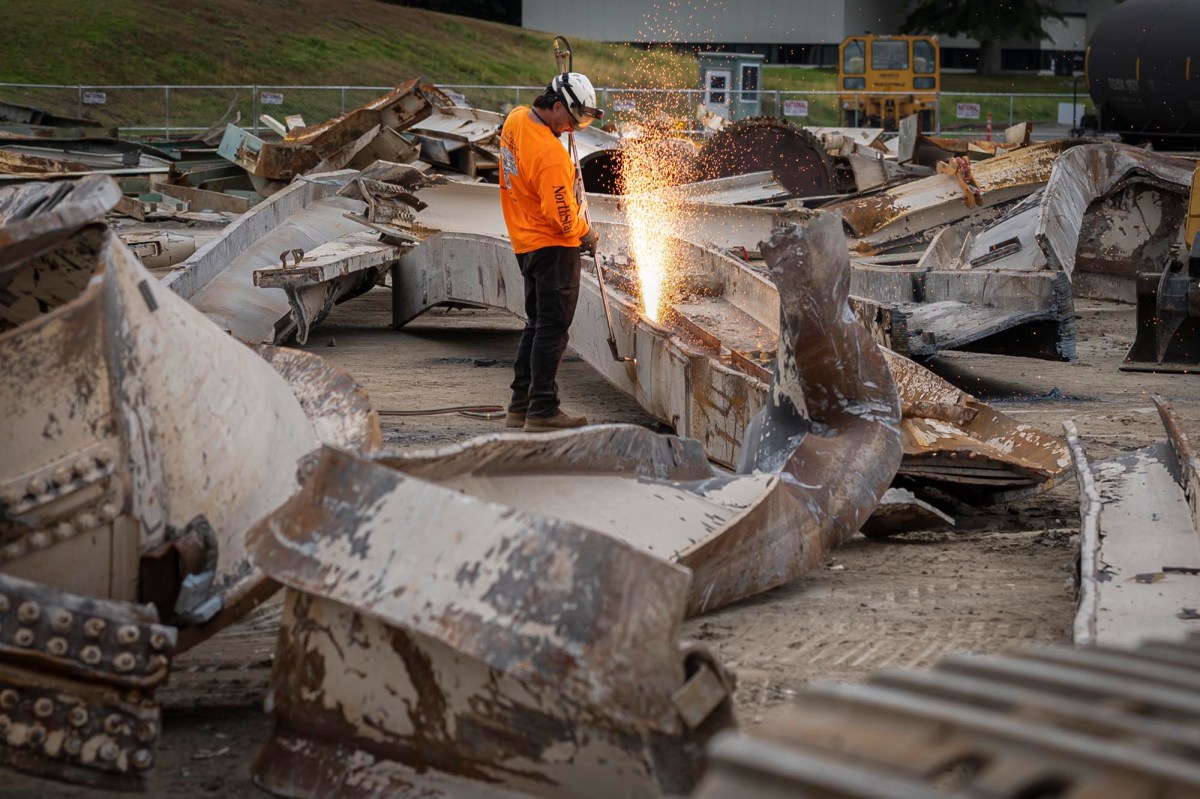
Separately, the workers send approximately three to four train cars full of non-fuel radioactive waste from the site to a Texas facility each week.
The ruling by the 5th Circuit of the U.S. Court of Appeals is the latest development in a yearslong saga over storing the country’s spent fuel, which can remain radioactive for thousands of years.
Congress has required the U.S. Department of Energy to find a permanent storage location for all of the country’s spent fuel. In 2002, it directed the country’s spent fuel to be stored in a deep geological repository on Yucca Mountain in Nevada. But in 2011, after a spate of opposition from the state and region, it withdrew federal funding.
Meanwhile, most of the country’s nuclear waste remains on the same site where it was produced.
Until the Department of Energy finds a permanent storage site, the Nuclear Regulatory Commission, which regulates nuclear energy in the United States, has attempted to license sites for the purpose of temporarily storing spent fuel.
While NorthStar planned to send its spent fuel to the Texas site, the state government, along with oil and gas extraction companies Fasken Land and Minerals, Ltd., argued that the commission did not have the authority to license any temporary storage facilities.
In August, the 5th Circuit sided with Texas, arguing that the commission did not have authority under the Atomic Energy Act to grant a license, meaning “we don’t have a licensed facility anymore,” State said.
Asked what’s next, the Northstar CEO said the Nuclear Regulatory Commission will have to decide whether to challenge the court’s decision and attempt to persuade the United States Supreme Court to review the matter.
The issue is not NorthStar’s fight, according to State.
“I think, ultimately, there’s going to have to be some meeting of the minds amongst the various states that host nuclear facilities,” he said.
The dry casks are stable, and could sit at that site for hundreds of years before degrading, State said.
“That facility will remain as it is, today, fully guarded, until that fuel is gone,” he said. “So, in perpetuity is how long that fuel can stay there.”
