



This story, by Report for America corps member Carly Berlin, was produced through a partnership between VTDigger and Vermont Public.
Greg Quetel remembers getting quoted for flood insurance back when he bought his manufactured home at the Berlin Mobile Home Park over 20 years ago. The premium, which was higher than what he paid for homeowner’s insurance, “was just too expensive,” he concluded at the time.
This July, floodwaters inundated the Berlin park and destroyed nearly all the homes, Quetel’s among them. The former technology specialist, whose income now comes from disability checks, has spent the last two months going back and forth with the Federal Emergency Management Agency, trying to get money to cover the damage to his home.
But even if he’s successful — and even with money the state has pledged to pitch in — Quetel may still come up short. He’s trying to figure out where he can afford to live next, and is even contemplating a move out of state.
Quetel is far from alone. As Vermonters take up the task of rebuilding, many lack the main financial backstop for recovering after a flood — flood insurance.
The take-up rate for flood insurance in the state hovers in the 1% to 2% range, according to Kevin Gaffney, commissioner of the Department of Financial Regulation. That’s an estimate based on the number of flood insurance policies currently in effect, measured against the number of households in the state. (The department also arrived at the same approximate rate by counting flood policies relative to the number of owner-occupied homes with homeowners insurance coverage.)
While neither are a perfect metric, any way you cut it, the rate of flood insurance uptake in Vermont has “been very low,” Gaffney said.
As of Aug. 31, the most recent data available, there were just over 3,000 active National Flood Insurance Program policies across the state; the majority, over 2,500, were for residences. Vermonters have purchased another roughly 200 policies through private companies, according to Gaffney.

Vermont is not unique in its low flood insurance uptake, but experts say a few factors could account for how few properties here are covered by flood policies. One is the steep cost — and with average flood coverage costs for Vermonters on track to nearly double over the next few years, this barrier could become more daunting for many. Another challenge: In a state with relatively weak flood disclosure laws, coupled with outdated floodplain maps, some Vermonters may not fully grasp their mounting risk.
Without flood insurance, Vermonters are left relying on federal disaster aid to recoup their losses – which rarely pays out as much money.
FEMA’s disaster grants average about $5,000 per household, according to the agency’s website. Flood insurance payouts are much larger: the average claim in 2018 was more than $40,000.
“In the absence of flood insurance coverage, there are limited other avenues to seek funding for recovery,” said Jesse Gourevitch, a postdoctoral fellow at the Environmental Defense Fund who lives in Vermont.
In the zone
Regular homeowner’s insurance policies typically don’t cover flood damage. Back in the 1960s, few private companies offered flood coverage because it was viewed as too risky, so the federal government created its own flood insurance program. Today, most flood insurance policies in Vermont – and across the country – are underwritten by the NFIP, which is administered by the Federal Emergency Management Agency.
The majority of the NFIP policies in Vermont are for residences. The policies max out at covering $250,000 for the building itself and $100,000 for the contents inside.
Over half of the covered homes in Vermont lie in what FEMA dubs the “Special Flood Hazard Area,” or an area the agency deems has a 1% chance of flooding in any given year.
That’s partly because a federal law mandates that homeowners with a federally-backed mortgage get flood insurance if they live within one of FEMA’s special high-risk flood zones.
Nearly all NFIP policies across the country — 98% of them — are inside the “Special Flood Hazard Area,” said Jeremy Porter, the head of climate implications research at the First Street Foundation, a nonprofit climate research firm.
“In general, the reason why people have coverage is because they’re told when they go buy their home that they’re in a Special Flood Hazard Area and it’s mandated by their mortgage provider that they have flood insurance,” Porter said.
Compliance with the rule isn’t perfect, though. Porter noted that many homeowners stop renewing their flood insurance policies after they’ve moved into their homes. “After the first year is when we see the biggest drop-off,” he said. Around 60% of properties in the SFHA nationwide have NFIP policies, Porter said.
Enforcement of the rule ultimately falls with federal regulatory agencies, who can fine lenders who don’t comply with the requirement, according to an email from a FEMA spokesperson. In those cases, “the NFIP receives the proceeds.”
‘I’ve never been flooded, good riddance’
For homeowners who never took out a mortgage, or for those who have since paid it off, flood insurance — even inside FEMA’s high risk zone — becomes optional.
Having purchased his home outright, Quetel, for instance, was exempt from the mandate.
In a state with an aging population, some speculate that older Vermonters have opted out of flood coverage.
“I’m seeing the baby boomer population – as they pay their mortgages off, you know, a lot of them aren’t selling their houses, you know, and going to Florida,” said Robert Desaulniers, a regional insurance specialist for FEMA, based in Massachusetts. “They are saying, ‘I’ve never been flooded, good riddance.’”
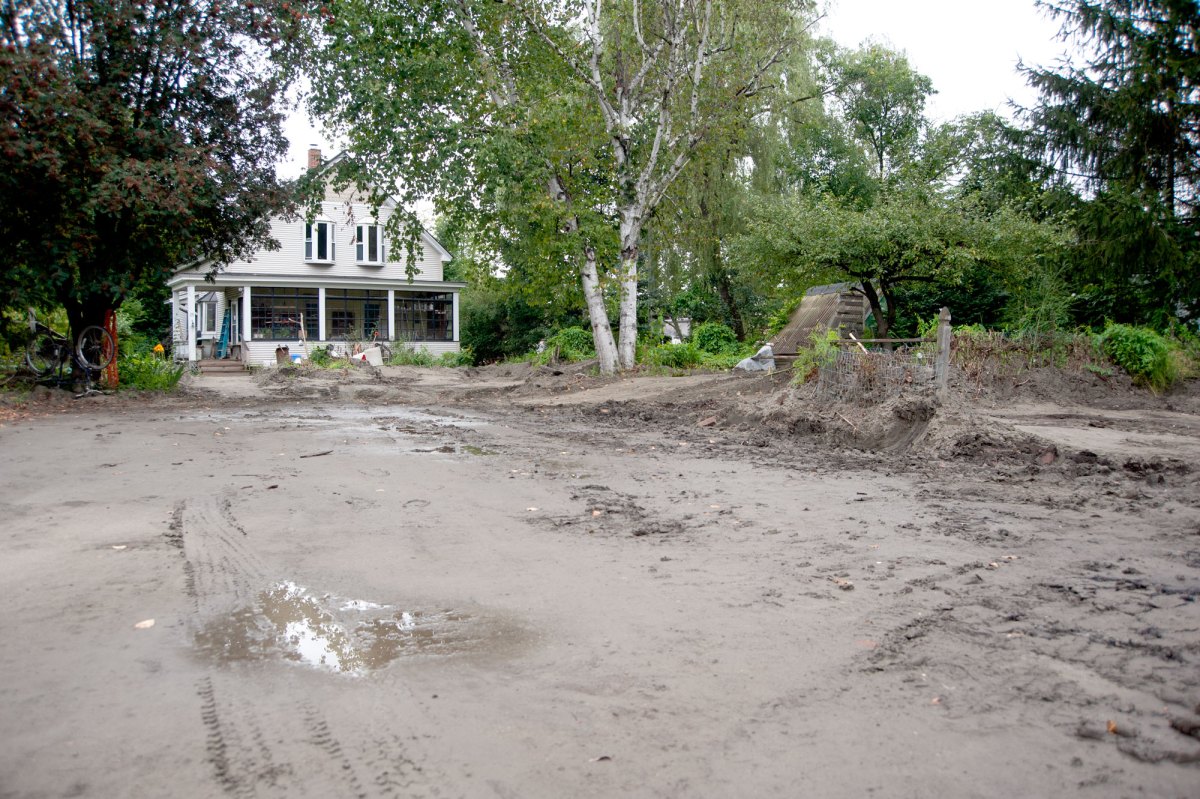
That was the case for Peter Anthony, a state lawmaker who lives in Barre City. He took out a flood insurance policy when he bought his home along the Stevens Branch of the Winooski River in 1977. At the time, he paid less than $300 a year for flood insurance, he recalled. By the time he paid off his mortgage in the mid ’90s, the annual premium had more than doubled.
The home’s basement had flooded before, but spending a couple hundred dollars to replace the furnace every few years felt more manageable than paying more each year to maintain flood insurance.
“If the cost and the potential benefit were different, we would have stuck with it. But our incomes didn’t rise as fast as the premium,” Anthony said. “We said, ‘Do we really want to stick with this?’ And we said, ‘No.’”
Anthony continued to get quoted on flood insurance every few years. After Tropical Storm Irene in 2011 – when the home’s basement flooded, again – premiums had shot up to over $3,000 a year, he said. And after this summer’s flooding, the quote came in even higher: $5,000 a year, a massive leap from what Anthony paid in the ’70s, even when adjusted for inflation.
Cost of coverage on the rise
Over the last two years, the NFIP has rolled out a new methodology for setting flood insurance rates: one that incorporates more data on flood risks for individual properties. That means rates will rely less on FEMA’s floodplain maps, which are widely criticized as being outdated and incomplete.
Desaulniers described the new rating system, called Risk Rating 2.0, as “fairer,” and noted that many policyholders will see their premiums decrease. But a greater share will likely experience increases, he said.
According to an analysis by FEMA of homes that have already transitioned to the new rating system, in September 2022, the average current cost of insurance from the NFIP for single-family homes in Vermont was $1,197 per year. Under the new rating system, the average “risk-based” cost of insurance across the state could nearly double to $2,248.
Some counties could see even higher average costs: Bennington, Lamoille, Washington, and Windham counties could see average insurance costs for single-family homes increase to over $2,500.
Annual premiums can only rise by 18% per year, and communities that undergo flood mitigation measures can earn premium discounts. But as other housing costs remain steep, higher premiums could be cost-prohibitive for some Vermonters, particularly when much relatively affordable housing stock is concentrated in flood-prone areas.
FEMA itself has called on Congress to enact a means-tested program for flood insurance, allowing low- and moderate-income households to get assistance. Gourevitch said that measure is critical: because when Vermonters see their premiums increase under the new pricing system, even more could opt out of getting flood insurance.
“That certainly has the potential to decrease insurance uptake even further,” he said.
Paying the price
Even Vermonters who reside outside of FEMA’s mapped, high-risk zones face mounting flood risks. According to a 2020 analysis by the First Street Foundation, FEMA’s maps identified about 13,000 properties facing substantial flood risk in Vermont. But First Street’s own research identified three times as many properties facing the same level of risk.
That means many Vermonters may not fully grasp their flood risk – and thus not think to purchase flood insurance. Vermont is also among a minority of states that lack a mandatory flood risk disclosure law for real estate transactions, leaving prospective homebuyers and renters with limited information as they decide where to live, and whether to purchase flood coverage. A 2022 FEMA analysis found that states with stronger flood disclosure requirements often have higher rates of residents with flood insurance policies.
Beyond hard facts about risk, there are also “cognitive biases at play,” Gourevitch said. Vermont isn’t typically associated with flood risk in the same way that coastal states are, which could mean many residents simply have not internalized the impact flooding could have on them.
“Irene was seen as kind of this anomalous, once in a lifetime event that would never occur again,” he said. “I think this summer’s flooding has definitely proved that untrue.”
Jeffrey Berwick, owner of the insurance company, Isham-Berwick Agency, Inc, said he’s seen an uptick in interest for flood coverage after the July floods. “We have been quoting quite a few more people this summer,” he said.
This shift in mindset about flood risk is important, said Ned Swanberg, a Vermont regional floodplain manager for Washington and Orange Counties. “As an individual, people tend to think they’re lucky,” he said. But when it comes to flooding in high-risk areas – at the community, and state, and national levels – “the bill is always coming due some place.”
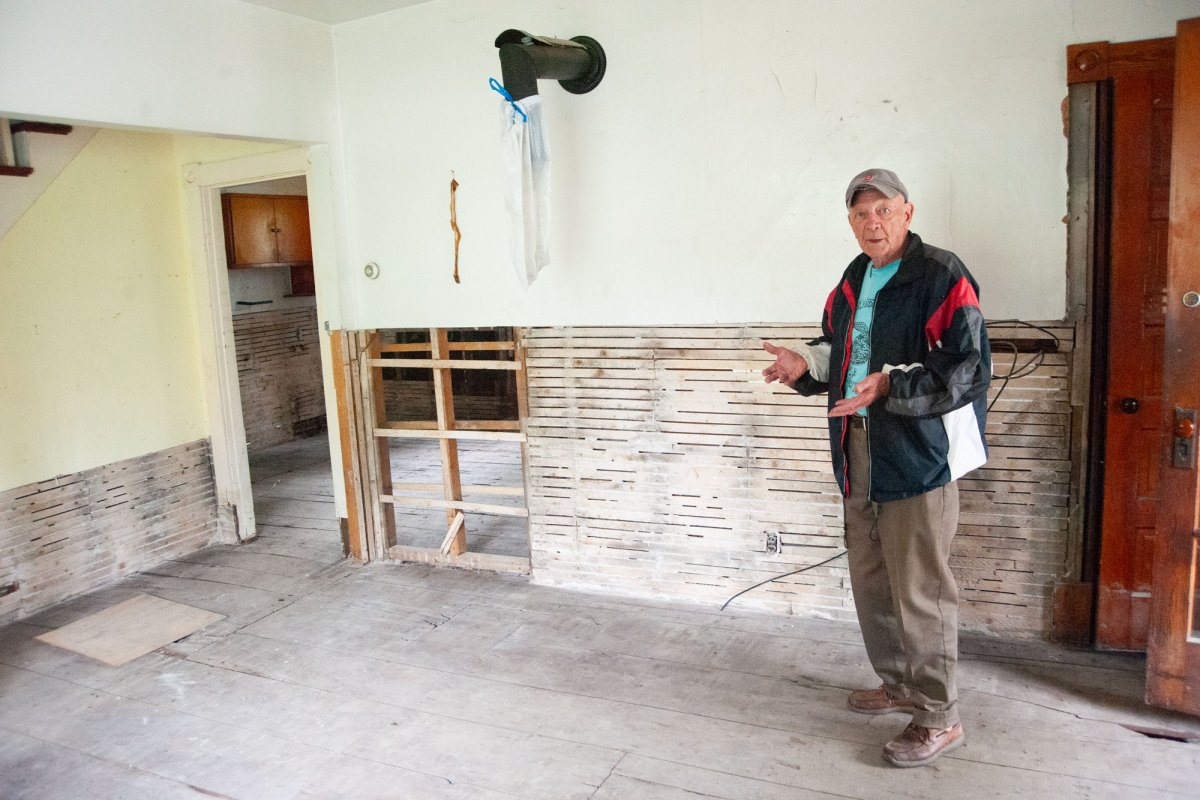
For Peter Anthony, the bill came due this July. His Barre City home, which backs up onto the river, filled with water. It was the first time floodwaters ever rose above the basement, he said. Two months later, the first floor is gutted. Anthony and his wife are renting an apartment nearby with some rental assistance funds from FEMA while they figure out what they’ll do next.
Their options for the house are limited. Anthony accepted a small award from FEMA after Tropical Storm Irene: $3,900 to move the circuit breaker from the flood-prone basement upstairs, he said. But that money came with a caveat: If he didn’t purchase flood insurance going forward, he wouldn’t be eligible for future federal disaster assistance for repairing the house.
Anthony — along with some of his neighbors — is contemplating a buyout. Standing in his garden on a recent afternoon, looking at his once abundant vegetable plots covered in a thick layer of silt, he contemplated the home he lived in for 45 years becoming a park.
“I will grieve again,” he said. “It’s as simple as that.”
