


Bear Pond Books, the independent book store in downtown Montpelier, celebrated its 50th birthday this summer — though you might have missed it.
“We were unfortunately closed for the party,” joked co-owner Claire Benedict, who was celebrating her bookstore’s grand reopening on Friday. Bear Pond was one of a handful of downtown businesses opening their doors anew this week after July’s historic flood inundated much of the capital’s downtown core.
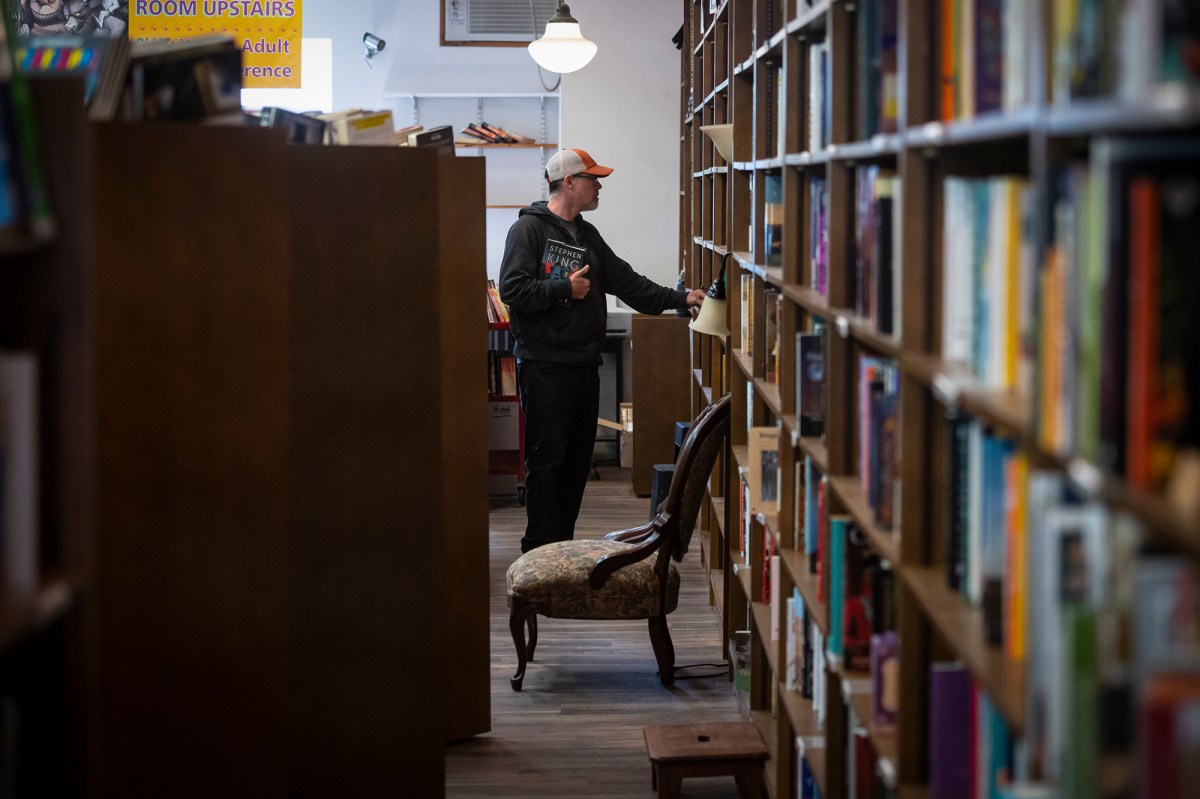
Benedict and her husband used the occasion to reorganize the store after the flood. But much remains the same. In the children’s section on the second floor, there’s still Veruca (age unknown), the Russian desert tortoise who greets visitors at the top of the stairs.
Benedict said the business was able to replace its inventory and rebuild all of its shelving without taking on loans. It dipped into reserves, got a small state grant, received philanthropic support and raised funds online.
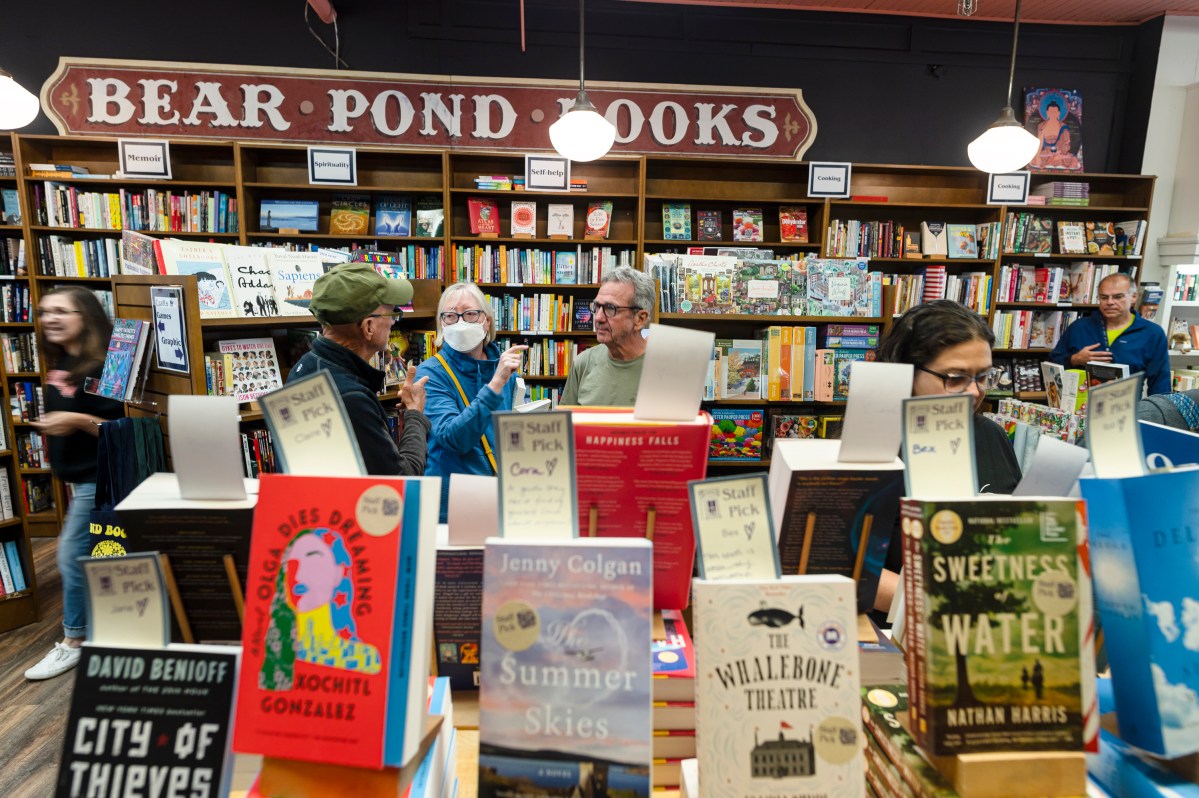
“I guess time will tell. The customers are flooding in today, and if that keeps happening, we feel pretty good about it,” she said.
Over on State Street, Pho Capital reopened Thursday, although Nghia Duong, the general manager, told an excited regular he was glad she would come on Friday instead. The day prior had been full of glitches as they tried to get their systems back online. Only half of the restaurant’s indoor space is open, but Duong said the Vietnamese eatery hopes it will be ready by the time the temperatures dip and they have to close their patio.
“It’s excitement, you know? We love our community — the people, the faces, families that we get to see, the workers,” he said. “It’s a joy. It’s a joy for us. It’s an uplifting thing.”
The federal government is only offering low-interest loans, not grants, to businesses affected by the disaster. And according to Katie Trautz, the executive director of Montpelier Alive, a nonprofit organization that supports the city’s downtown businesses, that’s what’s missing for dozens of businesses that remain shuttered: cash.

“They have applied for every grant or, in some cases, loans but have not actually received the money in hand that would allow them to reopen — and it’s never enough. So they’re just trying to figure out how to make ends meet,” she said. The Montpelier Strong Recovery Fund, a collaboration between Montpelier Alive and the Montpelier Foundation, has already doled out $500,000 to downtown businesses and is preparing to send out another $750,000 in the second round.
Businesses looking to reopen are also at the mercy of their landlords — who may themselves be struggling to find any available contractors.
Kent Bigglestone, who runs Capital Stationers alongside his brother Eric (the family has owned the store since 1950), credited his landlord, Tim Heney, with getting so many businesses on this Main Street block reopen so quickly.
“Half these places, they haven’t even got sheetrock on the walls yet,” he said, gesturing across the street.
Like Benedict, Bigglestone said the business was able to reopen its doors without incurring additional debt and mainly relied on community donations. But it also isn’t fully open yet — the store’s Hallmark section, for example, remains empty for now.
Many downtown institutions are finding ways to do business even as they rebuild. Charlie O’s is serving drinks on the outside patio it built during the pandemic. Kellogg-Hubbard Library’s building is still closed to the public, but it is offering curbside pickup. And many merchants are now selling a sampling of their wares each Saturday at the farmers market, which moved to the Vermont College of Fine Arts after the flood.
Montpelier Alive keeps a running list of businesses that are open — or doing business in some capacity — and it included 67 on Friday. But about 120 businesses were impacted by the flood, Trautz said, and only a handful that have reopened are actually fully operational.
“There are businesses who are really on the fence about whether they can reopen because not everything is aligning in their favor,” she said. “And I would say it could be up to a year before some businesses reopen to the capacity that they were previously.”
