

WOODSTOCK — A man sued for defamation over an op-ed in a local paper is hoping Vermont’s free speech laws will lead to an expedited dismissal of the suit.
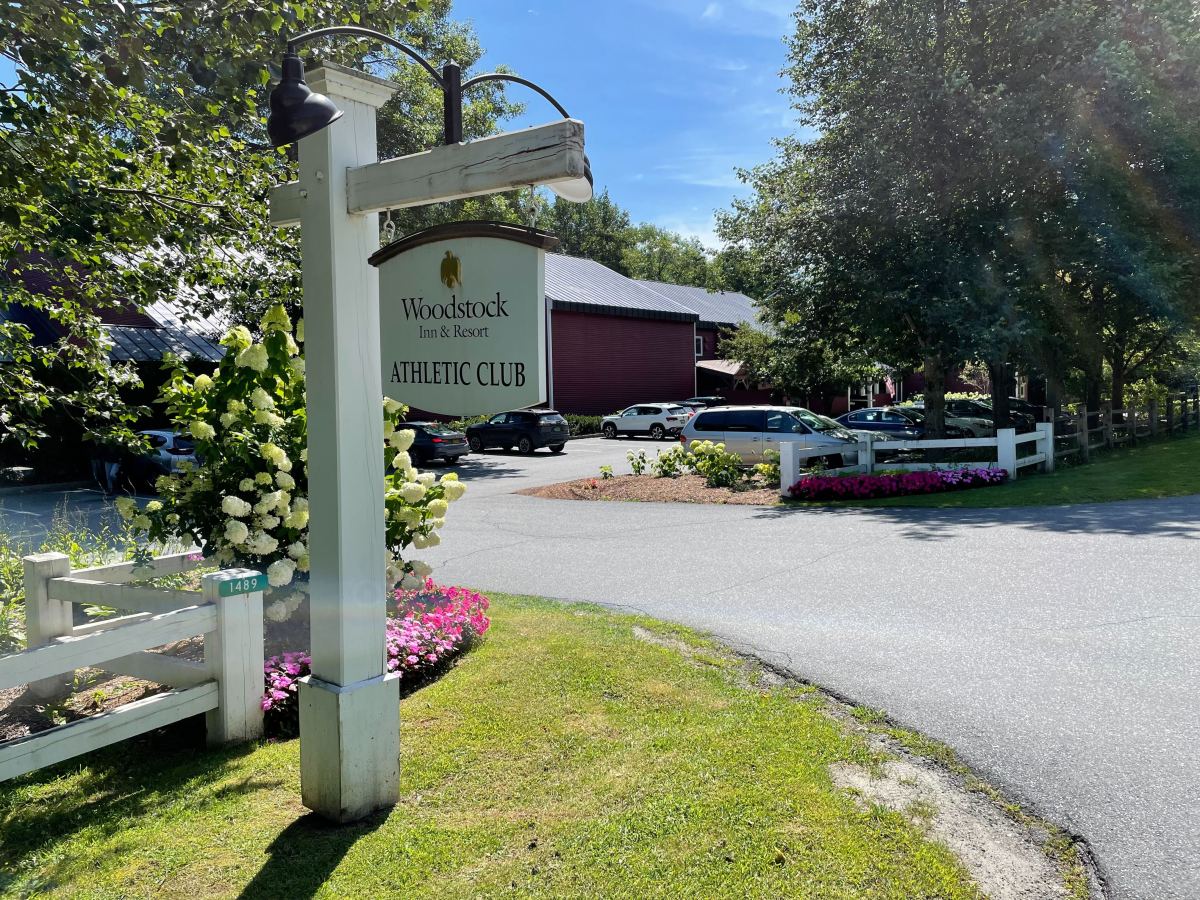
Devon Kurtz, a Woodstock resident, wrote an op-ed in Woodstock’s weekly newspaper, The Vermont Standard, alleging that the director of the Woodstock Inn’s athletic club, who had been fired, sexually harassed him in February 2023 and told him about sexually harassing an athletic club employee. Kurtz also referenced the “institutional failings” of the inn, alluding to a separate lawsuit alleging widespread mistreatment of employees at the inn.
The director, Alejandro Figueroa, sued both Kurtz and the Woodstock Inn and Resort, alleging wrongful termination and defamation, among other claims, regarding the sharing of “private personnel information” and “false information.”
On Tuesday, lawyers for all parties gathered in civil court in Woodstock for a hearing on Kurtz’s special motion to strike the claims against him.
Kurtz, through his attorney, cited Vermont’s anti-SLAPP legislation, which, among other protections, shields against lawsuits over speech related to issues of “public interest.”
SLAPP is an acronym standing for “strategic lawsuit against public participation.” That statute, which went into effect in 2005, allows defendants in a free speech case to file a special motion to strike a lawsuit, or parts of the action, expediting a hearing. If the suit is indeed struck down, attorney’s fees are provided to the defendant.
Tuesday’s oral arguments focused on whether Kurtz’s op-ed regarding Figueroa’s conduct concerned a matter of “public interest” and what role the fact that the speech was featured in the local newspaper had in making its content public interest.
Kurtz’s attorney, William Dagger, argued that because the Woodstock Inn plays an outsized role in the town and because its athletic club is open to the public, Kurtz’s op-ed regarded public safety and thus public interest.
“Mr. Kurtz exercised his right to free speech,” Dagger said, adding that the lawsuit was an attempt to silence his client for speaking out.
Norman Watts, an attorney for Figueroa, argued The Vermont Standard publishes “almost anyone’s letter to the editor” and that no consideration should be given to the fact that the letter was in the paper. The paper’s small circulation, Watts said, contributed to his client’s claim that his personnel issues, written about in the op-ed, did not rise to the level of public interest.
In an unusual twist, an attorney for the Woodstock Inn — the second defendant in the case — argued in alignment with Figueroa that Kurtz’s sexual harassment allegations against the plaintiff were “not a public matter.” The attorney, Elizabeth Rattigan, drew on a legal distinction between matters of “public curiosity,” which she said included Kurtz’s speech, and “public interest,” which she said did not.
In questions to Watts, Vermont Superior Court Judge Dickson Corbett asked the attorney where he would draw the line between a newspaper that, by publishing speech, necessarily dealt in matters of public interest, and newspapers that, due to small circulation, did not reach the threshold.
Watts said that The Vermont Standard was too small but an op-ed in The New York Times would be a matter of public interest.
“What about Vermont Digger?” Corbett asked.
“Close call,” Watts responded.
“Vermont Digger is available worldwide, right? It’s on the internet,” Corbett said. “How do I distinguish between the Vermont Standard, Vermont Digger and The New York Times?”
The judge also referenced previous anti-SLAPP lawsuits in Vermont, such as one regarding the Barton Chronicle, in which the state’s courts sided with newspapers.
In his closing remarks, Corbett told all parties they would have two weeks to submit materials for consideration.
The judge said he was specifically interested in whether the publication of materials in a newspaper affects whether they regard a matter of “public interest.” In an age when information spreads widely online, what separated a Facebook post from a newspaper article, he posed.
“How would I distinguish between one media outlet and another?”
