

RICHMOND — Capsized crafts, broken docks, destroyed habitat, increased shore erosion and disturbed sediments: These are some of the problems wake boats have allegedly caused in Vermont’s public waters, according to residents who are pushing the state to adopt stronger rules governing their use.
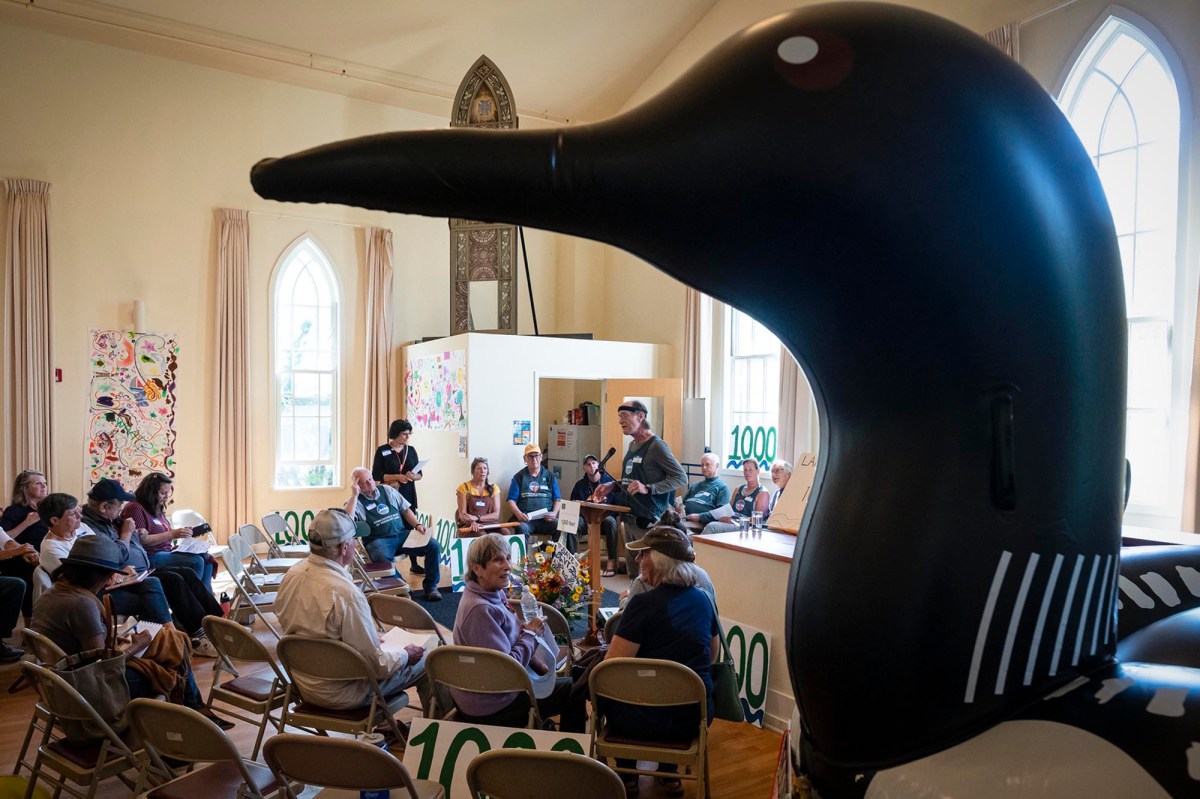
More than 70 people from across the state packed a room in the Richmond Free Library on Tuesday evening, wearing name tags noting the lake they live by or enjoy. The meeting had been moved from Montpelier to Richmond due to the recent floods.
Wake boats are motor-powered vessels with ballast tanks to weigh them down and create a large wake for surfing and skiing. Though they have become increasingly popular on Vermont’s lakes in recent years, those who oppose their use argue the state should keep them at least 1,000 feet away from the shoreline to protect the lake and the public.
“The final goal is to get a strong rule to keep as many wake boats away from as many lakes as we can,” said Jim Lengel, a leader of Responsible Wakes for Vermont Lakes, a citizen group formed in 2021.
The group filed a 54-page petition in March 2022 signed by more than 1,200 people calling on the state Department of Environmental Conservation to tighten rules governing the fast-growing watersport, especially for Vermont’s smaller lakes and ponds.
After several meetings and studies, the department rolled out a draft rule in January that calls for wake boats to operate 500 feet from shore while being used for wake sports; operate only in lakes with at least 50 acres of surface area and those that are 20 feet deep; and stay year-round at one lake unless decontaminated by a department-approved entity. These restrictions would, in practice, limit wake boat use to 31 of Vermont’s more than 800 inland lakes.
Only a handful of the attendees of Tuesday’s hearing spoke in favor of wake boats, advocating for the proposed 500-foot rule or looser regulations.
Eric Splatt, who identified himself as a wake boat owner on Lake Bomoseen, said he thinks there are already too many boating regulations and called for more education and enforcement instead. “I think that Vermont has always been about education and not about rulemaking,” he said.
But the vast majority of the 45 residents who spoke at the hearing said the proposal doesn’t do enough, and many called for a 1,000-foot shoreline buffer.
Kim Mackey, who owns a wake boat on an 8,000-acre lake in Wisconsin, described the vessels as disruptive. He does not bring his boat to his camp at Averill Lake in the Northeast Kingdom, he said, because “it’s not fun for others, it’s not safe and it’s not practical.”
With technology evolving, wake boats are likely to become bigger and to create even bigger wakes, according to Mackey, a member of Responsible Lakes. Therefore, in his view, stricter rules are needed to protect the future of Vermont’s smaller water bodies.
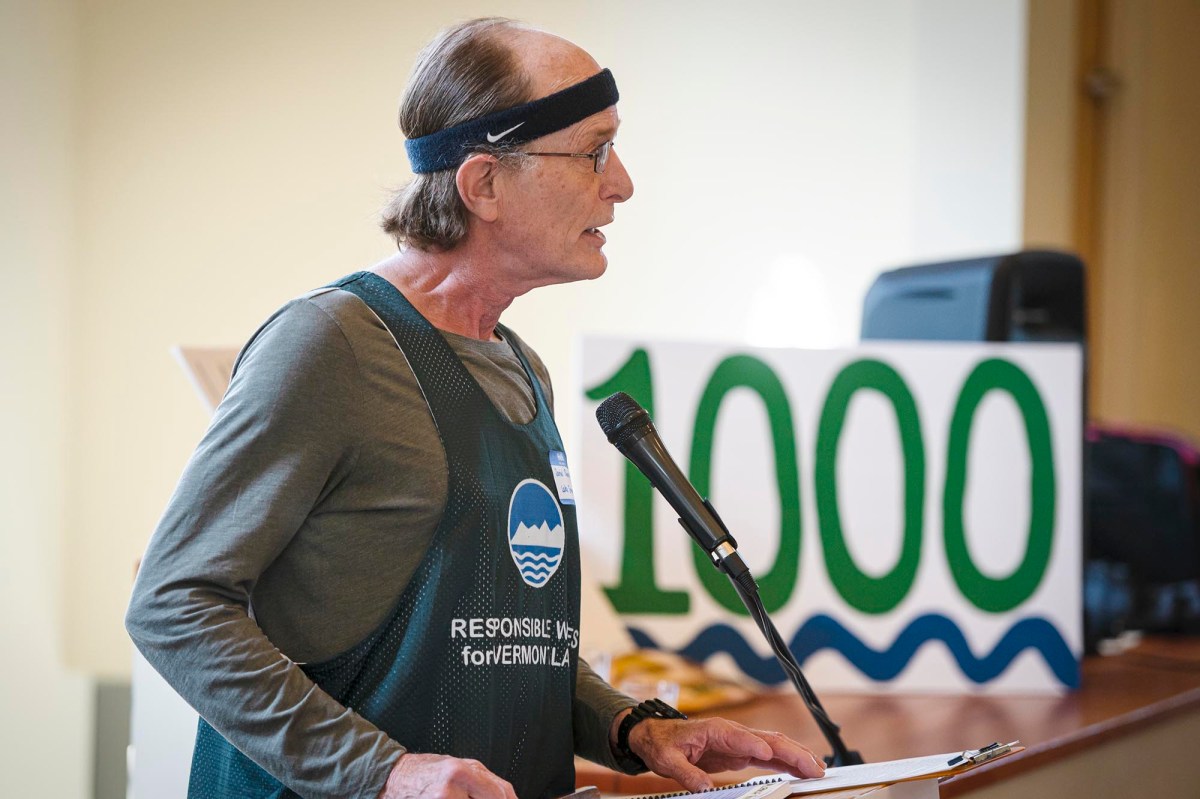
According to Meg Handler from Hinesburg, another Responsible Wakes member, the 500-foot rule is a compromise that “caters to the desires of individuals rather than the public good.” Wake sports are a niche interest that’s impacting many, she said, and that dynamic can be hard to address in a state that values private rights.
“Unfortunately, what is missing is the recognition that people with their private rights end up restricting the rights of everyone else — the right to clean air, clean water, peace and quiet personal safety, etc.,” she said. “A desire to create ocean waves for people to surf on, far away from the ocean, means everyone else needs to just step aside. Boaters, swimmers, paddlers, sailors, plants, animals, shorelines and the quality of the very water itself.”
Katherine Babbott, a board member of the Lake Fairlee Association, said an advertisement from Wakeboarding magazine described a new wake boat as a wave-making monster.
“Wave-making monsters do not belong on Vermont’s small, vulnerable lakes with up to 600-horsepower engines creating 3- to 5-foot ocean-like waves. These boats have no right to dominate lakes and threaten the safety of all who enjoy traditional watersports,” she said.
With 2,000 to 4,000 pounds of added water weight, Babbott said, these boats “harm small lakes’ fragile ecosystems.”
She held up a cigar and said, “A wake boat on a small Vermont lake is like someone smoking a cigar in a crowded room. It stinks.”
Some at the hearing said they’d prefer a prohibition on wake boats on all lakes.
The three-hour hearing was the fourth of five organized by the state. Energies ran high and applause punctuated the two-minute public comments given by 45 speakers.
Some carried signs that read “1,000.” A large inflated loon float gazed over their heads from one corner.
Oliver Pierson, the department’s lakes and ponds program manager, gave a rundown of the rulemaking process to date and said that wake boats currently represent less than 5% of motorized vessels using Vermont water bodies. The state is also exploring education, outreach and enforcement, as suggested by residents, and plans to continue to collect evidence and comment, Pierson said.
The last hearing is scheduled to be held online Thursday, Aug. 3, at 5 p.m. Speakers may sign up in advance, with a limit of 60. The department will also accept written comments with the subject line “wake boats” by email to anr.wsmdlakes@vermont.gov until 4:30 p.m. on Aug.10, when the public comment period will end.
Correction: A previous version of this story included the wrong date for the final public wake boat hearing.
