


BARRE CITY — Two weeks after statewide flooding, most apartments remained without water, power and propane at one Pearl Street building and some residents said they were afraid to file complaints, wary of how their landlord would react.
It’s been hard to get by, according to several residents of 28 Pearl Street, who spoke to VTDigger on the condition of anonymity for fear of retaliation.
“On a scale of one to 10, it’s a 10,” said one man who has not had power since the storm. “It’s almost impossible. I have no resources. I’ve got one flashlight and I don’t know what to do.”

Formerly the Central Hotel, the building comprises about 40 apartments in two connected buildings downtown. The place is occupied by largely low-income residents, most of whom have been without propane, hot water and power since their basement flooded in the catastrophic storms that struck the state on July 10.
The top-floor tenants in one of the two buildings had power back last week, but the majority still didn’t on Tuesday, according to residents. Another resident who has had power said they have been keeping their door open to let neighbors charge their phones or use the refrigerator.
“The living situation for a lot of us has been really rough,” the second resident said.
City officials say some 300 to 400 renters across 130 properties in the city were affected by flooding — and some are struggling to get timely help from their landlords. City workers visited the Pearl Street building and several others in Barre City last week in response to about 10 complaints in total from tenants as of Tuesday.
City Manager Nicolas Storellicastro called the proportion of complaints to tenants “relatively small,” as many landlords — some displaced themselves — “have been working quickly to get tenants back into their homes.”
While the city hasn’t gotten any new reports of people without power, “in certain circumstances, tenants without power have been requested to move to vacant units with power, or they could (use) the regional shelter at the Auditorium,” he said.
But Teddy Waszazak, a Ward 2 City Council member, called it an “untenable situation” for tenants in the lurch. Barre has “some of the best and worst landlords in the state,” he said late last week, as some are being responsive and reaching out to help residents, while others are leaving them stranded.
“I am not going to allow landlords to use a natural disaster to just throw up their hands and say, ‘Well, there’s nothing we can do to help,’ because it’s not true,” Waszazak said. “They need to be taking care of their people. They need to be taking care of their buildings. They need to be making sure that the places that folks are living are safe.”
Across Barre and other hard-hit communities, renters face unique challenges.
Some don’t have the means to move or the resources to access available services if the flooding has damaged where they live. Many feel they cannot make fixes because they do not own the property or that they cannot afford to. Amid a housing crisis that long predated the floods, alternative living situations are hard to come by.
A third tenant who doesn’t start her new job until Monday is cash strapped and tired. The situation at the building has forced her to spend more than she had planned on prepared food, water and laundry detergent because she is handwashing her clothes. She wonders where she might find some assistance. “Even 100 bucks or something would help,” she said.
There is only one washer and dryer in the building, which is not working, and the landlord has not responded to pleas for more, she said.
Help is available, according to attorneys who assist low-income clients, especially around housing. But the full scope of need may not be clear for weeks, months or even — as in the case of Tropical Storm Irene in 2011 — years to come. They urged tenants in difficult circumstances to call them.
“We want to make sure that they’re safe and that if they do need emergency housing, we want to make sure they’re linked up with those resources,” said Laura Gans, staff attorney at Vermont Legal Aid’s Poverty Law Project. “We’ll try to walk them through their fears and try to help them with legal problems. If we can’t help, we will try to find someone who can.”
Code enforcement in Barre
The housing crisis has been especially acute in Barre, a city with many renters. The recent disaster compounded the challenge.
“Probably many of the people who lost the most are many who have the least, so it’s going to be very hard recovering,” said Storellicastro.
Of nearly 4,000 households in Barre, 53% are rentals, compared to 29% percent statewide, according to city and state data shared by Storellicastro. The median household income for renters in Barre City is about $26,000 compared to $36,000 statewide. And 39% of renter households in Barre City make less than a third of the median income, qualifying them as “extremely” low-income.
Housing stock is also older than the statewide averages. The median year in which a house was built in Barre City is 1942 as compared to 1974 statewide. Half of the houses in the city were built before 1939, as compared to about a quarter statewide.
At 28 Pearl Street this week and last week, residents described an atmosphere of uncertainty and anxiety, and frustration that they have only seen the landlord when he was there with city officials. Another resident who spoke to VTDigger said the building’s owner, Oliver Twombly, was attempting to determine who had made complaints to city officials about the state of the building.
Twombly owns several properties in Barre and is also the appointed city attorney. He did not respond to multiple attempts by VTDigger to contact him, including by phone, email and messages left with a worker in his office.
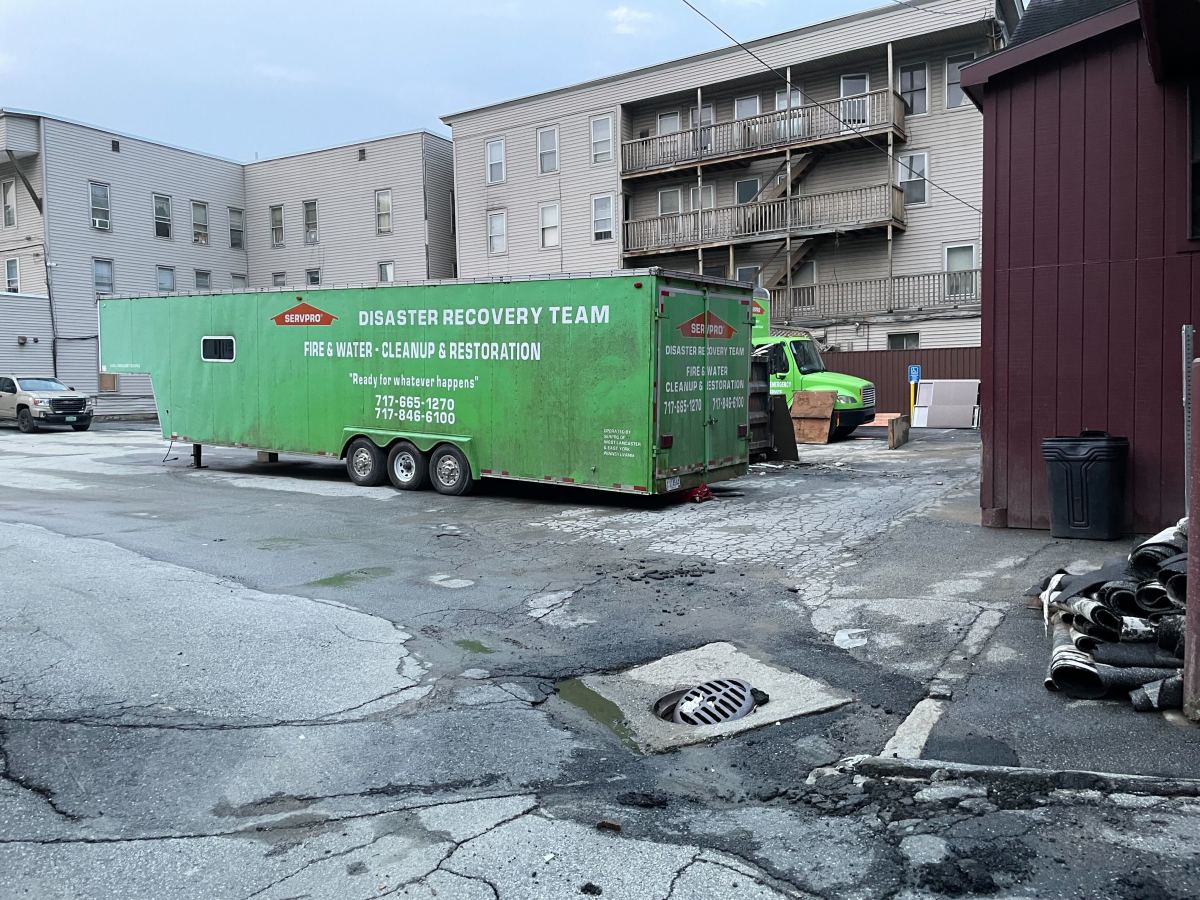
During a visit to 28 Pearl Street by a reporter on July 18, two maintenance men carted floodwater, mud and trash out of the building’s long basement. The pile of debris in the parking lot was almost up to the second-floor windows.
The men were hired by Twombly and continue to clean mud out of the basement this week, residents said. They said they appreciated their work but worried that two people are not enough for the job.
Waszazak, the city councilor, said this week the city has “started the enforcement process,” which entails identifying problems, issuing work orders and giving the landlord a deadline to fix it.
“So I know (work orders) have been issued and the clock is ticking,” Waszazak said. “I’m not sure if any specific landlord has hit the time frame for incurring fines yet.”
Citywide, 14 rental units were “red tagged” last week, which means occupancy is not allowed, and about 90 rental units were “yellow tagged,” meaning significant problems like fuel discharged into the basement, Storellicastro said.
“It’s a difficult line to walk but we’re trying to both make sure that landlords are moving quickly while understanding that landlords sometimes face similar issues to get service,” he said.
For example, electricians and supplies are in great demand right now, so some delay in services is expected. But when there is no response or bad faith, the city is going to be “more aggressive” with enforcement, he said. That means issuing fines.
“No citations have been written yet as we are working as closely as possible with landlords to mitigate the situations during this time. However, we are reaching the point of escalation as some landlords appear to be acting in bad faith,” he said on Tuesday morning.
On Granite Street on Tuesday, a team of three Red Cross workers walked around a yellow building on Tuesday, assessing the damage. Residents were still living there despite yellow stickers left by state inspectors on several windows recommending evacuation. A thick layer of still damp mud caked the yard and surroundings.
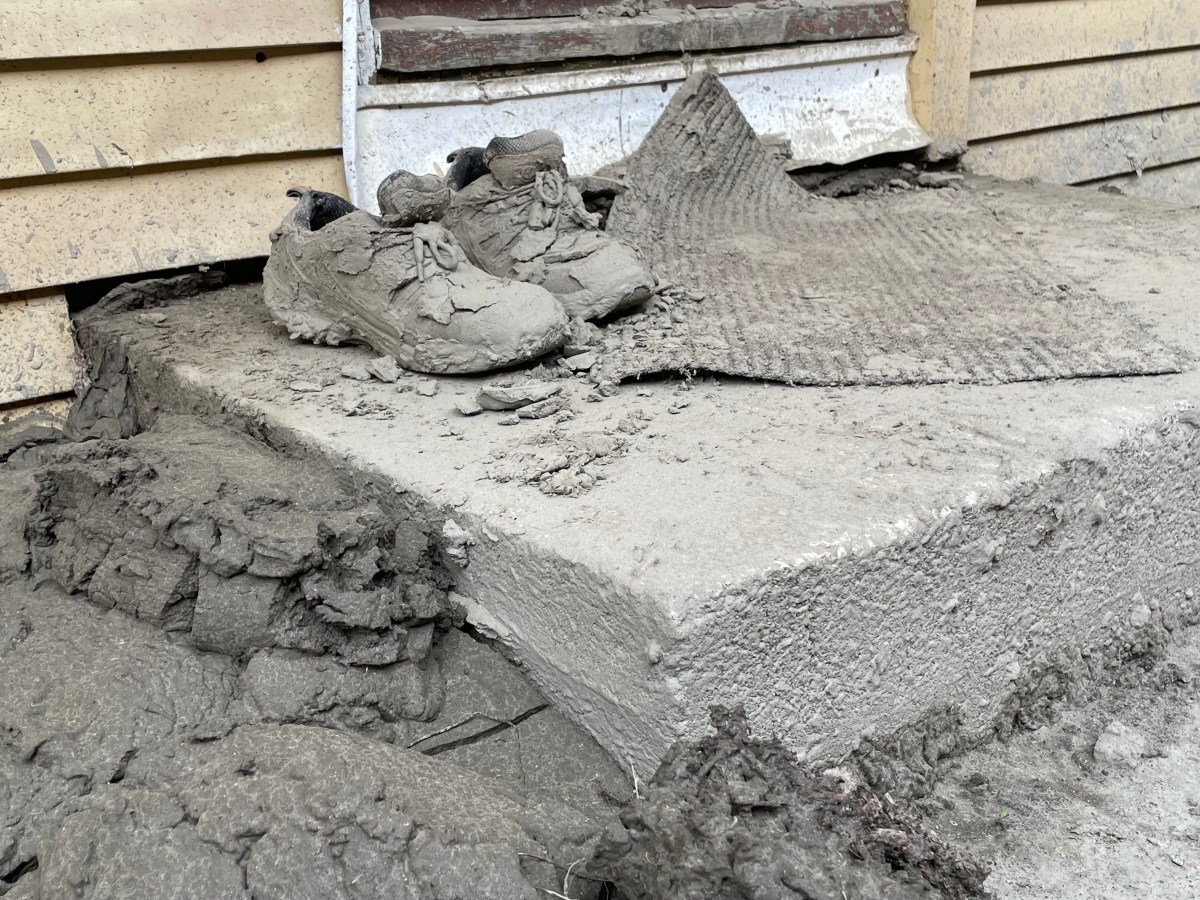
A second-floor resident, who did not want to be identified, confirmed it was a rental building that had heavy flood damage in the basement. The landlord had sent notices to evacuate the first floor. He wasn’t planning to move, he said, because his apartment felt safe.
Help is available
As Vermont enters recovery mode, officials have repeatedly urged Vermonters to report and seek assistance for damage and other cleanup.
State agencies have asked renters with flood-related damage to call 2-1-1.
And those who live in counties covered under the federal disaster declaration — which, as of Monday, included Caledonia, Chittenden, Lamoille, Orange, Rutland, Washington, Windham and Windsor, and could be expanded further — also qualify for individual aid from the Federal Emergency Management Agency.
Qualifying costs include “uninsured essential personal property losses and other disaster-related expenses,” according to a press release. These can include their cars, job-related tools and equipment, furniture, appliances, clothing, textbooks, or school supplies.
But the paths for dealing with absentee or unresponsive landlords are not always as visible.
In Barre, city officials are encouraging residents to continue to report issues regarding unsafe or unhealthy housing situations or unresponsive landlords through Barre city’s code enforcement complaint form.
Statewide, legal aid services that assist Vermonters with low income are attempting to fill the gaps.
Gans, the staff attorney at Vermont Legal Aid, encouraged any tenants experiencing flood-related problems to call for legal assistance and to consult a new flood help webpage providing tips and resources.
The intake staff understand the fear of retaliation from landlords and can take anonymous calls, she said.
As of last week, Legal Services Vermont, which also provides pro bono legal services, had not heard from any tenants interested yet in taking action against a landlord.
Managing Attorney Maggie Frye said that she expects people won’t reach out to them for legal services until they have more stability.
Frye, who was a disaster relief attorney in Vermont during Tropical Storm Irene in 2011, said for that event they dealt with actual cases one or two years later. The majority of the renters they heard from then wanted out of their lease or wanted to get their security deposit back, she said.
A tipsheet created jointly by both groups recommends that renters be specific and notify landlords of issues in writing so that there is a paper trail of their interactions.
“I think we’re still in disaster response mode. Once that calms down, people are going to start dealing with the landlord, tenant stuff,” Frye said. “No one is being sued yet, no one’s getting an eviction yet so it’s like the legal work piece hasn’t kicked in. It’s definitely going to be an issue in the future.
Another resource is the Champlain Valley Office of Economic Opportunity that has another flood rental tipsheet for renters. The reading material and videos found there are also available in multiple languages.
Jessica Hyman, associate director of statewide housing advocacy programs at CVOEO, urged tenants with flood-related housing problems to reach out prior to Aug. 1, when monthly rents are often due. Tenants need to know their rights and responsibilities related to withholding rent or their right to “repair and deduct,” which applies if repairs cost less than half a month’s rent, she wrote in an email.
“People are really scared about losing their housing because the housing market is so tight there simply just aren’t enough homes and everything is so expensive,” she said.
‘Overworked and exhausted’
Last Tuesday evening, a Salvation Army truck pulled up in front of a standalone red house on North Main Street with hot meals. They were delivering 60 to 70 meals a day, said Candy Kennedy, who works for the Red Cross.
She has observed that “as devastated as they are, people are looking out for their neighbors.”
Four residents came out into the debris-littered yard to receive the white styrofoam boxes of food. Among the storm-damaged items lay an upside-down couch, trash bags, a plastic pool, damaged appliances and several motorcycles.

Toni Lawrence, 62, lives in one of two units in the building with her son who fixes motorcycles and has disabilities. He lost the bikes in the flood.
“It’s been tough. We’ve been cleaning up for a week,” she said. “We are overworked and exhausted and all of us are sick.”
Their landlord has been coming by, but hasn’t been able to get much help and is waiting for insurance payouts before making repairs, Lawrence said.
The basement flooded and water came into the living space. For now, the duplexes are only habitable on the second floor. They had no power so their appliances weren’t working.
Also, their pets were traumatized, she said. Between the two households, they have three dogs and two cats going in and out of the yard. Some of the animals kept trying to sit on the discarded couch by the sidewalk.
The doors and windows of the house were open in an attempt to air out the wet spaces to prevent mildew. Cats curled up on bare stairs where wet carpet had been ripped off.
A small dog ran out of the red house, crossed the street and went onto the train tracks. A woman followed out the open door, a plunger in her hand, calling its name. A second dog ran towards the first dog.
Then the first dog stopped running, looked back and decided to turn back. Everyone held their breath as it narrowly missed being hit by a passing truck.
“Oh my god,” cried the woman, Christine Donald, 49, who has been a tenant there with her grandson for less than two years. “They are so confused. They don’t know what to do.”
Donald had secured a job at a local store, but it closed after the flood, she said. They have called 2-1-1, and volunteers have come by to help, but their living situation remains rough. The basement is full of sludge and everything inside that got wet is still damp and damaged. They have a generator but it keeps tripping out.
“If I turn on the kitchen tap, we can’t use the bath,” said Lawrence, who paid more than $2,500 for an old 35-foot camper parked in the back to live in for now.
She thanked the food deliverers and took stock of her surroundings. There was still some mud and water standing in the backyard and driveway and more piles of debris from the house, like many other parts of the storm-ravaged city.
“We used to have a very nice backyard, with flowers,” she said.
Correction: An earlier version of this story misidentified the type of notices that Barre officials have thus far issued to landlords.
