



BERLIN — Electrofishing gear in hand, biologist Will Eldridge smiled as he pulled a juvenile brook trout from Pond Brook on Thursday afternoon. He and other officials from Vermont Fish & Wildlife were surveying the area in the aftermath of the devastating floods, and it was the first young brook trout he’d seen all day.
While scientists don’t yet know how fish have been impacted across the state — the flows are still too high to conduct wide-scale monitoring — Eldridge estimated that fish populations will decrease as much as they did following Tropical Storm Irene.
Then, he said, “what we found is, the numbers just dropped — considerably. Like 50% to 60% or greater.”
“That’s probably what we expect here,” he said. “You’re gonna see pretty substantial declines in populations.”
Particularly at risk are younger fish that aren’t yet strong swimmers. Brook trout may be better off than some other species because they mature at a younger age, which means fewer fish are small, Eldridge said.
As human residents of Vermont bore the impacts of flooding that prompted more than 100 rescues, left homes and businesses in ruin and destroyed essential infrastructure, small creatures — particularly those that live in rivers and streams — lost homes, habitats and lives.
The risk of extreme weather events, including flooding, has risen in Vermont with a changing climate, and those events cause a number of dangers for wildlife.
“There are more ways, many more ways, in which these changes can affect wildlife than we could even imagine at this point,” said Jim Andrews, who leads the Vermont Reptile and Amphibian Atlas. “Wildlife has co-evolved with certain weather patterns, and we’re changing the rules of the game.”
While rising temperatures, the northern migration of ticks and new diseases could be considered long-term impacts of climate change, changes caused by an event such as this month’s flooding are more direct and swift.
“It may be a decade before we see changes in other species, but it’s gonna be short-term, immediate changes in some of those streams that were directly affected this time around,” he said.
Like fish, salamanders are likely to have a significant population decline following the flood. Both typically lay eggs in the rocks of freshwater streams, which “almost get sterilized with these floods,” Andrews said.
This time of year, two-lined salamanders and spring salamanders turn upside down in the water and lay their eggs under rocks.
“Those rocks would have been carried downstream and tumbled, so their effort to breed and reproduce is probably wiped out in the first water streams that they live in and lay their eggs in,” Andrews said.
As for the adult salamanders, most will have washed downstream, Andrews said, and some of them killed. Some leave streams during flooding and find refuge on higher land, and others could survive and make the trek back to their habitat, Andrews said.
He recounted the aftermath of a flood in Grafton where he conducted a survey once the waters had receded. A logjam had diverted a river over a road, and he watched salamanders hike back up the flowing water.
Even those who survive the flood and make the trip home, however, will likely return to an unfamiliar place. The base of the food chain — leaves, small bugs and other critters that fish eat — have all likely been washed away.
Displacement is likely to hurt turtles, too, according to Luke Groff, a herpetologist with Vermont Fish & Wildlife. He cited a Massachusetts study that showed population declines in turtles that were washed downstream during floods.
“The displacement of turtles is sort of an indirect impact because, if they don’t die, all of a sudden they find themselves in these new habitats, and they don’t know where to forage, where to find mates, where to seek cover,” he said.
He’s also seen reports of injured turtles, where their shells are fractured or broken. The infections these injuries prompt can be fatal. He’s particularly concerned about species such as the wood turtle, which are tied to rivers and streams.
But there are positive ripple effects, too: Downstream turtle populations may benefit from new genetic diversity from the surviving turtles that have been washed down the river.
“If you’ve got a couple of populations scattered across a watershed or a region of the state that really don’t interact because they’re too far, these floods that displaced turtles could bring distinct populations together,” Groff said.
Not all aquatic species have been fated to population decline by the flood, however. Tyler Brown, a wildlife specialist with Vermont Fish & Wildlife who specializes in beavers, said some beaver dams are likely to have been destroyed while others have held strong. Dams higher in the watershed are more likely to have held, while those that faced the accumulation of water in lower-lying areas may not have been so lucky.
Either way, beaver populations aren’t expected to decline due to the flooding.
“Once those waters recede back down, those beavers are going to move right back into the areas that they were in, the spots where maybe their dam washed out; they’re going to start rebuilding those down very quickly,” Brown said.
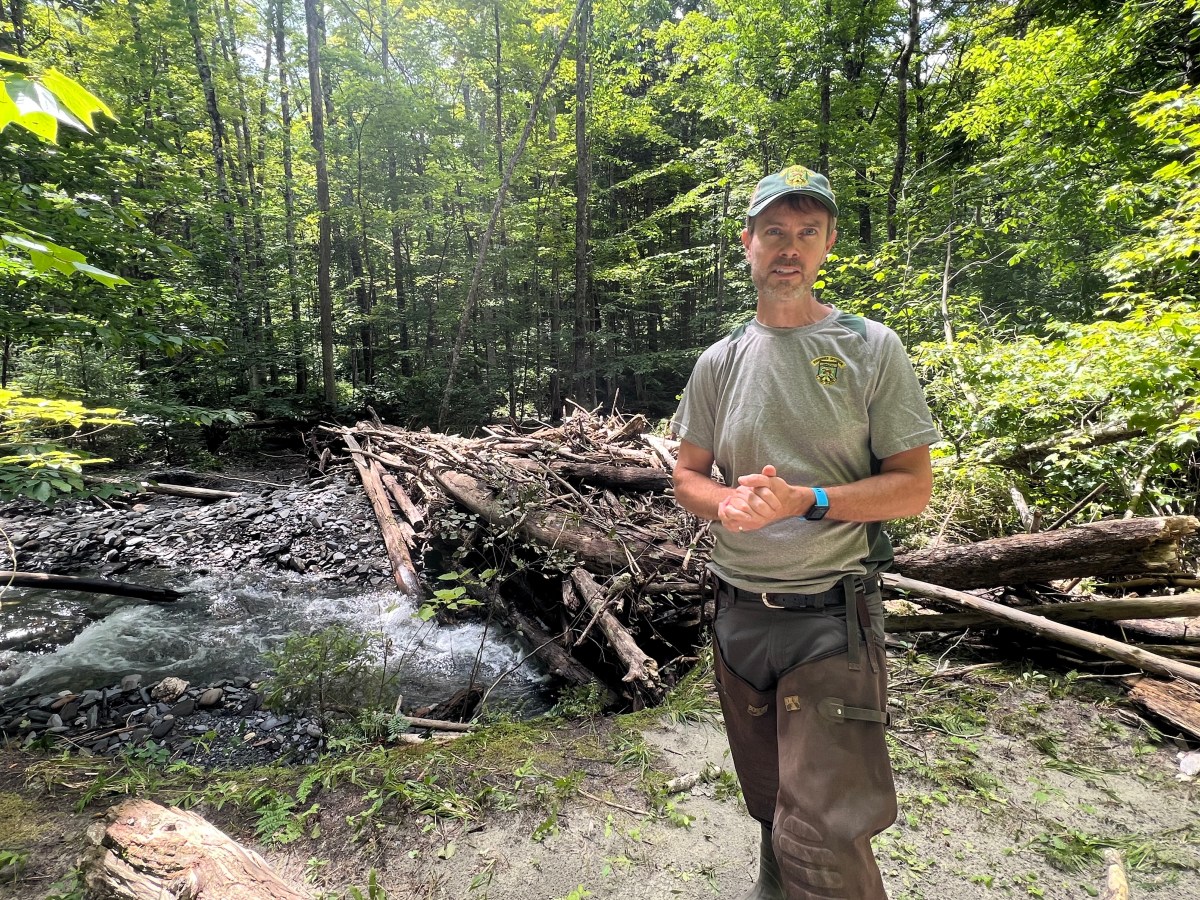
Eldridge, who studies fish with Vermont Fish & Wildlife, said the river ecosystems may be more likely to recover quickly if they’re allowed to do so naturally.
Logjams created by the storm create new habitat for fish — Eldridge calls them “fish hotels.” They create pockets that protect fish from high flows and predators, and they make good feeding spots.
“We’ve really changed our perspective on how we manage these,” he said, gesturing to a logjam in Pond Brook, “because historically, people would come in, we would come in, and pull this up. This is a mess. But now we realize that, you know what? The river has actually been doing it the right way all along.”
