


JOHNSON — Tim Hall reached high above his head to mark the level that the water rose up to last week inside the Johnson town wastewater plant. “It was 7, 8 feet,” he said. “Total destruction. The only thing we have left is the shell of a building.”
Around midday on Tuesday, Hall, the plant’s assistant manager, was triaging cleanup efforts at the red-roofed facility along the banks of the Lamoille and Gihon rivers. The plant still had no power, and so had no way to treat the wastewater flowing in. Instead, crews have been discharging the untreated influent into the nearby waterways.
“It’s a really big concern,” Hall said. “But we’re working as fast as we can.”
Across Vermont, 33 wastewater treatment facilities were impacted by the flooding that started last week, according to Michelle Kolb, a supervisor in the state Department of Environmental Conservation’s wastewater program.
Some plants were receiving such a high volume of incoming wastewater that they could no longer treat all of it, Kolb said. Others, such as Johnson’s, were flooded so heavily that the damage alone was enough to grind operations to a halt.

As of Tuesday, the situation was improving: 11 wastewater plants were providing only partial treatment, or no treatment at all, Kolb said. Plants in Hardwick and Ludlow, two towns that saw significant damage from the storm, were also among the hardest hit.
Swelling in the Winooski River last week broke a sewer pipe in Burlington, leading that city to ask some neighborhoods to minimize flushing and take shorter showers to reduce wastewater. And water was still flowing at high enough rates Tuesday to limit the water treatment capabilities of plants in Barton, Barre, Montpelier, Plainfield, Wallingford and Bridgewater, according to Kolb.
She noted that municipal crews across the state have been working around the clock to get plants back online, sometimes sleeping in their facilities overnight. Hall said he logged multiple 12- to 14-hour days last week.
Most of the sludge had been pumped out of Johnson’s plant by Tuesday, but the work was just beginning. Every single electrical panel lining the walls, propped open to dry, will need to be replaced; all of the facility’s records have been destroyed. Fans and pumps whirred as Hall walked around the building, which gave off a deep, rotten smell.
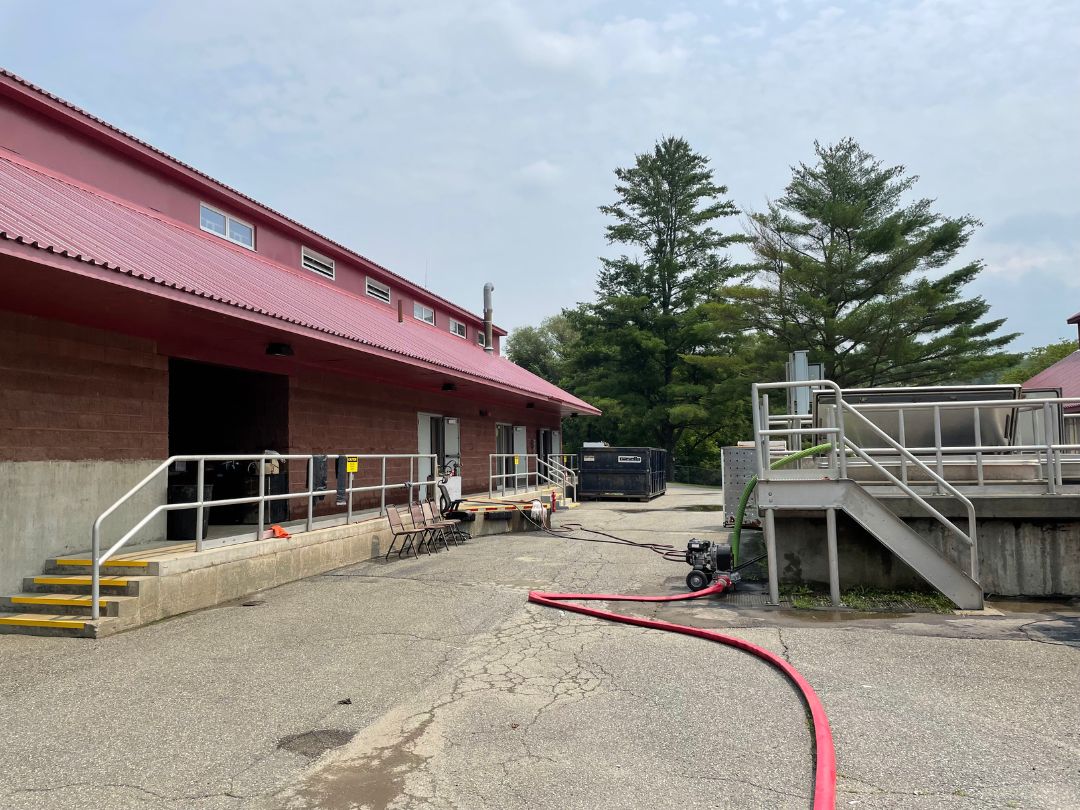
Until power is restored to the facility’s pumping system, crews have little choice but to continue releasing untreated wastewater into the Gihon River, he said, estimating the rate of release to be about 80,000 to 100,000 gallons a day. He noted that while the effluent contains human waste, it is “heavily diluted” with a mixture of wastewater from other household uses, such as washing machines, dishwashers and showers.
It could be another week or two before the plant is able to start treating small amounts of water again, he said. It might be a year before operations are back to what they were before the flood.
Even as wastewater plants across the state take steps to recover, though, they’re facing challenges getting the parts they need to rebuild. That’s because of global supply chain issues that have impacted cities and towns since the outset of the Covid-19 pandemic, according to Liz Royer, executive director of the Vermont Rural Water Association.
Speaking by phone Tuesday morning as she was driving to Ludlow to visit that town’s wastewater treatment plant, Royer said she has spent hours and hours since the flooding started helping local leaders find the equipment they need to make repairs.
Access to parts is far more challenging now than it was after Tropical Storm Irene in 2011, she said, which could make rebuilding efforts take longer and cost more.
“If we needed a new control panel after Irene, it may have been available in a week or two,” Royer said. “Now it’s maybe a month or two, if you’re lucky.”
Royer also noted that more wastewater treatment plants were damaged this month, and to a greater degree, than in 2011. She said this could be because the latest storm brought multiple rounds of rain over a longer period of time.
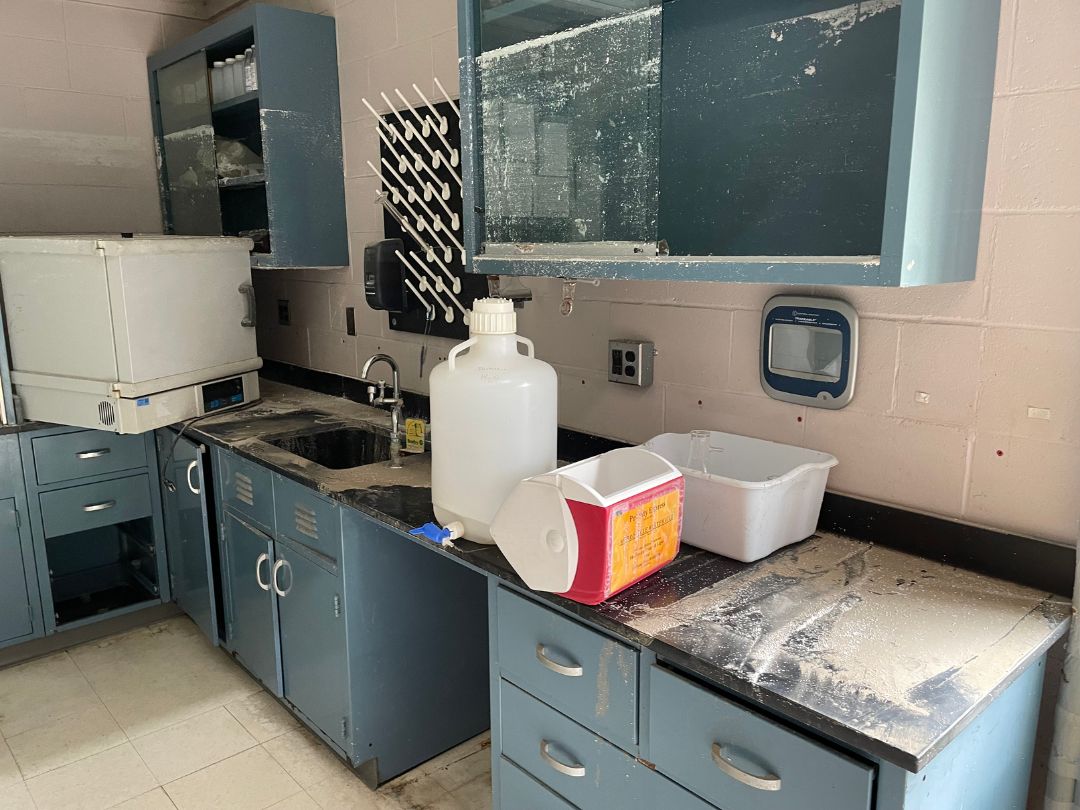
This month’s flooding also has some local and state officials thinking about whether it makes sense to rebuild critical wastewater infrastructure in very flood-prone areas. Kolb said engineers from the U.S. Army Corps of Engineers and the U.S. Environmental Protection Agency started evaluating the plants in Johnson, Ludlow and Hardwick on Monday — alongside state officials — to determine the next best steps forward.
Relocating the plant in Johnson away from the river is “definitely” part of that conversation, Kolb said, though she emphasized that no decisions have yet been reached.
Hall noted Tuesday that the town’s wastewater plant has experienced three “100-year floods” in the past 20 years — once 1995, once in 2019, and again this month.
“What’s it going to be?” he said, looking around at the washed-out plant he has worked at for the past five years. “Are we just going to keep doing this, over and over?”
