

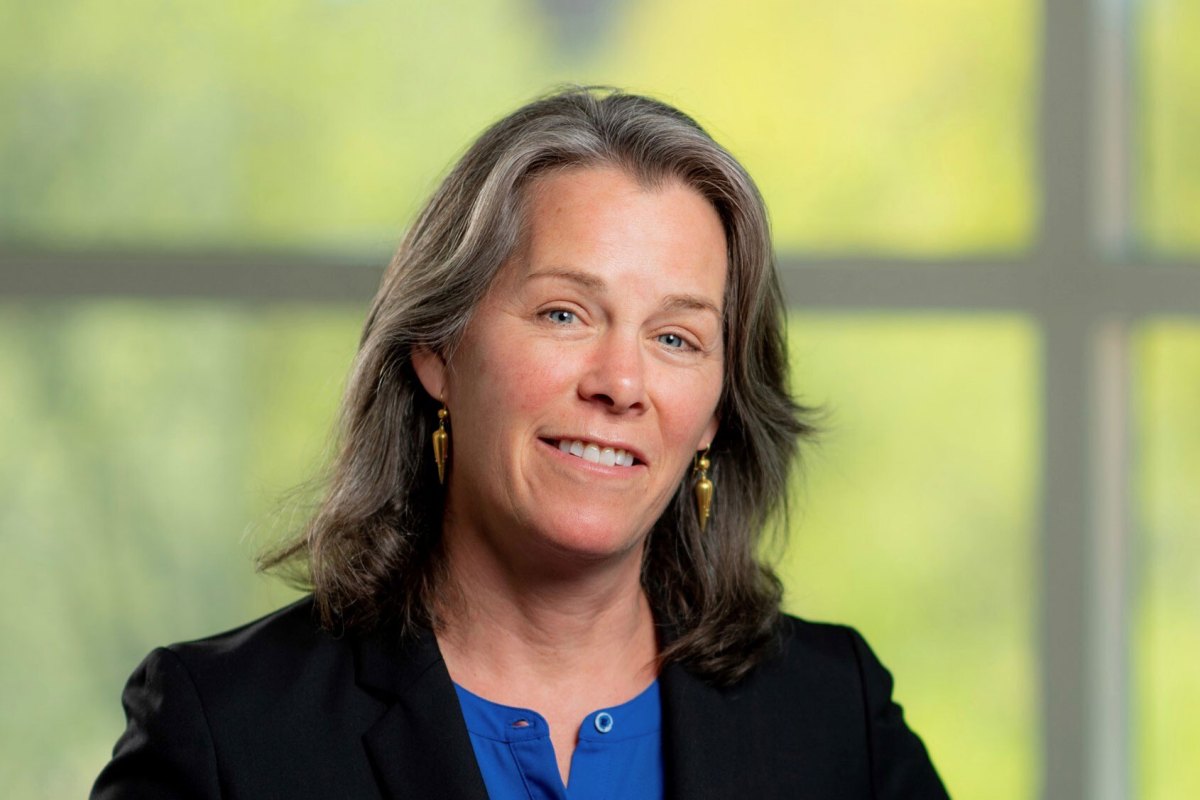
Anya Rader Wallack, an expert in state-level public health policy, is stepping down from her executive role at University of Vermont Health Network later this summer. She will leave her post as senior vice president for strategic communication on Sept. 1, according to a press release from the health network.
Rader Wallack served two Vermont governors — Howard Dean and Peter Shumlin — as a health care policy adviser and helped craft Act 48, which launched the Green Mountain Care Board, for which she served as the initial chair from 2011 to 2013.
She was appointed to the job at the health network in June 2021 after serving in public health leadership roles for the state of Rhode Island and teaching at Brown University in Providence. She will be returning to Brown’s medical school to lead a five-year, $25 million grant-funded effort to bring research-based best practices into health care and public health services.
The move will allow her to return to Rhode Island, where her parents and extended family are based, Rader Wallack said in an interview, noting that the commute back and forth has been challenging. “For my own mental and physical health and the health of my family, this is just a good move for me,” she said. Still, she called it “a bittersweet day.”
Rader Wallack said she has “tremendous respect” for colleagues at the health network. Through several years of significant challenges, weathering the Covid-19 pandemic and a widespread cyberattack in late 2020, “I’ve seen nothing but professionalism and dedication from them,” she said.

Jason Williams, the network’s vice president of government and community relations, will fill her role until a permanent replacement is hired, according to the network’s statement.
The announcement of Rader Wallack’s departure comes roughly six weeks after the departure of the health network’s chief operating officer, Al Gobeille, who succeeded Rader Wallack as Green Mountain Care Board chair.
Rader Wallack also chairs the board of managers of OneCare Vermont, the state’s largest accountable care organization and the only one that contracts with both public and private insurers. She said she will continue in that role for the foreseeable future. The board, made up of representatives from health care providers from around the state, conducts its business remotely.
Plus, Rader Wallack said, she wants to support the new CEO, Abe Berman, appointed after the departure of OneCare CEO Vicki Loner at the end of May, and help implement the ACO’s newly approved strategic plan. “I feel like we’re right in the middle of important work there,” she said.
New UVM Health Network CEO Sunny Eappen, who took the helm late November 2022, called Rader Wallack “an essential partner to me in navigating my first eight months here.”
Rader Wallack’s work during her two years in the position included developing a new website to show the general public how the network is responding to the ongoing challenge of providing health care in a rural setting.
She also directed efforts toward strengthening connections and efficiencies across the network’s six hospitals — UVM Medical Center in and around Burlington; Central Vermont Medical Center in Barre and Porter Medical Center in Middlebury, as well as three hospitals in the Adirondack region of eastern upstate New York — to improve access to care and reduce costs, she said.
“The only way rural health care systems can be successful is to be real systems,” and to have cooperative working relationships with administrators and regulators in the state and federal government, said Rader Wallack.
“If we’re not working cooperatively, or we’re working antagonistically, the outcome won’t be good,” she said.
“You can’t just have it be banging heads,” she added. “To change the health care system in ways that are going to make it sustainable at this point in time requires a partnership between government and the private sector, even if there is regulatory tension in that partnership.”
