

Updated July 13 at 7:21 a.m.
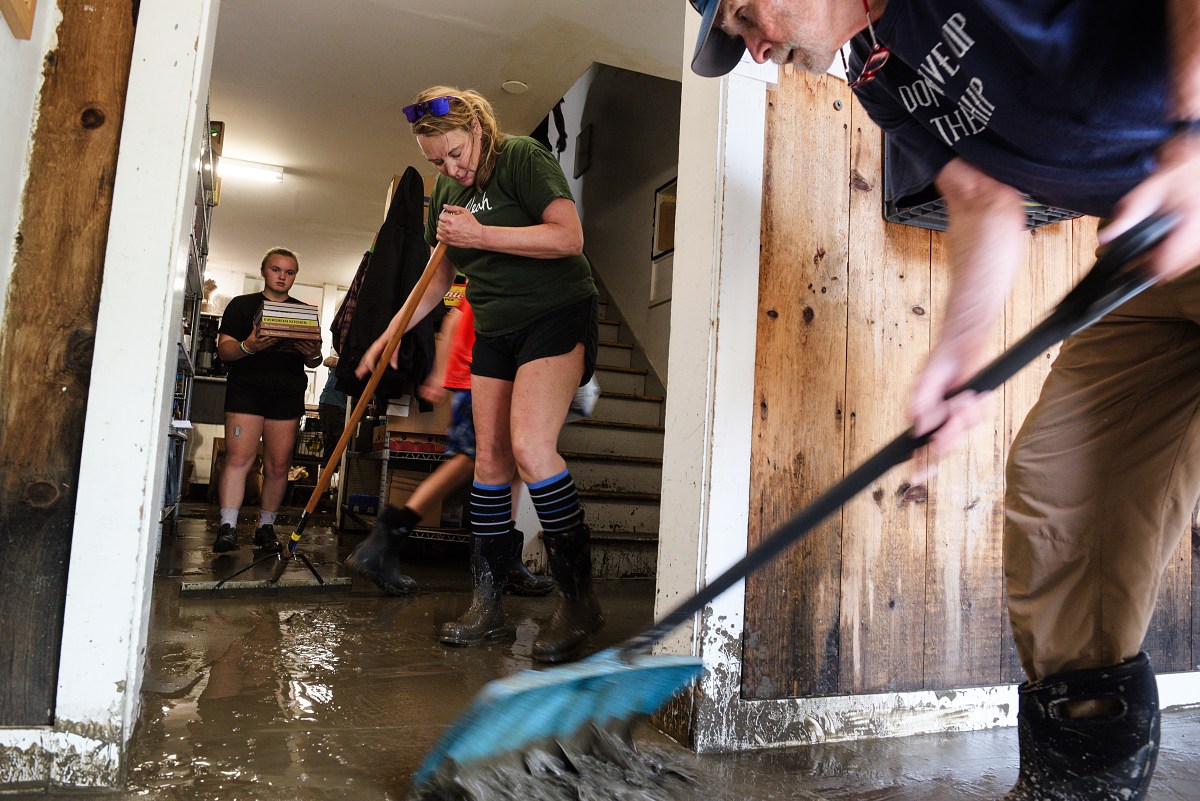
Catastrophic floods that turned dozens of Vermont neighborhoods into lakes of standing water also threatened water quality in several areas of the state.
As of Wednesday, Morrisville had issued a “do not drink” order, and boil water notices were active in multiple towns while water testing is being completed, including Barre City, Chelsea, Chester, Richmond, Ludlow, Marshfield, Montpelier, Woodstock Village, and areas of Alburgh and Weston, according to the Agency of Natural Resources.
Residents have been advised to boil their drinking water for a minimum of 60 seconds to reduce the risk of consuming pathogens, parasites or bacteria that floodwaters can introduce into drinking water and well systems.
Town residents under boil water advisories should use boiled or bottled water for brushing their teeth and should refrain from swallowing water while showering or bathing, according to the U.S. Centers for Disease Control.
Boil advisories also mean that residents should refrain from using appliances that draw water from a water line — such as refrigerators that dispense water or ice. Dishwashers are typically safe to use if water reaches a final rinse temperature of at least 150 degrees Fahrenheit, according to the CDC.
On Tuesday, pungent odors of gas and sewage could be detected in numerous floodwaters around the state. The swollen Black River along Route 103 in Ludlow, for example, smelled of sewage and gasoline.
Similar stenches permeated in heavily flooded downtown Montpelier, where rings of petroleum rippled across flood water that smelled of oil and gas. But it was not clear on Wednesday whether the capital’s drinking water had been contaminated because it’s isolated in a separate pipe system, according to Kurt Motyka, director of public works in Montpelier.
“The drinking water is pressurized in pipes, so (flood water and drinking water are) not in contact with each other,” Motyka said. “The drinking water is on a precautionary boil water notice that was recommended by the state of Vermont.”
The city’s public works officials are waiting for direction from the state on conducting additional coliform tests, normal sampling protocols that scan for dangerous bacteria, such as E. coli, in drinking water systems, Motyka said.
Given the sights and smells, Motyka said testing isn’t required to know that flood waters swirling through the city are dangerously contaminated.
“People should not be walking in the floodwater at all. There are oils. There’s garbage debris,” Motyka said. “If (individuals) have any cuts or anything, bacteria (from the floodwater) can cause an infection.”
Exposure to flood water can also cause skin rashes, gastrointestinal illness, Tetanus and Leptospirosis according to the U.S. Centers for Disease Control and Prevention.
During a press conference on the state’s emergency response on Wednesday, Public Safety Commissioner Jennifer Morrison urged residents to stay out of all the state’s bodies of water — lakes, rivers and flooding — due to a range of dangers, from the effects of contamination to unseen hazards.
While Motyka said it is not yet confirmed whether bacteria has entered Montpelier’s water system, private wells that have been submerged are much more likely contaminated and should not be used for drinking water at all.
“We know somewhere about 40% of Vermont’s population uses (private wells), and there’s less safety measures and monitoring in place,” said Tom DeBell, environmental health engineer at the Vermont Department of Health. “We are offering free testing for homeowners whose water systems have been impacted.”
DeBell said at-home tests can be ordered from the health department’s lab by calling 802-338-4724.
Motyka estimated that the results of testing conducted in Montpelier on Wednesday afternoon would be available by Thursday afternoon.
Other towns and cities under boil water advisories are awaiting the results of testing as well, according to the Vermont Agency of Natural Resources.
Video resources for interpreting boil water advisories are being made available in multiple languages through the Vermont Language Justice Project, according to Alison Segar, the project’s director. Segar said videos in Spanish and Mandarin will be accessible on the project’s YouTube page by Thursday morning.
Correction: An earlier version of this article misrepresented the kinds of contaminants that boiling water can reduce the risk of.
