

Updated Tuesday, June 27, at 12:02 p.m.
A federal judge denied a motion to dismiss the Burlington School District’s lawsuit against Monsanto on Monday, allowing the suit to proceed.
U.S. District Court Judge William Sessions denied the motion in a lawsuit related to PCB contamination at Burlington High School. The school district alleged in a complaint filed in December that the agrochemical giant knew of the potential harm of PCBs, or polychlorinated biphenyls, a class of chemical commonly used in building materials until the 1970s that has been linked to damaging health effects.
Attorneys for Monsanto filed a motion in February to dismiss the school district’s lawsuit, arguing that the statute of limitations had passed because the school district should have known of the contamination much earlier than 2019, when testing first revealed elevated PCB levels in the high school building. In his ruling on Monday, Sessions said the lawsuit’s timeliness can’t be decided in response to a motion to dismiss.
Monsanto also sought to dismiss a nuisance claim, in which the district alleged that Monsanto marketed and sold PCB-containing products knowing that they were harmful. Monsanto said it couldn’t be held liable for that claim because “it did not control the PCB-containing products when they allegedly caused harm,” Sessions wrote, summarizing Monsanto’s argument. Sessions rejected that argument on legal grounds.
In their motion, attorneys for Monsanto also said a “compelling public policy” reason was needed to make a nuisance argument. In denying Monsanto’s motion, Sessions pointed to a reason, writing that “the Court need look no further than the allegation of knowing and widespread private and public harm resulting from the manufacture and use of PCBs.”
Monsanto also argued that because the school district was responsible for bringing PCBs onto the property, there could be no claim of trespass, one of the claims that the district used in its original complaint.
Sessions set aside that question, for now.
“The Complaint alleges that Monsanto knew its PCBs were substantially certain to enter School property. At this early stage in the case, that allegation is sufficient for a plausible claim of common law trespass,” Sessions wrote.
In reaction to Sessions’ order, a spokesperson for Monsanto parent company Bayer, Nicole Hayes, said in an emailed statement that the company disagreed with the decision and was confident that the “full evidentiary record will demonstrate Monsanto should not be held liable.”
The Bayer statement also sought to deflect blame to the state.
“The bottom line is that the state has underfunded its public schools and significantly deferred recommended best maintenance practices,” Hayes wrote. “Burlington High School illustrates some of the potential consequences of this mismanagement with the discovery of hazardous materials like lead and asbestos.”
Matt Pawa, an attorney for Massachusett firm Seeger Weiss who is representing the school district, said in an email that the district “is very pleased with the court ruling today and looks forward to moving the case forward and holding Monsanto accountable for knowingly selling a toxic products for use in school buildings.”
In December, attorneys for the school district and district officials made clear in court filings and interviews that they wanted Monsanto to pay the cost of demolishing the former high school and to assist in building a new one at the site.
The school district alleged that the levels of PCBs in the school made the Institute Road campus unusable. In 2020, the building was closed. When in-person learning resumed in 2021, students were moved to a temporary location at the former Macy’s Department Store in downtown Burlington.
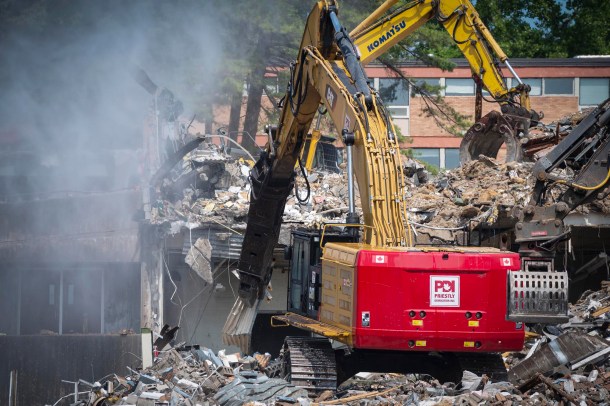
In November, Burlington voters approved borrowing up to $165 million to help pay for the nearly $200 million construction project. The demolition — and environmental remediation — of the old high school began in February and is still underway. District officials hope a successful lawsuit against Monsanto could help to pay down the construction debt.
Burlington is not alone in seeking damages related to PCB contamination. A Burlington attorney said last week that he has been retained by multiple Vermont school districts who are seeking legal action against Monsanto.
Earlier last week, Attorney General Charity Clark filed suit against Monsanto for damaging the state’s natural resources and schools.
Attorneys for Monsanto and the Burlington School District could not be reached for comment on Monday.
