

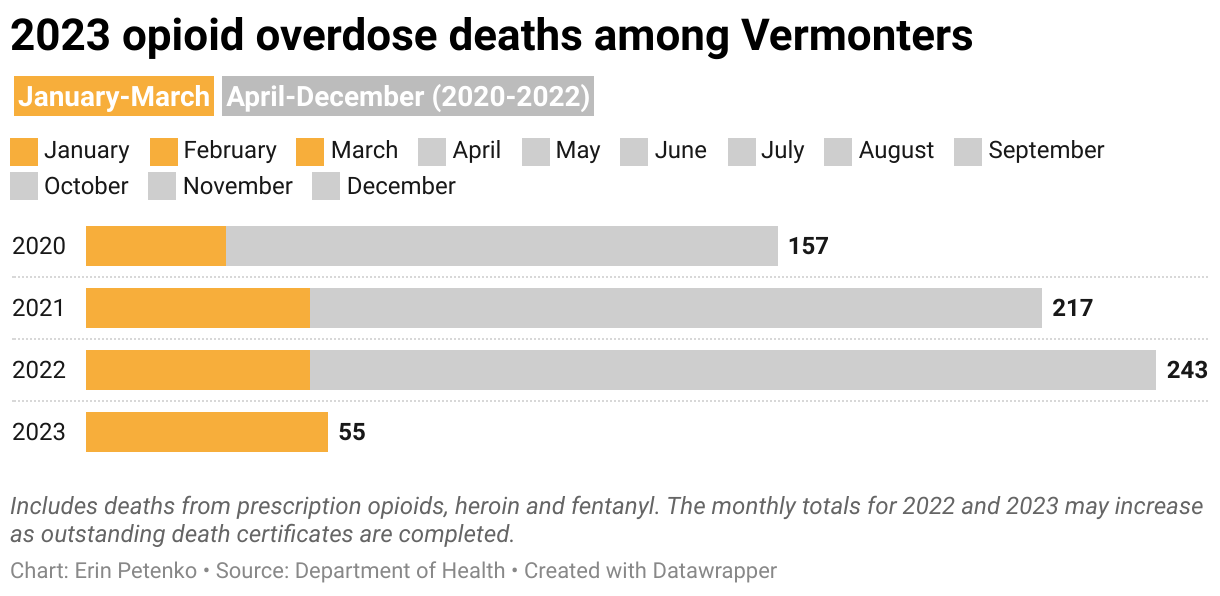
Fifty-five Vermonters died of an accidental opioid overdose in the first quarter of this year, continuing an upward trend that began in Vermont in 2020, the latest state data show.
In comparison, there were 51 such deaths during the same period last year — a year in which almost 250 Vermonters fatally overdosed on opioids, an unprecedented number. During the first three months of 2021, that figure was also 51, up from 32 in 2020.
Windham County registered the highest death rate this quarter, at 17.4 deaths per 100,000 residents.
As was the case last year, this year’s opioid deaths so far have been driven by the prevalence of the synthetic opioid fentanyl and the stimulant cocaine, according to a Vermont Department of Health report issued this week.
Fentanyl was involved in 53 of the 55 total fatalities between January and March, and cocaine in 35.
State health officials also continue to flag the growing use of xylazine, an animal tranquilizer, and gabapentin, an antiseizure medication, as opioid dilutants.
Xylazine was present in 16 of the death cases this quarter, and gabapentin in six. Neither drug was even on the health department’s opioid overdose radar this time two years ago. (Opioid overdose deaths usually involve more than one substance.)
Xylazine is particularly sought-after as a “cutting agent” for fentanyl by users because it prolongs the high, according to research.
Health officials are especially concerned about the presence of xylazine and gabapentin because they are not opioids, which means they blunt the efficacy of the opioid antidote naloxone, popularly known as Narcan. Because these drugs coexist with opioids in unknown quantities, officials say users never know when they could be taking a lethal dose.
“We have seen many of these tragic instances often have similar contributing factors — including levels of drugs like fentanyl, xylazine and gabapentin that are far more powerful than people realize, making accidental overdoses more likely,” Nicole Rau Mitiguy, the state health department’s substance misuse prevention manager, said in an email.
Three years after the coronavirus pandemic reached the U.S. in 2020, experts say opioid use still reflects some of the after-effects of that health emergency. The pandemic — which brought job and home losses, unexpected illnesses and deaths — upended people’s lives, causing depression, anxiety and stress.
Addiction recovery professionals say some people began using illegal drugs under these socioeconomic pressures, while others in recovery relapsed.
Researchers also say social isolation policies during the pandemic led more people to use drugs on their own, with no one around to help when they overdosed. Some began using substances of unknown quality from new or unknown sources when their normal supply chains became disrupted.
“I think we are still seeing the ramifications of the levels of stress and modes of consumption that we saw in the pandemic,” Magdalena Cerda, director of the center for opioid epidemiology and policy at the NYU Langone Health system, said in an interview. “It’s likely a combination of things.”
Because non-opioid drugs can be involved in an opioid overdose, additional medical assessment is necessary, Rau Mitiguy said. It’s important for people to call emergency medical responders during an overdose even if they have naloxone on hand, she said.
The opioid fatality count for the first quarter of 2023 is preliminary. The monthly tally may increase once outstanding death certificates are processed. The total for 2022, for example, has risen to 243 from the 237 deaths the state initially reported in March.
Opioid deaths among Vermonters have been on the rise since 2020, following a decrease in 2019.
The Vermont Department of Health is encouraging people to reach out to VTHelplink, the state’s drug and alcohol support center, to learn more about available treatment and recovery services.
