


Updated at 7:41 p.m.
The state of Vermont settled with eight defrauded Jay Peak investors on Thursday, just two days into a 10-day trial that was to feature testimony from former Gov. Peter Shumlin and other state officials. The state is also discussing a possible settlement that could apply to hundreds more, according to Russell Barr, an attorney representing some of the investors.
The state Agency of Commerce and Community Development ran a regional center that both promoted and oversaw projects that secured hundreds of millions of dollars in economic development from foreign investors as part of the federal EB-5 visa program. Federal regulators in 2016 said the Jay Peak projects were a sham.
Investors later sued the state, alleging that Vermont officials failed to meet their legal obligation to supervise the projects and prevent an eight-year Ponzi-like scheme.
It is unclear how much money the eight defrauded investors will receive from the deal announced Thursday, but Barr said the plaintiffs are in the midst of negotiating a potentially much more expansive settlement with the state that could extend to several hundred investors, including those not directly involved in the lawsuit.
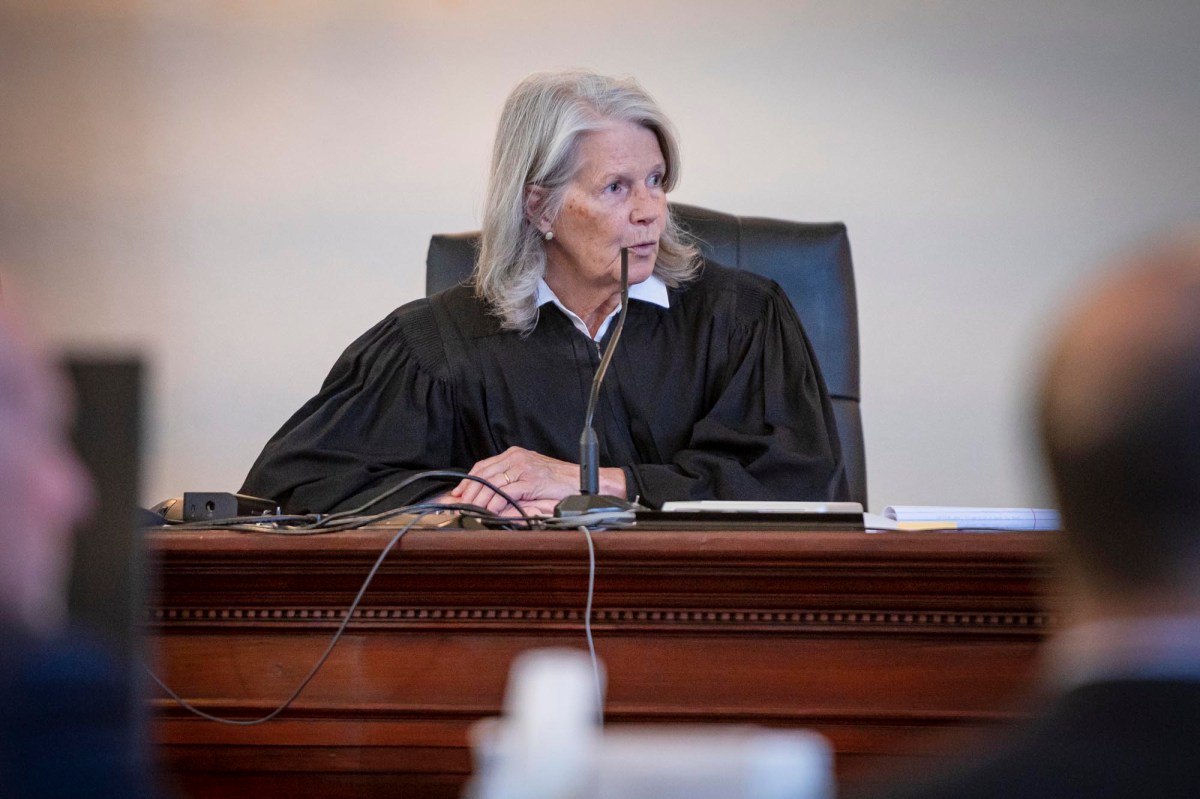
Judge Mary Miles Teachout dismissed the trial for the eight investors in Lamoille County Superior Court in Hyde Park after announcing that the two sides had come to an agreement.
In a statement Thursday, Attorney General Charity Clark said the state was “pleased to have reached a resolution” in the civil suit.
“Vermonters, investors, and the State of Vermont were all deceived by the fraudulent promises made by Ariel Quiros, Bill Stenger, and William Kelly — who have since answered for their crimes in the justice system,” Clark said.
Quiros, Stenger and Kelly were criminally convicted last year. Stenger was released from jail in March; Quiros and Kelly are serving prison sentences.
The investors sued the state and two regional center directors for alleged negligence, gross negligence, breach of contract, and breach of good faith and fair dealing. While criminal cases must be proven beyond a reasonable doubt, civil cases are decided on the preponderance of the evidence, Teachout told jurors on Tuesday.
Each of the investors put up $500,000 in the Northeast Kingdom developments, with the hope that the money would meet the EB-5 program’s job-creating requirements, allowing them to obtain green cards and U.S. residency.
The projects were part of a $350 million Ponzi-like scheme with seven phases — six at the Jay Peak Resort plus AnCBio Vermont, a proposed biomedical facility in Newport. Another project at Burke Mountain involved another $60 million in defrauded investor funds. In all, more than 850 immigrant investors were defrauded.
Barr Law Group, which represents 32 investors in all seven phases, filed a lawsuit in 2017. The case was thrown out in the Lamoille court five years ago. A subsequent appeal to the Vermont Supreme Court allowed the case to move forward, but a behind-the-scenes legal battle ensued. The Vermont Attorney General’s Office sought to delay the case, called for its dismissal, and blocked depositions and the release of “privileged” documents until March of this year when Teachout ruled in the plaintiffs’ favor and 39,000 pages of state records were released.
Vermont’s ‘unique advantage’
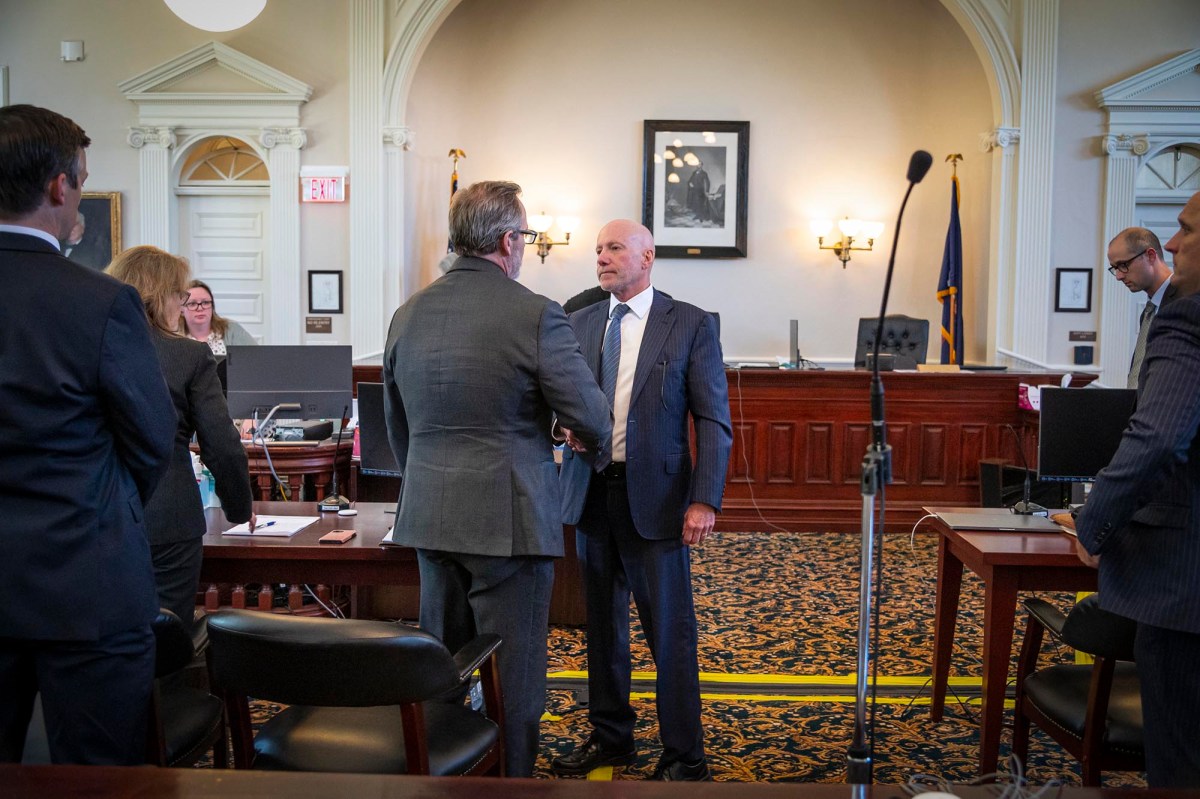
Packed into a corner of the federal-style Hyde Park courtroom, jurors sat quietly Tuesday as they listened to opening statements from Barr and Assistant Attorney General David Groff.
The opposing lawyers used the same documents to make very different cases to the jury of 15 Lamoille County residents.
Over the course of 90 minutes, Barr described investors being taken in by state marketing materials, letters of support from then-Gov. Peter Shumlin and then-U.S. Sen. Patrick Leahy, and legal agreements with the Jay Peak developers describing the Vermont Regional Center’s obligation to supervise the projects.
Sometimes barely audible above the whirring air conditioning system, Barr described more than a dozen documents projected on computer screens. He told jurors that the evidence would prove investors were misled by top state officials and the center’s employees, contending they promoted the projects on behalf of Jay Peak but failed to provide oversight as required under the federal EB-5 immigration program.
A brochure touting the Vermont Regional Center’s “unique advantage” was projected on one of the screens. It sported the state’s logo side by side with the Jay Peak brand. Barr showed other materials, including web pages and emails between investors and state officials. They all made the same promises to investors who chose to invest in Vermont and Jay Peak: faster immigration approvals, easier access to the EB-5 program, state oversight and compliance with U.S. law.

The evidence would show that the state and Jay Peak were partners in selling Vermont’s “unique advantage,” Barr said. They used joint messaging to distinguish Vermont and Jay Peak from competitive projects in Chicago, New York City and other major cities in the United States, Barr said. Shumlin advanced the messaging by saying in a video and in-person sales events that the projects were “audited,” according to documents filed in the lawsuit.
“The messaging was worldwide and consistent, targeted by the folks before you today,” Barr said, gesturing to the group of attorneys for the state and James Candido, a former Vermont Regional Center director accused of gross negligence in the lawsuit.
Hundreds of investors made Jay Peak one of the most successful EB-5 developments in the nation. The problem, Barr said, was that the state did not supervise the projects as advertised and ultimately failed to protect investors.
When it was Groff’s turn to address the jury, he dropped reams of paper onto the wooden railing that surrounded the jury box, making four thuds that punctuated his opening comments. He explained that the records before them were offering agreements and legal requirements for the EB-program.
Groff said the state “complied with all laws” and state officials vetted the projects as “they said they would.”
“All the Vermont Regional Center did in this case was to foster growth,” Groff said. “Our role was to support job creation only.”
Candido did what he was supposed to do, Groff said. The former regional center director passed on questions and complaints to his superiors and conducted quarterly in-person reviews with Stenger.
There was no law requiring that the Vermont Regional Center audit the Jay Peak developments, Groff said. Nor was there anything in the fine print guaranteeing the investors would get green cards or their money back, he said.
“This is not a situation where no one was paying attention,” Groff said. “There is no question these plaintiffs were harmed by fraud and those responsible are not here today.” The assistant attorney general said Stenger, Quiros and Kelly were responsible for the fraud and concealed their activities from the state.
“The state did not deceive them,” Groff said, referring to the investors.
Investors say but for state’s promises they wouldn’t have invested
About half of the investors are in immigration limbo as a result of the fraud; about 600 have not been made whole financially.
Two appeared in the witness box to tell their stories on Tuesday: Felipe Accioly, who came from Brazil, and Charmaine Enslin, formerly of South Africa.
Accioly pushed back on comments made by potential jurors the day before who said they were angry about “rich people buying citizenship.”
“I didn’t come from a rich family,” he said.
Accioly grew up in Rio de Janeiro. His father was a department store buyer who died when he was 14. Accioly put himself through night school, working for a chemical company as a quality control manager during the day where his wife also worked. He eventually developed inventory software for the company, then became a Y2K technology consultant.
“That’s how we made our money. It’s not like it dropped from the sky,” Accioly said. “Every single cent was hard earned.”
In 2012, Accioly and his wife sold their apartment in the city of Rio and a small farm in the Rio province, and poured all of their savings into the $500,000 investment they made in the Stateside hotel and condo project at Jay Peak. They later moved to Stowe where they wanted to give their daughter, Carolina, an opportunity to “grow up in America.”
When a Jay Peak partner raised questions about the financial accounting at Jay Peak in 2012, Accioly emailed Candido.
“I talked to James Candido who takes care of the project and he told me it was OK,” Accioly said.
In cross-examination, Groff asked who persuaded Accioly to invest in Jay Peak and suggested that it was Stenger and an immigration attorney who steered him to Stateside.
“(Candido) didn’t ask you to enter into a contract with you did he?” Groff asked. No, Accioly said.
“Didn’t you tell me you had no relationship with James Candido at that point?” Groff then asked, probing whether Accioly remembered the comment in a deposition. Accioly replied, “Yeah, you grilled me for 10 hours.”
Several times the assistant attorney general pointed to one of the stacks of paper documents and asked Accioly if he had only relied on the marketing material and if he had read the offering agreement before he signed it. The investor replied that he had read the agreement. Groff asked if he was a lawyer; Accioly replied no. Later the assistant attorney general commented that English wasn’t Accioly’s first language.
Enslin, the former South African, drove 18 hours from Atlanta to participate in the trial. Her father, husband and young daughters sat through the jury selection and opening arguments. In a brief introduction to the jury, she explained that her father, an investor in the Hotel Jay project, decided to get the family out of Johannesburg after their home was invaded and shots were fired. Family friends had been raped, killed in hijackings at gas stations, grocery store parking lots and outside their homes.
Her family’s home was broken into a number of times. At one point, they found their Dalmatian shot dead at the bottom of their swimming pool.
“Here it’s hard to understand what it’s like to live every day where you fear for your safety,” she told the jury.
America represented “safety and freedom.” Her father David Malcher decided to invest in Jay Peak, and to leave South Africa with her sister and mother. Enslin, who was 21 and unable to participate in the program with the family because she was too old, was left behind to take care of the house. Eventually, her father leant her his retirement funds to invest in the Penthouse Suites project. “He sacrificed a lot to give me the opportunity to move over,” she said.
Malcher studied the Jay Peak and state materials. He believed that because the state had promised to audit the projects, Jay Peak was a safe investment, Enslin said, and she followed his lead.
“We left friends, we left the culture, we sold homes to make investments to come over,” she said. “When you know you’re risking losing everything you want to be sure, because there is nothing to go back to.”
Enslin said she hasn’t been able to repay her father.
