


Updated at 7:58 p.m.
On June 20, conservative activist Walt Heyer, who previously identified as a trans woman and now advocates against gender-affirming care practices, will speak in Vergennes.
At an evening seminar — titled “Transgender ‘Care’/Helpful or Harmful?” — Heyer will outline his criticisms of gender-affirming treatments, according to an event flyer, including an argument that using trans people’s preferred pronouns can be damaging.
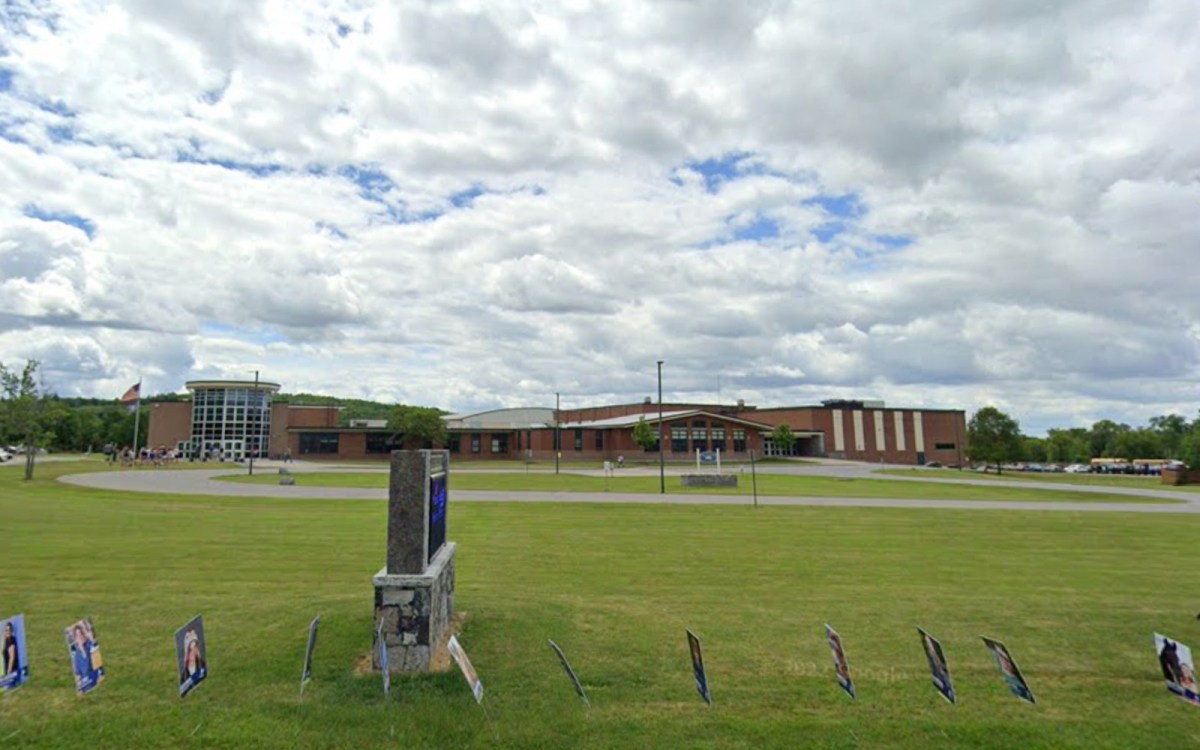
The venue? A public school — specifically, Vergennes Union High School.
LGBTQ+ equity initiatives, particularly in K-12 school settings, have become increasingly politicized, drawing heated opposition largely from conservative organizations and politicians.
But holding an anti-trans event in a public school building appears especially unusual, given that such views run counter to the official values of the Addison Northwest Supervisory District — and much of the state.
Addison Northwest superintendent Sheila Soule said in an email that officials were not hosting, promoting or endorsing the event and affirmed the district’s “commitment to equity and inclusion.”
The district has a policy that allows community members to rent out school spaces for a variety of purposes, she said: entertainment, community meetings, tutoring, and more.
“There are a few reasons we are allowed to deny requests for building use,” Soule said. “Disagreeing with a group’s views is not one of them.”
‘One of the best places to have this event’
Heyer, the scheduled speaker, detransitioned after spending eight years as a trans woman, according to his website. He is now a critic of gender-affirming care and has claimed that a child’s gender is “absolutely fixed at conception” and cannot be changed.
The June 20 event is organized by a group called Parents Rights in Education, an Oregon-based organization that advocates against equity initiatives, “Marxist doctrine” and sex education in schools.
Tara Ferf Jentink, a district parent who leads the Vermont chapter of Parents Rights in Education, believes that LGBTQ+ subjects are “not age-appropriate material” for young children, she said in an interview.
“I believe that the way that they are discussing things with children is actually promoting transgenderism,” she said. Her two children attended elementary school in the district, she said, but the family decided to pull them out of the district at the end of the school year.
A public school is “one of the best places to have this event,” she said. “This is a parent’s rights topic. That is a community topic.”
But Amanda Rohdenburg, associate director of the LGBTQ+ advocacy nonprofit Outright Vermont, said that holding the event in a public facility could be particularly harmful to LGBTQ+ students.
“The difficulty of hosting this in a public school setting is that it really continues to message to queer and trans youth that they are not welcome in public spaces,” she said.
Rohdenburg also criticized framing gender-affirming care as a subject of debate, comparing it to the scientific consensus on climate change.
“If you have 99 experts saying this is what is happening and how we need to address it, and then one person who is like, ‘Gosh, I disagree’ — that’s not both sides,” she said.
‘Discriminatory but protected’
In Vermont, similar events in public facilities appear to be rare. But two relatively recent examples show officials struggling to seek a balance between freedom of expression and offensive speech.
In 2020, an organization called Gender Critical Vermont booked a room at Burlington’s Fletcher Free Library for a “discussion group for Vermonters who oppose the subversion of Women’s Rights by the transgender agenda,” according to the library’s director, Mary Danko.
“After receiving comments from a number of individuals in the community expressing concern about this group’s use of library space, we have engaged in considerable discussion with the City Attorney’s Office and concluded that we are allowing this meeting to occur,” Danko said in a January 2020 message on the library’s website.
The meeting organizers ultimately canceled the discussion before it took place, she said in a later message.
In January, media outlets reported that the public Vermont Technical College had canceled a screening of “What is a Woman?” — an anti-trans documentary.
But Sylvia Plumb, a spokesperson for the Vermont State Colleges, told VTDigger Friday that administrators had no involvement in the event. “Vermont Tech was not sponsoring the film and did not cancel the film screening,” she said in an email.
Plumb said she believed that the organizer initially postponed the screening, but ultimately decided to cancel it.
In an email Jan. 15 to community members, then-Vermont State University president Parwinder Grewal said the documentary did not represent the school’s values.
“This week, we will review our facilities use policies and engage our community in any changes to them, recognizing our responsibility as a public institution to maintain reasonable and viewpoint neutral policies,” Grewal wrote. “We encourage all to engage in civil discourse and thoughtful debate that does not normalize discriminatory but protected speech.”
The college’s policies and procedures are currently “under review,” but have not yet changed, Plumb said.
‘Not in harmony’
Mark Oettinger, a Burlington attorney and former general counsel at the Vermont Agency of Education, said that school districts could decide to prohibit community members from renting their facilities.
If a district does allow community members to use its space, he said, there could be commonsense restrictions on speech: no incitement to violence, no fomenting rebellion, no shouting “fire!” in a crowd.
But once facilities are open to the public, “If a school district starts to try and constrain content of speakers, I think you get into problems,” he said.
Under its policy, Addison Northwest officials can reject an event for being political or for-profit; for involving drugs or alcohol or threatening damage to school equipment; or if it “could reasonably be expected to or actually do give rise to a riot or public disturbance.”
In Vermont, many school district policies are based on models published by the Vermont School Boards Association. Addison Northwest’s superintendent said she believes her district’s building’s use policy is among them.
The school boards association policy on “Community Use of School Facilities” is currently under a regularly scheduled review, according to Sue Ceglowski, the organization’s executive director, and was not publicly available on its website as of Friday.
“The regular review process includes internal formatting and legal review as well as review by the legal team of the Vermont School Boards Insurance Trust,” Ceglowski said in an email.
Ceglowski declined a phone interview, and did not respond to questions about whether the review would include discussion of events like the one in Vergennes.
On Thursday, as next week’s event began to attract media coverage, the Addison Northwest district posted a letter on its website homepage, affirming its commitment to “safe and inclusive schools.”
“The perspectives proposed by the organizers of the forthcoming event are not in harmony with the Vision and Mission of the District,” the letter reads. “We will persist in educating and supporting students in a manner that celebrates diversity and upholds the principles of equity.”
