

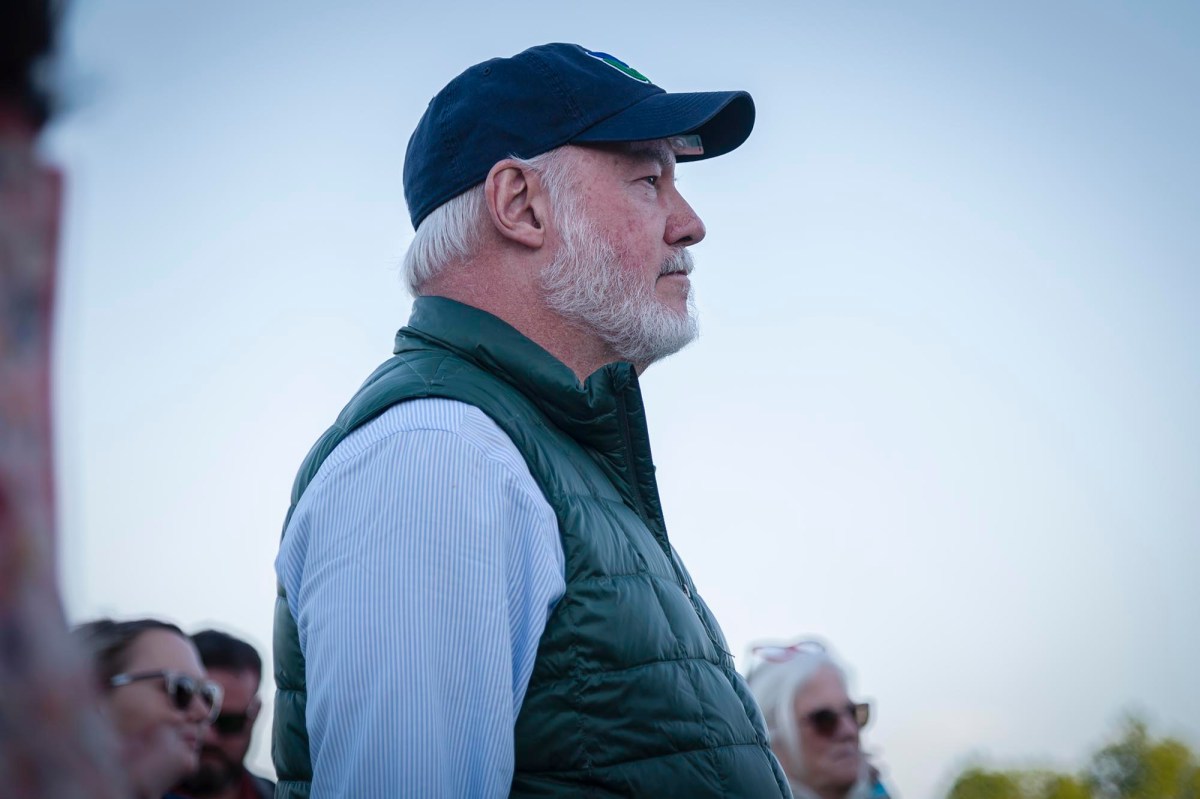
When he moved back to Vermont in 2017, Jim Welch was not looking for a full-time job. But after nearly half a century in journalism — including top posts at the Burlington Free Press and USA Today — he also wasn’t ready to call it quits.
“In the back of my mind was the idea of maybe pitching in to help at VTDigger,” he recalled.
Welch had witnessed the gradual decline of daily print newspapers and had followed VTDigger founder Anne Galloway’s work as she turned a one-woman website into a rapidly expanding nonprofit newsroom.
“It was a really smart approach,” he said. “I was inspired by Anne’s willingness to try to reimagine what journalism might look like here.”
Galloway was similarly interested in Welch and hired him in January 2018 as “projects editor” — a position he would later describe as “kind of vague in terms of hours and compensation.” Pretty soon, the semi-retirement job became more than full time and Welch became essential to VTDigger.
As a senior editor, Welch at times oversaw the news organization’s investigative reporting and its political coverage; expanded its northwest bureau in Chittenden, Franklin and Grand Isle counties; and professionalized its internship program. When Galloway stepped back from her leadership position in May 2022, VTDigger’s board of trustees asked Welch to serve as interim executive director — a gig he hoped would occupy just a few months of his time but ended up lasting close to a year.
Last month, after Welch finished onboarding his successor, chief executive officer Sky Barsch, he finally called it quits and actually retired at 73 years old. To honor his services to VTDigger — and the broader world of journalism — the organization’s senior management team and board of trustees have renamed VTDigger’s internship program in his honor.
“Throughout his career, Jim has distinguished himself as a teacher and a mentor to up-and-coming journalists. He has inspired generations of reporters,” said John Reilly, president of VTDigger’s board of trustees and a former colleague of Welch’s at the Burlington Free Press in the late 1970s and early 1980s. “I can think of no better way to thank Jim for his service than to rechristen the initiative he built the Jim Welch Internship Program.”
‘The heyday of print journalism’
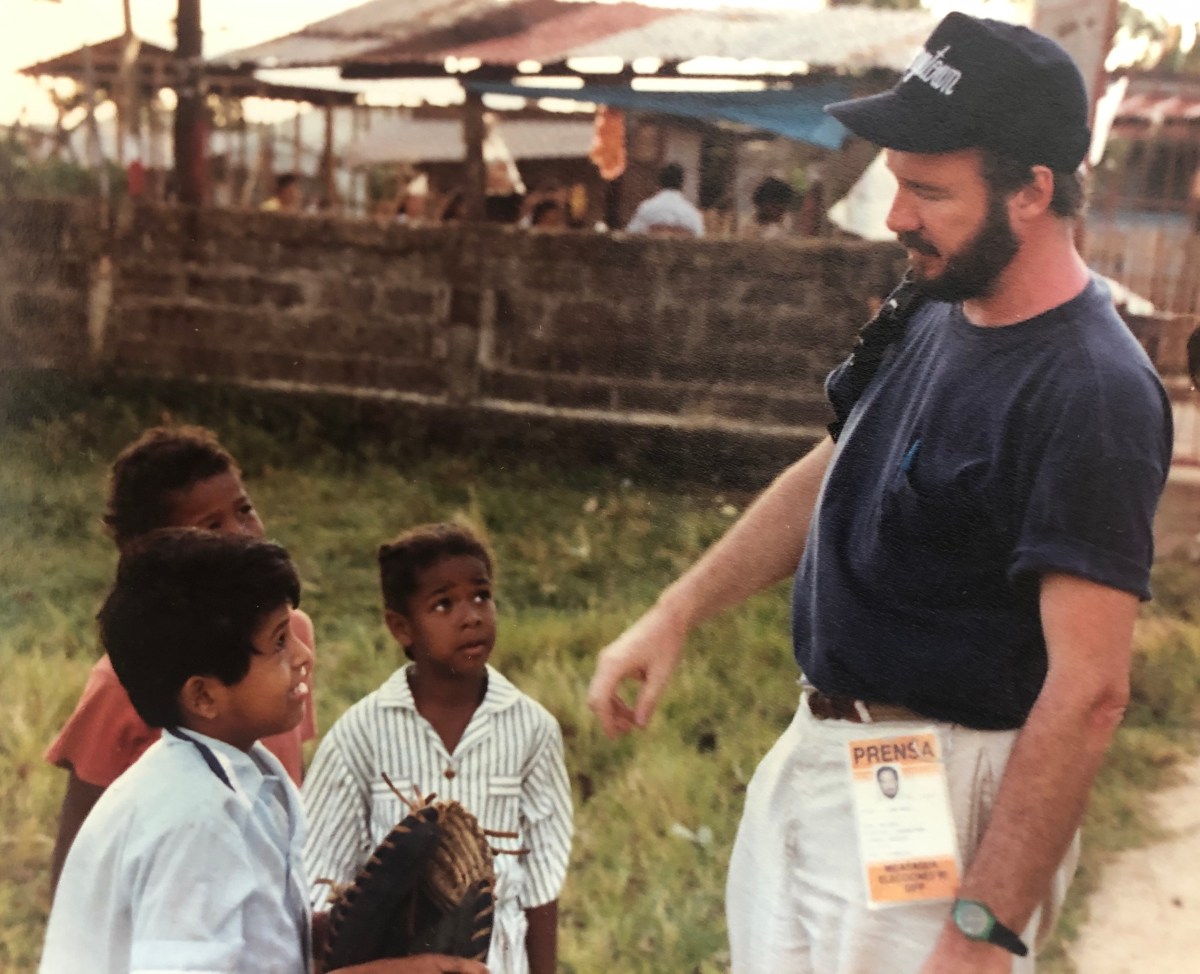
Welch hadn’t planned to go into journalism. But while studying international relations at Georgetown University, he got a job as a researcher at National Journal, the Washington, D.C., magazine focused on government and politics.
At the time, the Watergate scandal was engulfing the Nixon White House — and Welch found himself writing up weekly recaps of the scoops Bob Woodward and Carl Bernstein had published in the Washington Post. While filling in one day for a reporter covering the U.S. Senate Watergate Committee hearings, Welch had the good fortune to witness the revelation that the president had been secretly taping his conversations in the Oval Office.
“I was just completely drawn to the idea of being able to write and be up close to where these things were happening,” he said.
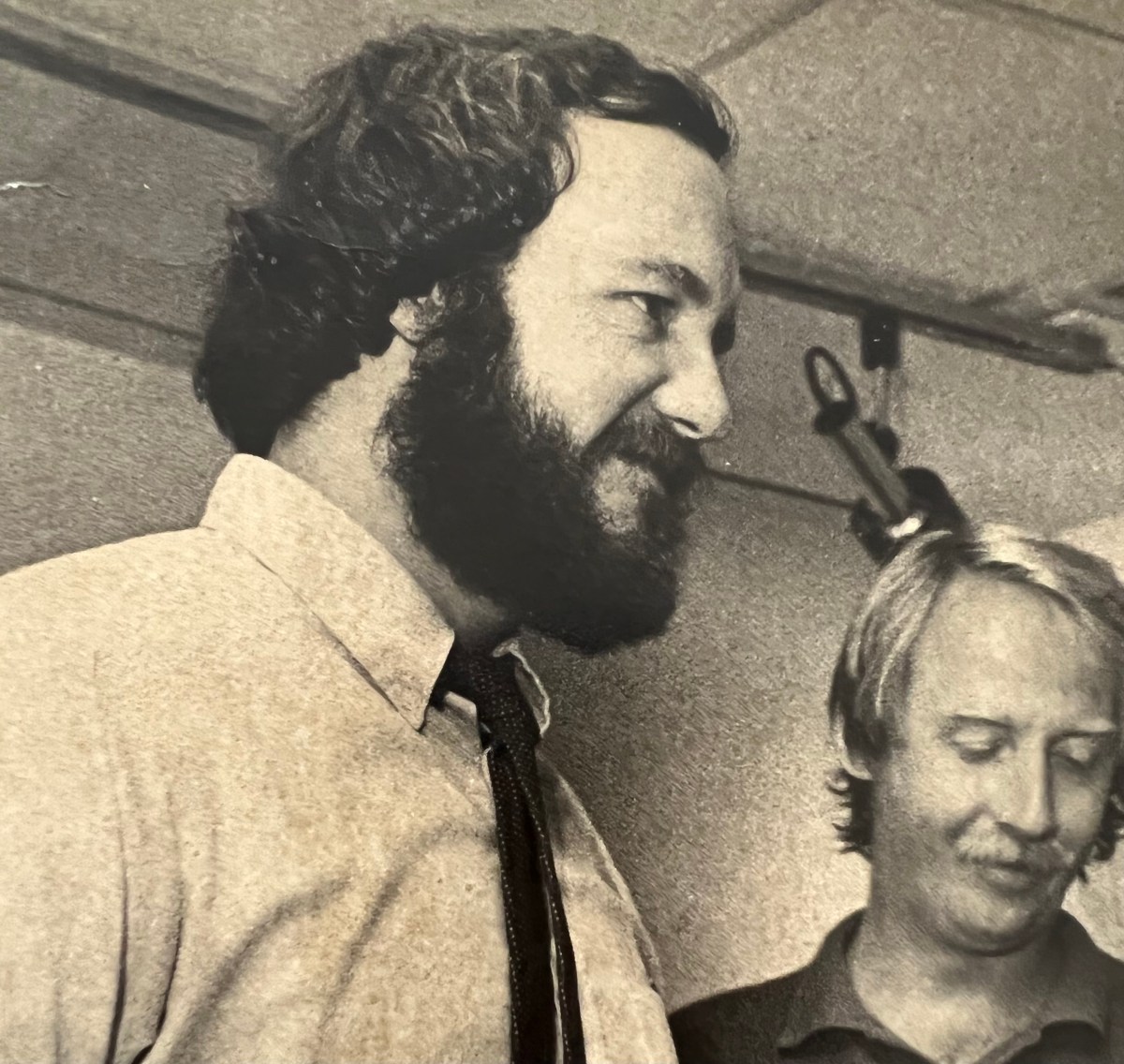
Welch was also drawn to Vermont, where he’d vacationed while growing up in Connecticut and where he’d spent an autumn working on an apple orchard in Shoreham. When the Burlington Free Press launched a new Sunday edition in 1975, Welch talked his way into an editing position at the paper and subsequently worked as a political columnist, Statehouse bureau chief, city editor and assistant managing editor.
When Gannett, the Free Press’ parent company, launched a new national newspaper in 1982, it recruited Welch and his close friend and Free Press colleague, Andy Gardiner, to help get it off the ground. Welch became the first Washington editor of the new paper, USA Today, overseeing its coverage of the White House, Capitol Hill and national politics.
But when the top job at the Free Press opened up the next year, Welch couldn’t turn it down. At 33, he became the youngest person to serve as its managing editor, a position that would later be renamed executive editor. At the time, the paper had more than 60 full-time staff members, Welch recalled.
“That was the heyday of print journalism,” he said.
At least one reader was thrilled by the news of Welch’s appointment. In a letter to the editor published a week after the paper announced his hiring in January 1983, Burlington resident Bill Mares wrote, “I am delighted that one of the best newsmen in the state will return from Washington and USA Today.” (Decades later, Mares would join VTDigger’s board and introduce Welch to the organization.)
Welch returned to USA Today in 1989 and spent another 25 years there — as deputy managing editor for sports and then deputy managing editor for news. One perk? The lifelong sports junkie served as USA Today’s on-site editor for 10 Olympic Games.
‘Persistent, determined and public minded’
One throughline of Welch’s career was his mentorship of young reporters.
Over the years, he worked with high school students in Washington, D.C., to publish school newspapers and advised college publications at Georgetown, the University of Vermont and Middlebury College. He regularly spoke with journalism students at Pennsylvania State University and, in 2007, served as a professional in residence at the University of Iowa.
Many of those who learned the trade from Welch have gone on to illustrious careers.
Among them was Michael Powell, who joined the Free Press staff in 1984 and went on to work for The Washington Post and The New York Times — covering politics, sports and, most recently, free speech and expression.
According to Powell, Welch impressed him as “a smart newsman who communicated joy.”
“He talked of the work needed to get a story and of the fun of the chase, which was a perfect stance for a newsroom with a lot of (then) kids,” Powell said. “He had a steadying hand, and he was not a pushover, which in my eagerness and ambition I sometimes viewed as unfortunate at the time and I see today as deeply fortunate for me.”
A few years later, while advising the University of Vermont’s student newspaper, The Cynic, Welch got to know its top editor, philosophy major Eric Lipton. He, too, would go on to work for the Times — as an investigative reporter with three Pulitzer Prizes to his name.
Lipton recalled Welch as “soft spoken, but persistent, determined, and public minded,” with a “steady hand and understanding of the vital role that journalism plays in American democracy.”
“I am so glad that Jim has played the role he did in helping promote public discourse and self-examination, through all these decades in Vermont, including at Vermont Digger, which is such a beacon of journalism and democracy,” Lipton said. “Vermont is a better place because of it.”
NBC News Washington correspondent Yamiche Alcindor, a former anchor of PBS’ Washington Week, worked with Welch at USA Today early in her career. At the time, Welch was leading the paper’s weekend coverage.
“It was a complete pleasure to work with Jim Welch,” she said. “As a fellow alum of Georgetown university, Jim welcomed me into USA Today‘s newsroom and taught me so much about reporting and writing. We spent many weekends together covering national stories and I will always cherish all that I learned from him.”
In recent years, Welch has served as an adjunct lecturer in the University of Vermont’s English department, working closely with student journalists and informally advising editors of The Cynic. Welch particularly enjoyed holding court on journalism ethics during weekly roundtables at Billings Library.
At VTDigger, Welch built an ad hoc internship program into a professional operation. Each year, anywhere from eight to 12 students and recent graduates join the organization for several months at a time, covering local and state news. They work alongside staff writers under the supervision of senior editors — and get a taste of life in the newsroom.
“We really do take seriously that part of our mission is to try to help inspire and train the next generation of journalists,” Welch said.
He was particularly diligent about corresponding with aspiring VTDigger interns — sometimes as many as 70 a year — whether or not they found a place in the organization.
“We treat each one of those (applications) as a matter of importance,” he said. “So I always made sure, with a few exceptions, to get back in touch with people, including those who were not successful, and encourage them to apply again.”
Barsch, VTDigger’s CEO, said she hopes the newly renamed Jim Welch Internship Program will continue to serve up-and-coming reporters — and remind them of Welch’s legacy.
“We owe a debt of gratitude to Jim for helping to grow VTDigger into what it is today,” Barsch said. “I look up to him as an excellent leader — one with patience, wisdom and grace. With our readers’ help, we will honor Jim by continuing to invest in training for early-career journalists.”
