Editor’s note: This story by Frances Mize first appeared in the Valley News on April 23.
There’s no sheet music for navigating the world of international trade controversy, but the musicians at the Upper Valley Music Center are trying their best to sight-read.
The sale and possession of the Brazilian red wood that is used to craft coveted bows, which many musicians think of as a rite of passage — a symbol of ascending to a certain level of skill, a gateway to a richer sound — could be in jeopardy.
Since 2007, the tropical tree pernambuco, used to make the highest quality bows, has been listed in the second tier of endangered species by the Convention on International Trade in Endangered Species, better known as CITES. The second-tiered listing indicates that the wood isn’t considered threatened with extinction, but it may become so without commercial trade restrictions.
Still, Brazil has declared the wood to be endangered within the country and instituted an indefinite ban on any pernambuco harvest. But international desire for the resource remains, and illegal logging persists.
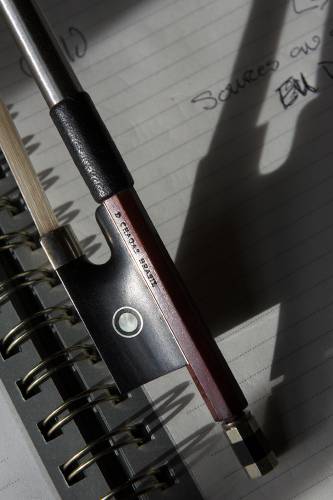
Bow-using musicians, makers and sellers in the Upper Valley, along with their counterparts across the world, have found themselves at the center of a global skirmish.
“Pernambuco is the standard for good bows,” said bow-maker Eben Bodach-Turner, speaking to a room of violinists and cellists at the nonprofit Upper Valley Music Center in Lebanon, New Hampshire, earlier this month. He briefed them on the crisis, which has rendered some of the bows in their hands objects of contention.
Bodach-Turner makes custom pernambuco bows, which can sell for $5,000 or more.

It’s a price many musicians are willing to pay. But the environmental cost has, until recently, gone largely unspoken of among players.
An estimated 85% of the original Atlantic Forest in Brazil is now a graveyard of stumps, according to the environmental advocacy nonprofit the Nature Conservancy. The forest, which once covered an area twice the size of Texas, is the only ecosystem that can support the growth of pernambuco.
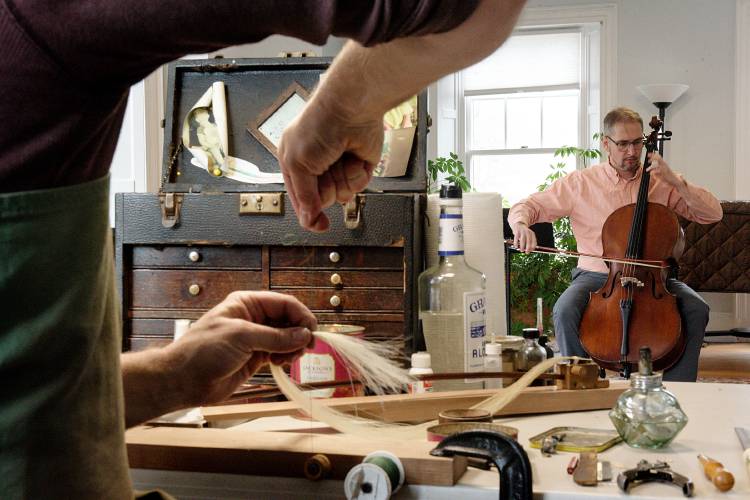
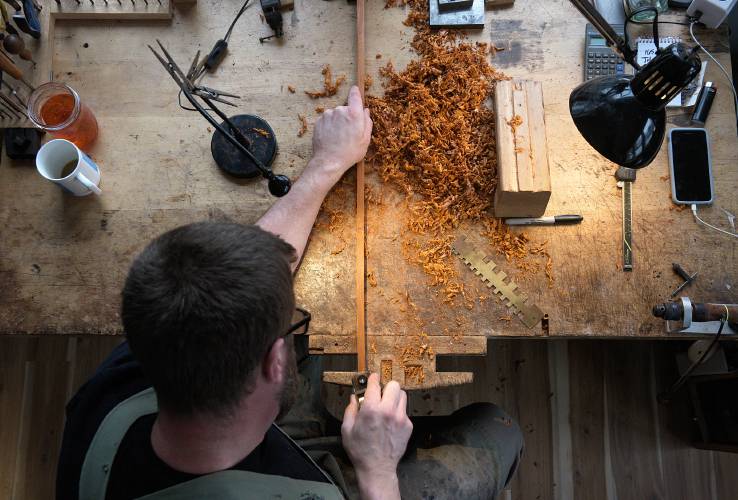
While the cache of existing pernambuco wood in the U.S. — that which is already cut, so legal — can bridge the gap for decades, the desire to prevent further restrictions is real. Bodach-Turner, who has a workshop in East Montpelier, spends hours planing down a single block of the wood before something resembling a bow starts to show through.
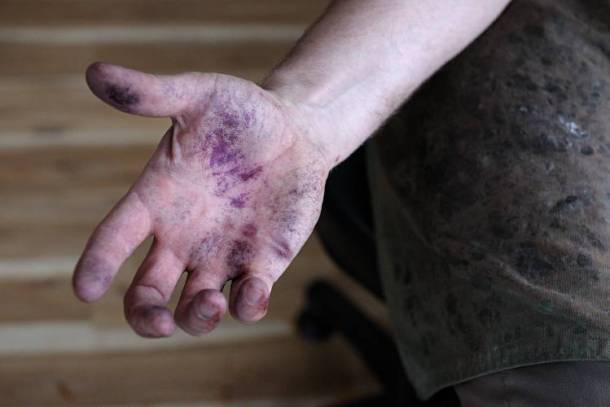
A typical year sees him making 10 bows. In a busy year, he cranks out upward of 20.
If pernambuco was given the highest level of restriction, “these bows would be completely illegal,” Bodach-Turner said.
Tortoise shell and ivory both used to be commonplace materials in bow-making. They drifted further from the norm as those materials became threatened.
“In bows, we can do without both of those,” Bodach-Turner said. “But pernambuco really does make a difference.”
The musicians in the Upper Valley Music Center with Bodach-Turner used phrases like “the color of the tone” to describe the sound that his pernambuco bows drew from their instruments.
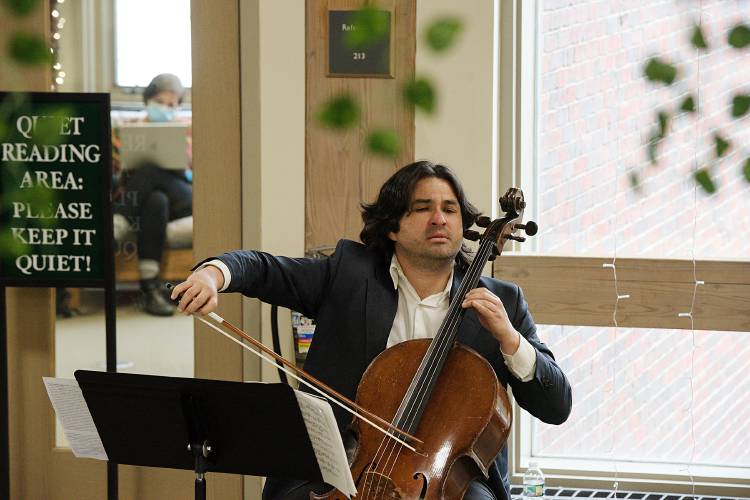
“With the bow I normally use, all the balance is in your hands,” Kayla Monty, a cellist from Canaan, New Hampshire, said while testing out one of Bodach-Turner’s pernambuco bows at the Upper Valley Music Center earlier this month. “But this makes its own sound, and you can let it sing. It balances itself.”
While that kind of sensation might be difficult to translate to the layperson, it’s at the heart of the pernambuco crisis.
Ridie Ghezzi, a West Lebanon, New Hampshire, cellist with the Upper Valley Music Center chamber group, cherishes her bow.
“When I was ready to buy a better bow, I went to Vermont Violins,” Ghezzi said. At the store in West Lebanon, she was shown 15 different bows.
But when she knew, she knew, said Ghezzi, who landed on a pernambuco model.
“It seems to be so individual, what feels good,” she said. “And I’m playing stuff that’s hard enough, so I want it to sound good, too.”
Ghezzi said she wasn’t aware of the endangered status of her bow’s material.
Carbon-fiber alternatives can’t match the quality of the pernambuco bow. But if Ghezzi was to buy a new bow, “I’d have to seriously think twice” about purchasing more of the threatened wood species, she said.
At another Upper Valley Music Center event earlier this month, Kathy Reilly, owner of Vermont Violins, tried to set the record straight on the wood. “I’m sure that students, parents and teachers buying bows from Brazil had no idea that there was a serious problem,” she said.
Investigations by Brazilian police have uncovered extensive illegal cutting of pernambuco trees for use in the bow-making trade, entering international markets as raw wood as well as finished product. “The greater musical community can support these investigations by becoming informed and making responsible choices when purchasing,” Reilly said, adding that the U.S. is the largest consumer of illegal pernambuco bows in the world.
In 2022, Brazil proposed to CITES that pernambuco go the way of the jaguar and the humpback whale and be given the highest level of endangered species protection. This would restrict the movement of finished pernambuco bows across international borders, clogging trade that relies on intertwined global markets and resources.
But the music community was given some time to catch up. The designation was put off for three years while players, makers and sellers riddle through a way to document the legal origin of existing bows.
Musicians will likely be able to use invoices or insurance statements as proof of the legality of their bows to avoid confiscation, Reilly said.
Shops will need to have some kind of documentation from the people they’re importing from.
But to protect the bows, this information should be gathered sooner rather than later, she said.

The Know Your Bow campaign, which encourages transparency in bow sales, is an effort of the International Alliance of Violin and Bow Makers for Endangered Species. It’s about documenting “what we already have,” Bodach-Turner, the bow-maker, said.
“You can say my bow was made before this date out of wood that is by definition legal at that point,” he said. “If you need to travel in the future and CITES has a more restrictive policy, you have something saying this bow existed before this policy.”
Musicians’ desire for the best sound out of their instrument is “what’s driving this whole thing,” Bodach-Turner said about the instinctual affinity many bow-using musicians feel for the wood.
“We all hear the value of this extremely precious resource in our playing and want it,” he said.
“While that’s a challenge to the resource, it may also be its salvation.”