

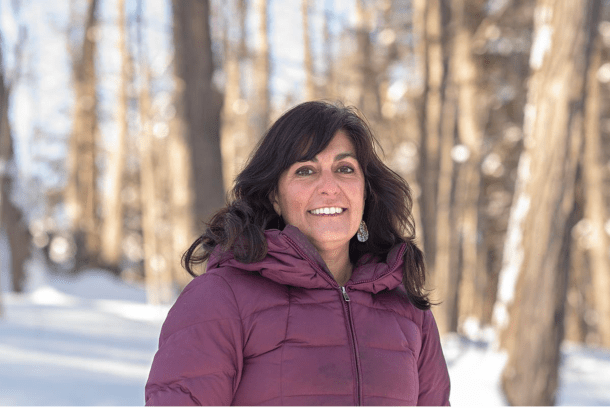
Gov. Phil Scott has appointed Danielle “Danny” Fitzko to lead the Department of Forest, Parks and Recreation, which is responsible for the state’s forest resources, operating its state parks and supporting outdoor recreation.
Fitzko, who has worked at the department for 20 years, had been serving as interim commissioner since January, when then-commissioner Michael Snyder stepped down. Snyder led the department, which is part of the Agency of Natural Resources, for 12 years.
“Danny has demonstrated a deep commitment to Vermont and our natural assets over the course of her two decades of service to the Department,” Scott said in a statement on Tuesday. “I’m confident she’ll continue that good work leading FPR.”
The new commissioner first came to Vermont from the University of Maryland’s Extension program, where she focused on horticulture.
“I was doing everything from turf, to house plants, to vegetables, and trees,” she said in an interview. “And I really just had a keen interest in trees and forestry — just the impact that they have on the landscape.”
At the same time, she became interested in land use and smart growth. Combining these interests led her to pursue a master’s degree that focused on urban and community forestry. When she graduated, a coordinator position opened up for the urban and community forestry program in Vermont’s Department of Forest, Parks and Recreation.
Fitzko ran the program for 15 years. She oversaw projects to install trees as green infrastructure to help control stormwater, help towns develop recreation planning toolkits for municipal forests and promote the use of the VT invasives website, where residents can learn about controlling invasive species in their backyards.
“Really, it’s about empowering local communities to understand the public tree resource and to be better stewards of them going forward, and really about increasing urban tree canopy so it’s healthy and thriving for the future,” she said.
Fitzko said she’s likely to see much of her work through the lens of climate change. Forests sequester carbon dioxide, therefore providing a climate solution, but trees are also more likely to face challenges from pests, diseases and extreme weather.
Climate change has brought new discussion to the use of Vermont’s forests in recent years, with an increasing number of environmentalists urging those who manage state and federal forests to set forests aside so they can’t be logged. Meanwhile, loggers have worried for their livelihood and said their work can be part of the climate solution.
About 74% of the state is covered in forest, but only about 4% of the forests are permanently protected from logging, according to a forthcoming report by forest research and conservation groups including Harvard Forest, Highstead and Northeast Wilderness Trust. Across the region, scientists consider less than 0.1% of land in New England and New York to be occupied by old growth forests.
Asked how she thinks of the balance between working lands and permanent environmental protection, Fitzko said that while she believes a majority of the forest should remain sustainable working land, she hopes to find room to do it all.
“It’s a hard balance, but forests are so important,” she said. “And we need them for all the climate benefits, all the environmental benefits, and we need them also for the goods that they provide.”
A number of environmental groups celebrated Fitzko’s appointment on Tuesday, including the Vermont Natural Resources Council, The Nature Conservancy in Vermont, the Vermont Land Trust, Audubon Vermont and Trust for Public Land.
