

This story by Tommy Gardner first appeared in Stowe Reporter on April 6.
Stowe farmers who participate in a local ag-based tax stabilization program will pay more in property taxes going forward, but still less than if they enrolled their land in the state’s current use program and significantly less than non-farming folks.
Last week the town re-upped its agreement with four farm families to tax their farm and forestland using reduced appraisal values, a deal that has been in place in Stowe since the early 1970s.
The so-called “farmers contracts” allow property owners who use their land for agriculture — farming and forest business — to have the workable portions assessed at $321.50 per acre, and then taxed according to that reduced assessment.
The tax stabilization applies to all the owner’s farmland or forestland minus any residential buildings plus the 2 acres surrounding the home or homes as well as any other non-residential buildings — just their structural footprints.
That’s a higher assessment than the farmers who participated in the last round of contracts got, but the contracts sunset every decade and must be approved again by voters. The sentiment at Town Meeting Day was like other annual meetings, with nary a nay from the floor.
Under the previous 10-year contract, farmers only paid taxes based on assessments of $200 per acre.
Even at $321.50 an acre, it’s a better deal than the state’s current use program. According to the Vermont tax department, farmland enrolled in current use is appraised at $456 per acre. However, forestland in current use — think timber products — is appraised at only $187 per acre.
The same seven properties as last time are enrolled, land owned by the same four farmers — Paul Percy, Les Pike, Ken Ricketson and Arthur and Lawrence Morrill.
Between them there are 1,312 acres of land enrolled — an area about twice the size of Central Park in New York City. If that land was assessed at fair market value, it would add $5.67 million to the tax rolls, according to figures provided by the town.
The tradeoff for giving farmers a break on their property taxes means the rest of Stowe’s taxpayers will have to shoulder the extra burden when it comes to the town’s contribution to the state education fund. With the current slate of farmland enrolled, that figure is $106,157 per year.
This next round of contracts is still for 10 years, but the town broke it up into two five-year periods. The second five-year period will start automatically unless the town provides one year of notice.
At town meeting last month, Percy and Pike touted the value of the program, not just to their financial bottom lines, but to anyone who wants to see open spaces remain undeveloped. No one argued with them, and the contracts were approved unanimously by voters.
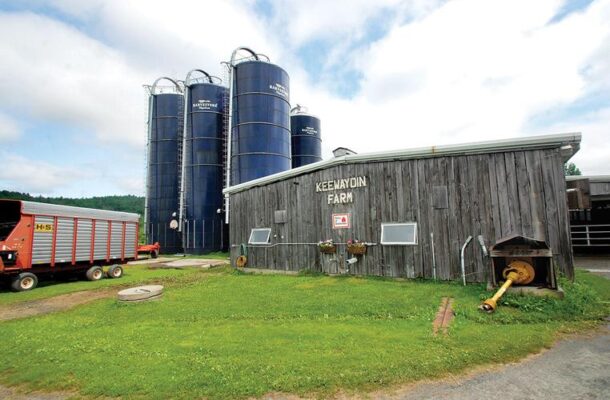
Pike, co-owner of the century old Keewaydin Farm said the tax break saved his family $21,000 in taxes last year, more than the small but well-regarded farm produced.
“If having those green spaces are important to you and if eating is important to you, then you should vote for it,” Pike said.
