

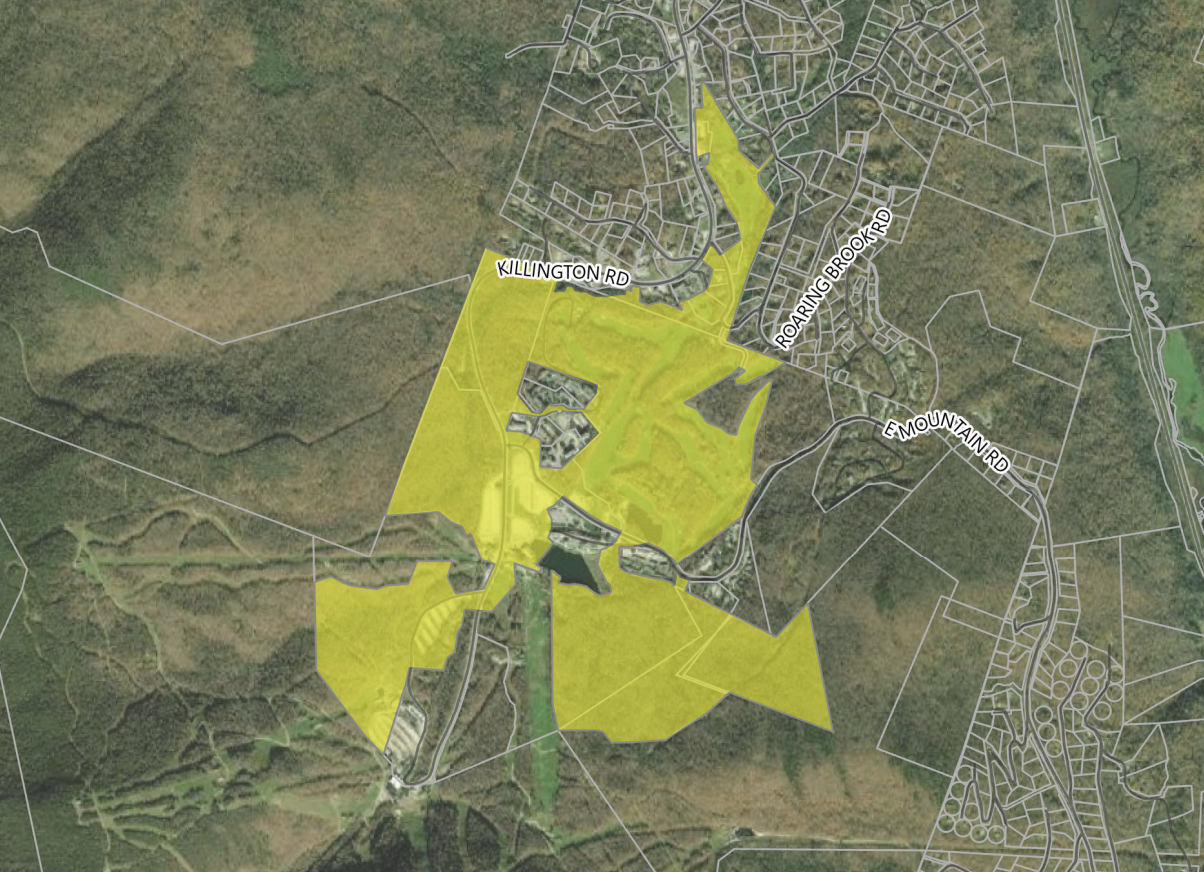
KILLINGTON — On Town Meeting Day, residents will vote on whether to take on up to $47 million in debt, paid for by tax increment financing in a plan the town has called Killington Forward.
The money would fund a public water system that would pump water from Route 4 up Killington Road into the proposed Killington village area, eventually expanding access to the town system downhill as well, and pay for reconstruction of Killington Road.
According to town officials, those infrastructure upgrades in Phase 1 of the project are needed for the town to expand housing availability at all income levels.
A tax increment financing district, or TIF, is a concise area targeted for development that needs infrastructure to achieve further growth. Once approved, a town uses the increased property taxes generated by the TIF development to fund the infrastructure.
Optimally, the system allows towns to create infrastructure otherwise unaffordable without significant tax increases. Proposed districts are approved by the Vermont Economic Progress Council.
At a public meeting Jan. 30 held to discuss the TIF ballot item, selectboard members and the town’s business partners sought to answer residents’ questions and concerns about the March 7 vote, including what guarantees confirm the development will get built and whether the schools can handle an influx of students.
If approved, the infrastructure should yield a crop of initial residences whose property taxes would support the entire vision, said Jim Haff, a Killington Selectboard member.
“The result is going to be 180 — approximately 180 — housing units,” Haff said of the initial construction. “This will be only possible with the town’s creation of the water system and road improvements.”
Great Gulf, a private home builder and the project’s developer, signed a development agreement with the town last year that ensures the corporation will cover the town’s bond payments, Haff said.
In addition to the $47 million to be voted on by residents, Killington has already received approval for $2.3 million in American Rescue Plan Act funding for the water infrastructure, as well as a nearly $3.7 million forgivable loan from the state’s drinking water revolving fund.
One attendee at the Jan. 30 meeting, Debbie LeBlond, referred to recent coverage of Burlington’s TIF that discussed millions of dollars of mistakes, asking how the town would keep detailed records of spending to prevent a similar problem from occurring in Killington.
A frequent topic of concern was whether the project would benefit residents with low incomes.
According to Haff, the town has “identified a piece of property,” not yet publicly disclosed, that could be used for affordable housing. He called the TIF’s ability to enable affordable housing one of his “main” reasons for supporting it.
Plus, affordable housing developers have told town officials they can’t consider building until the town has municipal water infrastructure, which the TIF would pay for, Haff said.
Killington’s TIF district, which received preliminary state approval last summer, is composed solely of properties owned by the town’s ski resort and SP Land Company, which owns property near the proposed ski village. The town partnered with White + Burke Real Estate Advisors, a Burlington-based firm, in the application process.
Killington Resort is one of Vermont’s largest ski areas, yet efforts to modernize its village area have sputtered for decades. The town’s leaders hope that, if approved, the TIF will finally change that.
If voters give their consent, both water and road work — which would include expanded sidewalks, bus pullouts, and less steep grades — are scheduled to begin this year.
Killington residents can vote by ballot on Town Meeting Day, Tuesday, March 7, at the town office between 7 a.m. and 7 p.m. Residents also have the ability to vote absentee.
