

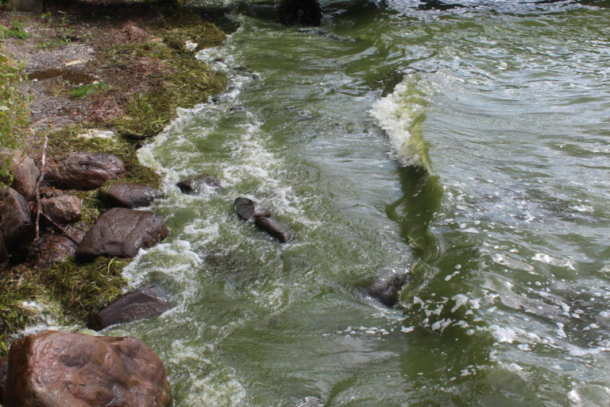
Regulations for wake boats on Vermont lakes may be coming soon.
The Vermont Department of Environmental Conservation will hold a public meeting Wednesday to discuss its proposal to impose regulations on wake boat use, according to Oliver Pierson, the department’s lakes and ponds manager.
The draft rule, which would affect 31 lakes in Vermont, outlines three regulations for the boats, whose powerful wakes enable sports such as surfing and wakeboarding.
A group called Responsible Wakes for Vermont Lakes is pushing for even tighter regulations and has pressed the state to take tougher action. Meanwhile, Green Mountain Water Skiers opposes the state’s proposed rules, questioning whether any rules are needed.
Under the state’s proposal, wake boats would have to stay 500 feet from shore while engaging in watersports, and could be used only on ponds and lakes that are at least 50 acres in size and at least 20 feet deep, according to Pierson.
The rules would not apply to bodies of water that share state or federal borders, such as Lake Champlain, Lake Memphremagog and the Connecticut River Reservoir, according to Pierson.
The draft rule also would require any wake boat to stay in one lake or pond for a calendar year, unless decontaminated and approved by the Department of Environmental Conservation. A Northeast Kingdom group called Pristine Lakes pushed for that clause, according to Pierson and Candy Moot, a member of the group. The group was concerned about people driving wake boats to Vermont ponds and lakes, which could bring with them unwelcome guests — invasive species traveling in the boats’ ballast tanks, according to Moot.
Ballast tanks are compartments in the boat that contribute to its buoyancy and are filled with water. In wake boats, these cannot be fully emptied, and so the boats run a risk of inadvertently transporting species from one body of water to another, according to Pierson.
Some Vermont lakes, including Lake Caspian and Lake Seymour, currently have no invasive species in them, according to Moot.
The state drafted the wake boat rules after the Responsible Wakes group filed a petition for regulations. The group formed in 2021, according to member Jim Lengel, in response to environmental and recreational concerns stemming from wake boat use. Members presented their petition to the Department of Environmental Conservation in March 2022.
After receiving the petition, the department held two meetings to seek input from the public, and also received more than 300 public comments.
Pierson views the draft rules as a compromise between those seeking more stringent regulations on Vermont’s wake boats and those who want very few.
“We hope that this is sort of a reasonable, you know, science-based compromise that will make sense to people and survive the rulemaking process,” Pierson said.
Shoreline controversy
Going into Wednesday’s meeting, one of the biggest areas of concern in the draft rule is the 500-foot distance from shoreline.
In weighing rules for wake boats, the department looked at studies of how wake boats affected the surrounding environments. In particular, a University of Minnesota study illustrated that wake boats have the same wake effect 425 to 600 feet from shore as other motorboats do 200 feet from shore.
“Because the literature shows there’s this, you know, distance between 425 to 600 feet, let’s meet in the middle. That’s the use of 500-foot distance,” Pierson said.
Responsible Wakes for Vermont Lakes is arguing for more.
“We want it 1,000 feet, not 500,” Lengel said. “That’s because that reflects the data, and basically the reality is that it does make a pretty big difference, especially in the effects of the wakes obviously, but also in the number of lakes where these boats would not be allowed to operate in it.”
At 500 feet, wake boats could operate in many more lakes and ponds than the 1,000-foot distance would allow, Responsible Wakes argues.
Others think the draft rule goes too far in the opposite direction.
“We got a lot of feedback saying this proposed rule is overreach, it’s not justified by science, you don’t need 1,000 feet,” Pierson said. About 40% of public comment on the draft rule so far has reflected that sentiment, he said.
Green Mountain Water Skiers, a group that has been active for over 40 years, thinks the 1,000-foot shoreline distance is too extreme, according to its president, Bruce Epstein. Epstein is not sold on the proposed 500-foot buffer, either.
“I just don’t think the least restrictive approach is necessarily 500 feet and I would prefer to see in the future more consultation up front from petitioners,” Epstein said of the draft rule, a point he plans to make at the Feb. 15 meeting.
The public has been involved in the process of crafting the draft rule from the very beginning, Pierson said, and “the input we get from the public is really valuable. … We might learn some new things on the 15th that, you know, motivate us to make some additional changes.”
The meeting will take place at the Highland Center for the Arts in Greensboro, home to the highly popular Caspian Lake. After the meeting, the Department of Environmental Conservation will launch a formal rulemaking process. Regulations could take effect later this year, according to Pierson.
