

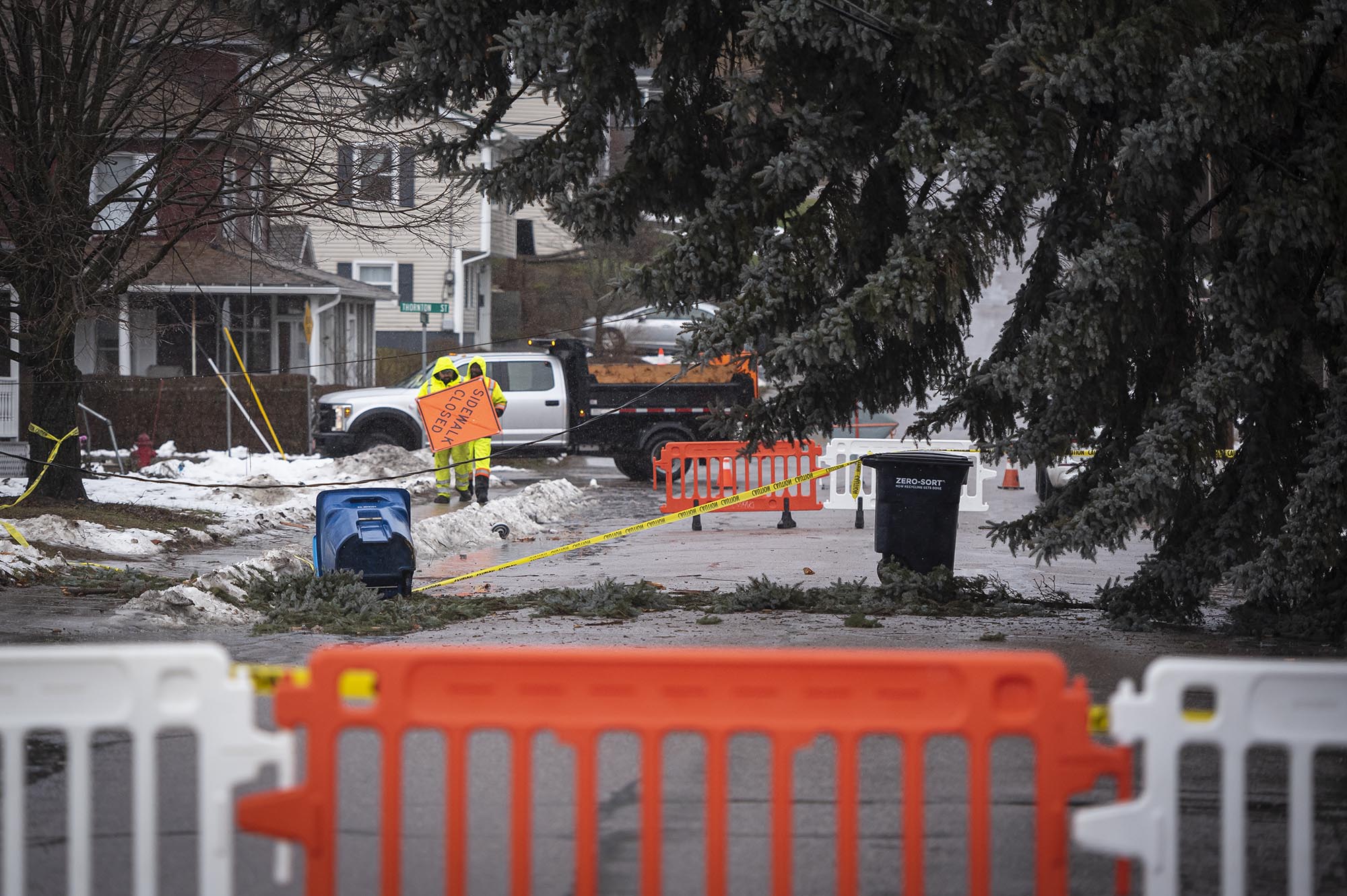
Winter Storm Elliot caused more than $2 million worth of damage to Vermont towns and its municipal and nonprofit utilities, according to a preliminary estimate by Vermont Emergency Management.
The total cost, however, is likely to rise as state officials better assess the impact of the storm and seek reimbursement from the federal government.
The initial estimate does not include the costs borne by private utilities, such as Green Mountain Power. According to Kristin Kelly, a spokesperson for the utility, the combination of Winter Storm Elliot and the storm that hit Vermont a week earlier inflicted some of the most intense damage in the company’s history.
Vermont Emergency Management has asked federal officials to assess the damage themselves and determine whether the storm qualifies as a major disaster, which would result in significant federal aid.
The state’s preliminary estimate “is the beginning of an effort to ensure that ratepayers and residents of Vermont do not have to bear the brunt of the cost of this disaster,” Erica Bornemann, director of Vermont Emergency Management, said in a press release.
Her agency’s initial request is for assessments in Addison, Caledonia, Chittenden, Essex, Franklin, Grand Isle and Orleans counties, though additional counties may be added. The Federal Emergency Management Agency must validate the damage estimates before Gov. Phil Scott can request a disaster declaration from the president.
To qualify for a major federal disaster declaration, Vermont must show at least $1.14 million in total costs for response and public infrastructure recovery, and each individual county must demonstrate damage and recovery costs of at least $4.44 per capita to qualify.
On Dec. 23, Winter Storm Elliot’s swirling, powerful winds knocked out electricity to more than 75,000 houses and businesses throughout the state and resulted in the death of at least one person.
Nonprofit organizations such as Washington Electric Cooperative and the Vermont Electric Cooperative spent the following days restoring power to as many houses as possible in the areas they serve. The repair costs for these cooperatives were immense. For instance, Washington Electric figures it spent $1.3 million on the repairs, while its annual budget for emergency storm management is just $300,000.
Green Mountain Power allocates $6 million each year to handle emergency storm situations, Kelly said. The restoration costs from these most recent storms are still being calculated.
A federal disaster declaration could reimburse municipal and nonprofit utilities for 75% of restoration costs, and municipalities for 75% of the cost of debris removal, road repairs and staff overtime cleaning up after the storm.
The state has 30 days to request federal assistance, but actually receiving the money takes substantially longer, Bornemann said.
“We are looking forward to working with FEMA to provide assistance to utilities as well as to Vermonters who were impacted by this storm,” she added.
