


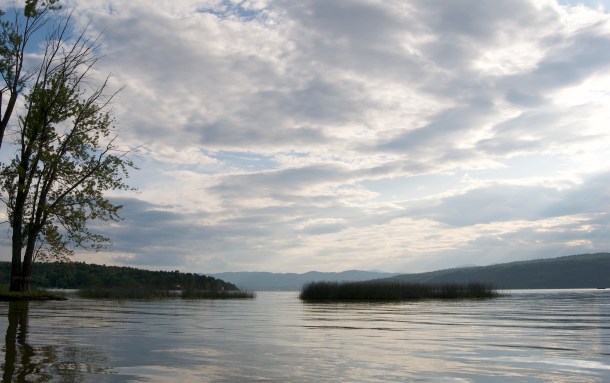
Lake Champlain is home to many nonnative and invasive species, but environmentalists fear it may soon become home to more.
The concern is that invasive species can displace native species, disrupting the ecosystem and causing problems such as pollution, algae blooms, and a change in what can survive and prosper in the lake.
To keep track of what’s going on in the lake, since 1992 the Vermont Department of Environmental Conservation has had a long-term monitoring program for all manner of content, from phosphorus and chloride to sodium, carbon and types of phytoplankton.
In addition, the Lake Champlain Basin Program has closely monitored invasive species already in the lake, such as zebra mussels, Eurasian watermilfoil and water chestnut. In an effort to limit new entries in Lake Champlain, and what might spread from the lake to other bodies of water in Vermont, the basin program has a boat launch stewardship program, which checks boats entering and leaving Lake Champlain to limit the spread of invasive species.
Also part of the war on invasives are local lake associations, mostly volunteer organizations that want to keep problems from developing in the bodies of water their members enjoy.
High on the alert list are quagga mussels and hydrilla plants, which could make their way into the lake from the Connecticut River and the Great Lakes, said Meg Modley, aquatic invasive species management coordinator for the basin program.
“Many people trailer their boats and watercraft very quickly from faraway places to Lake Champlain, so they could be bringing new aquatic hitchhikers with them into Lake Champlain,” Modley said.
Another concern is what might enter Lake Champlain from canals that lead eventually to the Great Lakes, St. Lawrence Seaway and the Hudson River system.
The current threat from the canal systems is the round goby, a fish that could threaten and displace native fish, but Modley stresses that the round goby has not yet been found in Lake Champlain.
Not every nonnative species in Lake Champlain is invasive, Modley said. There are 51 nonnative species in Lake Champlain, but only a dozen are considered invasive.
Invasives, she said, are nonnatives that “cause some type of harm to the economy, the environment, or to human health.”
Climate change greatly compounds the spread of invasive species, Modley said. Mild winters lead to lower water levels, because there’s less snow runoff than normal. Lower water levels combined with higher temperatures lead to quick growth of invasive plants early in the season.
Modley and the Lake Champlain Basin Program stay in constant communication with invasive species experts in all the water systems connected to Lake Champlain, aiming to stay as up to date as possible on the invasive threats. In 2009, the basin program developed a Rapid Response Action Plan, designed to ensure that enough resources are available — staff, equipment and a permit system — to contain and potentially eradicate new invasive species before they become established in Lake Champlain.

The state Department of Environmental Conservation and the Lake Champlain Basin Program work together to closely monitor the zebra mussel population to help understand its effects on Lake Champlain’s ecosystem. In the Midwest, zebra mussels — each no bigger than a penny — have destroyed boat engines, fouled beaches, and caused damage to boat ramps and docks, according to officials in King County, Washington, which includes Seattle. Zebra mussel fecal material may also contribute to taste and odor problems in drinking water sources.
The Vermont program focuses on zebra mussels in their larval stage, which the Department of Environmental Conservation says is when the mussels are most easily spread. Samples are collected using plankton nets, which are towed vertically from near the bottom of the lake.
The department’s Vermont Invasive Patrollers program helps to find and remove invasive plants in Vermont’s water bodies. Plants like water chestnut can be pulled out by hand in most cases, but dense mats of chestnut in southern Lake Champlain require mechanical removal, and hard-to-eradicate milfoil has become a problem in many ponds and lakes.
The work of the state agencies and the basin program are an effort to limit the potential impacts of invasive species.
