


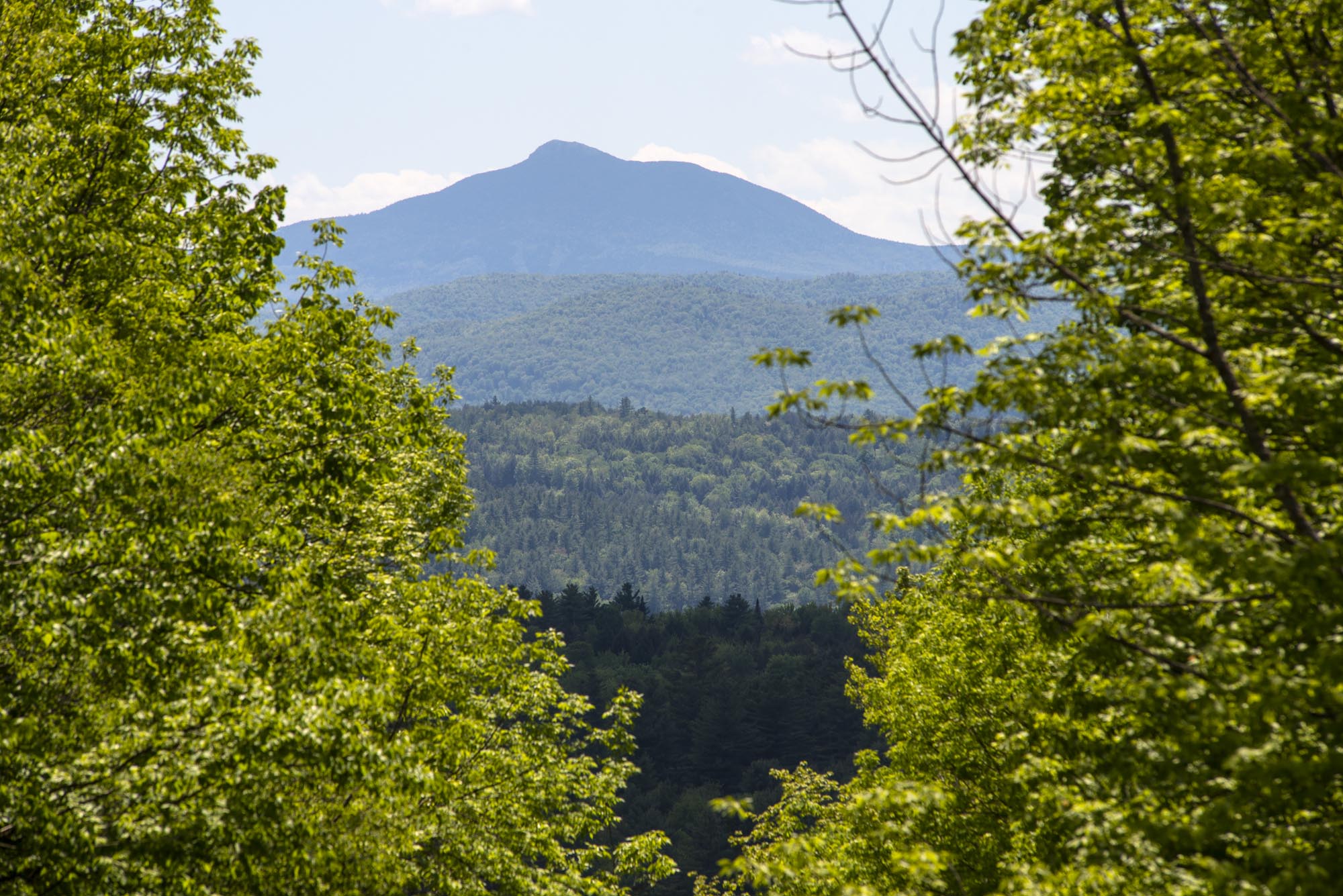
Close to 40 people are urging the Vermont Agency of Natural Resources to halt logging at Camel’s Hump State Park until the agency develops additional safeguards and standards for managing the land there, which petitioners say are required by law.
Standing Trees, a Montpelier-based organization that advocates for protecting forests, filed a petition Tuesday claiming that the agency developed its most recent management plan for Camel’s Hump and nearby public lands without the necessary rules in place.
The petition cites a Vermont law that state officials must “adopt and publish rules” for harvesting timber from state forests and parks.
Michael Snyder, the commissioner of the Department of Forests, Parks and Recreation, said he appreciates the interest in land management at the state’s most iconic peak. But his initial impression was that the petition was “misguided,” he said, and was in fact seeking an end to logging on public lands more generally.
Snyder said the Agency of Natural Resources would provide a more complete response to the petition after he and other officials have had more time to consider it.
The Camel’s Hump management plan, released in December 2021, permits harvesting about 3,750 acres of timber from the management area over the next 15 years. That area spans some 26,000 acres and includes Camel’s Hump State Park, Camel’s Hump State Forest, and the Robbins Mountain and Huntington Gap wildlife management areas.
James Dumont, who is Standing Trees’ attorney, said the state’s formal rulemaking process, detailed in statute, involves publishing an environmental impact statement, addressing alternative options, public comment and input from the Legislature.
For projects on public lands, the public comment piece is critical, he said.
“In the face of climate, water quality, and extinction emergencies, the State of Vermont must promulgate rules to govern public land management,” said Zack Porter, executive director of Standing Trees, in a press release. “It cannot legally log a single tree in the Camel’s Hump Management Unit until it comes into compliance with the law.”
Snyder pointed to hundreds of public comments the state received as it was developing the 2021 management plan, adding that the process allowed “far more robust” input from the public than the rulemaking sought by petitioners.
Dumont said those comments are several years old, since they were based on a draft of the management plan released in 2017. He contended that more updated public input is needed.
“I feel very good about the plan,” Snyder said. “I feel good about implementing the existing policies, within the law and guided by science. And we are doing so.”
Petitioners said the state’s 2021 management plan is based on written procedures from 2008 and 1995 that were established without a rulemaking process. They believe these procedures, too, are due for an update. “The world has changed a lot,” Dumont said.
Per Vermont law, if a state agency is using a written policy that was not adopted through rulemaking, it has to go through a rulemaking process upon the request of 25 or more people, according to the petition. Standing Trees’ petition garnered 38 signatures.
In a letter outlining the petition to leaders in the Agency of Natural Resources, Dumont said updated forest management rules should consider current state policy as well as data showing how future logging could impact carbon sequestration, endangered species, habitat fragmentation and water quality in the Camel’s Hump management area.
Petitioners asked the state to respond to them within 30 days.
Snyder said he believes the petition is “cherry picking” a piece of state law, adding that the same section of statute allows state officials to “sell forest products and other resources on public lands.”
Halting logging on public lands is an idea that’s “worthy of a conversation,” Snyder said, though he feels the petition unfairly frames responsible timber harvests, which support the state’s demand for wood products, in a bad light.
By limiting timber harvesting in Vermont, “we’re just exporting this demand to other places on the planet,” the commissioner said. “That’s bordering on environmental injustice, and a bit of an elitist approach to things here.”
According to the 2021 plan, the 3,750 acres authorized for timber harvests is about half the total area that is suitable for harvesting. Most of the area will be harvested using uneven-age techniques, it says. That means that individual or typically small groups of trees will be removed, with the intention of ultimately regenerating new trees.
Jamison Ervin, a Vermont-based scientist with the United Nations Development Programme who’s involved in the petition effort, said the Camel’s Hump management area has old forests that are particularly good at capturing and storing carbon dioxide from the atmosphere.
Ervin is not opposed to logging, she said, though she worries that continuing to remove timber from the area will not help Vermont meet its legally binding greenhouse gas pollution reduction targets, outlined in the 2020 Global Warming Solutions Act.
“Over the next 15 years, this enormous amount of biomass is going to be reduced,” the Duxbury resident said. “But it’s not just the biomass. We’re tearing apart the fabric of this forest.”
She said she’s also concerned about the impact that logging trucks carrying more than 500 million pounds of timber could have on local roads and bridges. And clearing parts of the forest, she said, could reduce the amount of water absorbed during major storms such as Tropical Storm Irene, making the area more vulnerable to flooding.
Ervin and others involved in the petition also said that without additional rules in place, informed by updated public feedback, the Camel’s Hump management plan does not provide adequate protections for endangered species.
Dumont’s letter asks state officials to refrain from issuing requests for bids, or from entering into contracts for harvesting timber, in the management area unless officials complete field studies to determine the roosting and foraging locations of the northern long-eared bat — one of five threatened or endangered bat species in Vermont.
Officials should then either exclude those areas from harvesting, Dumont said, or apply for a “taking permit,” which would allow the work to continue.
Snyder disputed the claim that the 2021 plan does not provide adequate protections.
“We have professionals from Fish and Wildlife that are on our team here that developed these plans,” he said. “And they think about endangered species habitats.”
