


This legislative session, Vermont lawmakers took up a question: When police officers violate the civil liberties of citizens while on the job, should they have available a stronger legal defense than a civilian would in a comparable case?
The answer to whether to abolish qualified immunity for police officers could have been a simple ‘yes’ or ‘no.’ Instead, lawmakers watered down the original language of S.254 to commission a study on the topic. Gov. Phil Scott on Monday signed the bill into law.
That pattern wasn’t limited to just S.254. James Lyall, the executive director of the American Civil Liberties Union of Vermont, told VTDigger that this session, there was a “long list” of police and criminal justice bills that “were either gutted or just defeated outright.”
“What happened is what always happens in this building,” Senate President Pro Tempore Becca Balint, D-Windham, said about S.254 in April. “You do the best you can with the people you have at the table. You do the best you can with the information that you have on the ground.”
Wednesday marks two years since George Floyd took his final breaths under the weight of Derek Chauvin’s knee, his face pressed to the pavement on a Minneapolis street. The cellphone footage of the white police officer suffocating a Black man over the course of 8 minutes and 46 seconds sparked nationwide protests, including throughout Vermont. Demonstrators called for sweeping reforms to policing and progress to end systemic racism.

In the two years since, Vermont has enacted laws that reformed the state’s use of force standard for police officers, banned chokeholds and expanded the use of body cameras, as well as beefed up training for officers. More often, they’ve commissioned studies — on qualified immunity, misconduct databases, traffic stops and more.
Rep. Hal Colston, D-Winooski, calls these “baby steps.”
“There’s so much more work that we could have accomplished, but I don’t think we fully have the will,” said Colston, one of two Black members of the Vermont House. He blamed the lack of progress on the “dominant culture” of the predominantly white Legislature: “I think it’s fear driven, because I don’t think they fully understand the depth of the issue.”

Xusana Davis serves as the executive director of the state’s Office of Racial Equity. Much of her work involves collecting data and studying racial disparities in Vermont, but when it comes to legislating, she said, “us not having yet collected data on something doesn’t mean we shouldn’t act.”
“A lot of times, that is used as a way either to intentionally or unintentionally stall work and stall progress by saying, ‘Well, we don’t have the data. So how can we possibly know what needs to happen?’” Davis said.
“Maybe we don’t have data,” she continued, “but our options are to try something or to try nothing. And so if people don’t have a vested interest in this work being done because their lives don’t depend on it, then it’s very easy to say, ‘Well, let’s just do a study committee and defer this to another Legislature because we don’t want to deal with it.’”
‘The blue wall’
In the wake of Floyd’s death in 2020, Vermont legislators passed three major police reform bills. Those bills were introduced prior to Floyd’s death, but Lyall said they gained momentum and made it across the finish line in response to the murder and consequent calls for justice nationwide.
In the two years since, Lyall said he has seen that momentum slowing — or reversing course.
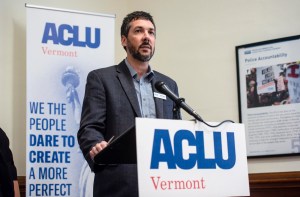
“We’re increasingly seeing a concerted backlash by police and by defenders of the status quo to roll back some of the recent progress Vermont has made and that Vemont communities have made and to undo a lot of the ongoing work to make further progress,” Lyall said.
Take S.250, a sweeping bill that began with several police reforms, including the establishment of a statewide database of police officers with credibility issues. That bill followed the familiar path of becoming a study.
S.228, a bill that would have barred Vermont police officers from executing no-knock warrants, didn’t receive a hearing.
Lyall pointed to extensive testimony against this session’s major police reform bills, saying law enforcement had “essentially veto authority over any substantive oversight or accountability legislation on the table.”
Rep. Selene Colburn, P/D-Burlington, a member of the House Committee on Judiciary, said some lawmakers dubbed the persistent law enforcement opposition “the blue wall.”
While the qualified immunity bill arrived in her committee already diminished, she and her colleagues knew the likely outcome, she said. “There were a handful of us who were like, ‘We’d like to do a lot more than study.’ And that conversation was not going to go anywhere, it was clear.”
In pushing back against the various reform bills, law enforcement groups would often point to the reform bills passed in 2020. In a written position statement on S.254 from March, for example, the Department of Public Safety said earlier measures “should be given a chance to work” before lawmakers take further action.
In a Tuesday interview with VTDigger, Commissioner of Public Safety Michael Schirling said that it’s difficult to assess whether laws like 2020’s use of force policy are effective if “you’re constantly changing the playing field.” Like in research, he said, there needs to be a control.
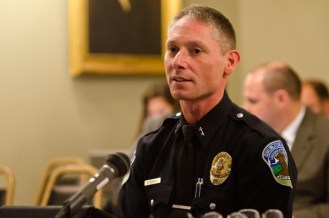
Schirling did not hesitate to say that Vermont law enforcement could do better. On a national scale, he said, there are incidents that are “criminal in some cases, and catastrophic error in other cases. But that’s not the norm of what happens in law enforcement encounters nationally every day.”
“The problem is, even though it’s low frequency, it’s high impact,” he said. “Somebody loses their life, there’s no more high impact.”
But he thinks the solution is investing in better training, as opposed to what he said are “completely regressive” proposals like ending qualified immunity, which would only apply after a harmful encounter with police.
“You want to make change by making it easier to sue someone after a mistake is made? How about, instead of that, why don’t we invest in not making mistakes?” he asked. “That’s a place where we haven’t quite made it.”
By the time S.250 and S.254 finally did make it across the finish line, they were watered down from their original intent; instead of taking direct action, they commissioned studies. Even Schirling said he “would share a little bit of that frustration” with activists when direct action is diluted to yet another study.
When the Senate took its final vote on the qualified immunity bill in April, Sen. Dick Sears, D-Bennington, who chairs the Senate Committee on Judiciary, said it was more than watered down — it was “flooded.” Law enforcement opposed the bill, but so did a number of lawmakers, Balint said in April.
The same sequence of events happened for H.635, Colston’s bill to end traffic stops for secondary, minor traffic offenses, such as broken tail lights or expired tags. The intent of the bill was to prevent traffic stops that disproportionately target drivers of color, which have, in some cases, resulted in the deaths of drivers. Seeing the bill reduced to yet another study was disappointing, Colston said, but unsurprising. Scott signed the bill into law earlier this month.
Some reform bills indeed passed the Legislature, only to be struck down by Scott’s veto pen. Last week, the governor vetoed H.534, which would have reformed criminal record sealing and expungement rules for nonviolent offenses, as well as H.505, which would have established a board to advise the Vermont Sentencing Commission and Legislature on recommended changes to state drug sentencing practices.
H.505 would have also changed state law to equally criminalize powdered versus crack cocaine, a measure that proponents said was specifically designed to address disparate drug sentences for Black and white Vermonters.
“Both of those bills were racial justice bills,” Colburn said, days after news of Scott’s vetoes broke. “So, the two of them together really tells a story.”
‘If this chamber looked different’
Colston said that the root of the problem lies in the Legislature’s structure: With a part-time citizen Legislature, he said, lawmakers don’t always have the time to pass major, tangible laws in one session. The Legislature this year passed H.546, which would establish a Division of Racial Justice Statistics in state government, as well as H.96, a bill to study the generational impacts of Vermont’s history in the eugenics movement. Scott signed the latter into law on Tuesday.
Those bills will lay the groundwork and “start to shift people’s mindsets” in order to have a conversation down the line about reparations for Vermonters of color, Colston said.
“We’re going to have a conversation about reparations as a state. It’s coming. So are we ready for it?” he said.
But also due to the Legislature’s structure, with its five-month-long session and part-time pay, Colston said, only certain Vermonters can realistically serve in office: “You’re white, and you usually have white hair.”
Davis said that “of course” lawmakers who skew whiter and older will be “less invested in the work itself.”
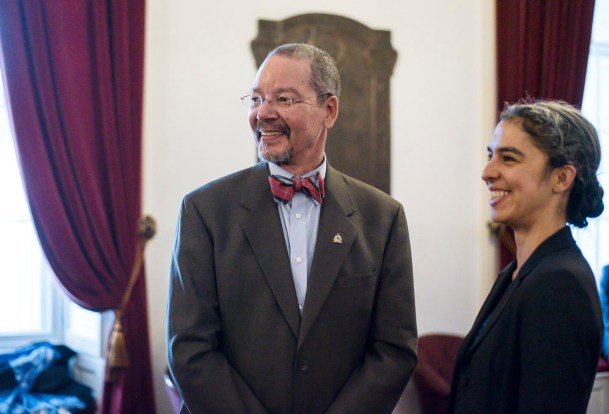
“Some of us do not have the luxury of hoping that this happens in someone else’s lifetime,” she said. “Maybe nobody you know is at risk of being murdered by the government, or maybe no one you know is more likely to be denied services or chased down the road and killed for their appearance. But if you can’t muster the empathy for it, then find a different activity and let those of us who are ready to do the thing, do the thing.”
When the Senate was debating the qualified immunity bill in March, Sen. Kesha Ram Hinsdale, D-Chittenden, asked her predominantly white colleagues to reflect back on their first interactions with police officers. Ram Hinsdale is the only woman of color currently serving in the state Senate.
“How old were you? Do you feel that the interaction was justified? Do you feel that you got off maybe better than you should have, and you didn’t face the same consequences that someone else might have? Did it traumatize you? Did it make you fearful for life of interacting with another police officer? Was your body touched? Did you lose your civil liberties and wonder if you would lose your life?” she asked. “If this chamber looked different, if this chamber was full of people of color, or people with disabilities, the answers to those questions would be significantly different.”
Colston said that Floyd’s murder served as a wakeup call for his colleagues and others alike, and did spark some change in Vermont. But he raised the question: “Are you in it for the long haul, or as long as it feels good?”
Davis referenced a quote from Malcolm X: “If you stick a knife in my back nine inches and pull it out six inches, there’s no progress. If you pull it all the way out that’s not progress. Progress is healing the wound that the blow made. And they haven’t even pulled the knife out much less heal the wound. They won’t even admit the knife is there.”
In Vermont, Davis said, “in some senses, it doesn’t feel like progress so much as it just feels like slightly pulling the knife out.”
“In some ways here in Vermont, yes, absolutely, I do see progress and it’s exciting,” she said. “And in other ways, I see us as still trying to convince people to reluctantly pull the knife out six inches.”

