



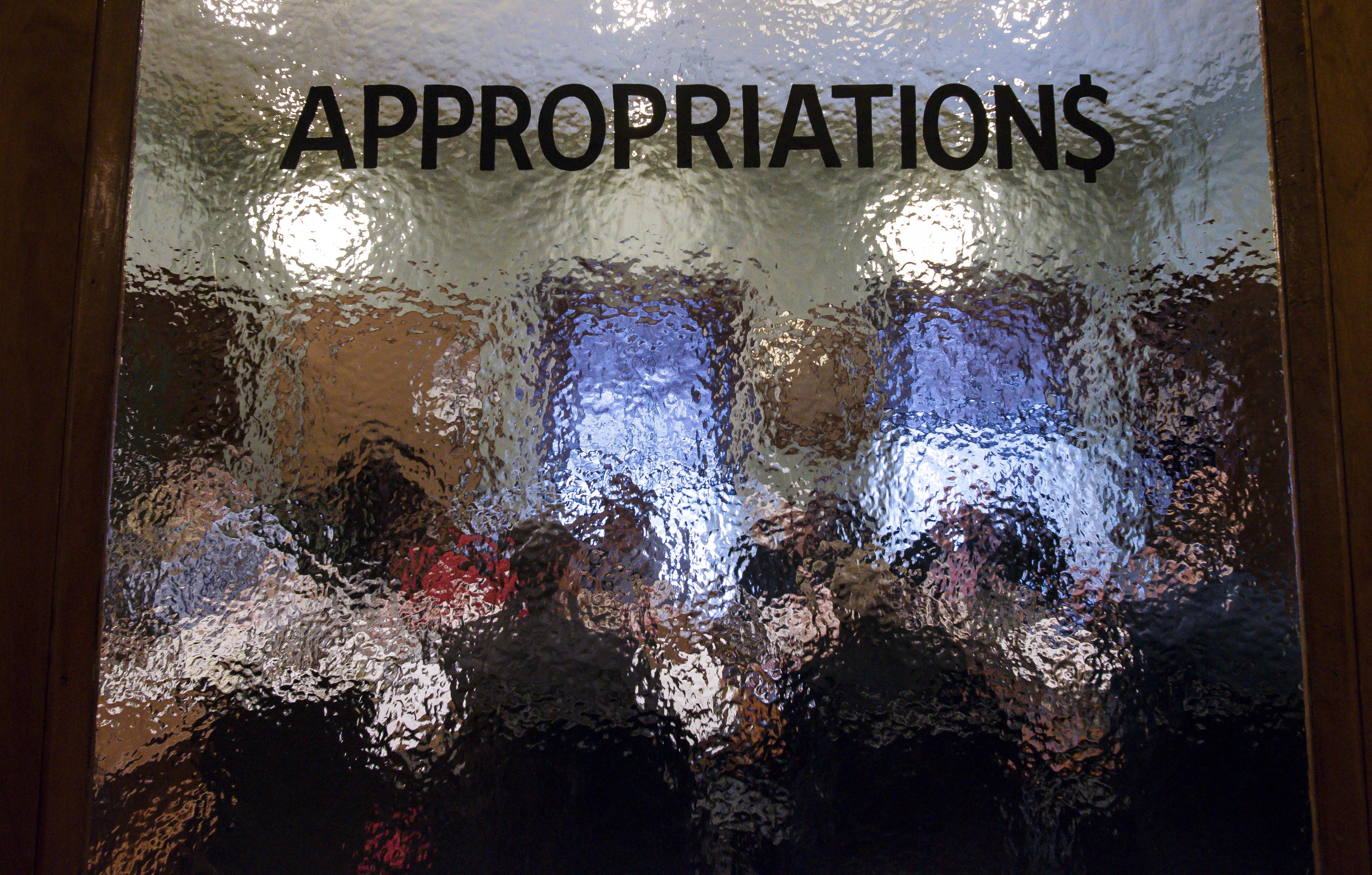

With the House and Senate poised to enter conference committee discussions on their respective $8 billion state budget proposals, Gov. Dad had some finger-wagging to do at Tuesday’s weekly news conference.
The House proposal, passed in March, isn’t up to snuff, according to Gov. Phil Scott. The Senate version, preliminarily approved on the floor 28-2 Tuesday evening, “moved in the right direction,” he said. But there remain key differences between the Senate version and his own budget proposal.
Scott has billed his budget as one that will make Vermont more affordable and attract young workers to the state, which faces a demographic conundrum — thereby growing the tax base. The Senate’s budget, he said, “focused more on government systems.”
On Tuesday he pointed to cuts the Senate proposal made from his wishlist: funds for workforce training, recruitment and retention; rural economy investments; tax cuts for seniors, veterans and workers in nursing and child care; and more.
“The fact is, investing in initiatives to grow the economy, make Vermont more affordable and retain and attract the workers we desperately need will do far more to change our trajectory than the bridge funding the legislature has prioritized,” he told reporters.
The Senate budget as it stands also would set aside $40 million to pay for two housing bills, S.210, and S.226, that have continually created friction between the legislative and executive branches this session. S.210 includes a rental registry and statewide inspection system for rentals, while S.226 is a far-reaching housing reform package that includes, among other measures, a new statewide contractor registry.
Scott has maintained that both of the proposed registries are “poison pills,” and that he isn’t afraid to veto the whole budget if they’re in it.
Senate President Pro Tempore Becca Balint, D-Windham, and House Speaker Jill Krowinski, D-Burlington, are set to discuss the details of the budget in a press conference Wednesday morning. But Balint gave a preview of her talking points Tuesday afternoon on the floor.
“I think it’s something that we forget in this state, that we always pass a balanced budget,” Balint said. “We do not deficit spend. And not because we pass a law saying we can’t, but because we as Vermonters understand that our constituents send us here to pass legislation that we will also fund.”
With several weeks remaining in the legislative session, there are sure to be some twists and turns in budget talks before lawmakers head home for the summer.
— Sarah Mearhoff
IN THE KNOW
With roughly a month to go before adjournment, Gov. Phil Scott is ramping up pressure on lawmakers to make changes to a pension deal the Legislature brokered with the unions that would be impacted.
A Senate-passed bill, S.286, would cost the state $200 million in one-time cash and require higher contributions from workers. Estimates indicate it would shave $2 billion from Vermont’s unfunded pension liabilities. But Scott on Tuesday argued it “doesn’t go far enough, and simply kicks the can down the road.”
“I’m concerned that we’re putting a more than $200 million Band-Aid on this without fixing the underlying problems,” the governor said at his weekly press conference.
— Lola Duffort
Vermont’s net metering rate is likely headed for another decrease.
Over the last several years, the compensation Vermonters receive when they install solar systems and send excess power back to the grid has declined, and the state’s Department of Public Service is recommending another cut.
Environmentalists and representatives from renewable energy groups say now is not the time to reduce incentives to switch to solar — instead arguing the state should accelerate the transition. Net metering can offset the typically high start-up costs associated with installing solar panels and systems at home.
But department officials contend that net metering is one of the most expensive and least effective ways for Vermont to transition to renewable energy and reduce emissions. When more Vermonters switch to net metering, utility ratepayers compensate for the loss through higher prices.
— Emma Cotton
IN CONGRESS
Days after U.S. Rep. Peter Welch, D-Vt., launched his campaign for the U.S. Senate last November, he declared that he would no longer accept contributions from corporate political action committees.
“This campaign is powered by people,” he tweeted at the time. “We aren’t accepting any corporate PAC money. We want Vermonters and people across the country to know we are fighting for them.”
But that doesn’t mean Welch is refusing big-dollar donations from industry groups that frequently lobby Congress.
In its quarterly campaign finance report filed Friday with the Federal Election Commission, Welch’s Senate campaign logged numerous multi-thousand-dollar contributions from PACs associated with the medical, agricultural, real estate and retail industries, among others.
— Sarah Mearhoff
COVID CORNER
Travelers using transportation systems across Vermont can now shed their masks, officials said, after the Federal Transit Administration reversed its prior guidance on Tuesday following a federal court ruling on Monday that voided the nationwide transportation mask mandate.
Burlington International Airport, Amtrak, Green Mountain Transit and the state’s other public transit providers will no longer require masks on their vehicles or inside buildings. The Lake Champlain Transportation Co., which operates two ferry crossings between New York and Vermont, said it also will not require passengers to mask up.
The abrupt reversal of policy was triggered by a Monday decision out of federal district court in Florida. That decision struck down the federal transportation mask mandate first promulgated by the U.S. Centers for Disease Control and Prevention in January 2021.
— Jack Lyons
WHAT’S FOR LUNCH
Chef Bryant is hurt, sad and disappointed that so many Capitol ghouls played hooky on Tuesday “because of the snow” or whatever.
So you better make it up to him tomorrow and stop by to grab some sweet and sour meatballs and fried rice.
Or how about a grilled chicken sandwich with swiss, dijon and roasted red pepper from the grill?
Or, perhaps you, like me, are eager for a Mediterranean tuna sandwich from the sandwich bar. Sandwich Man Peter tells me it’s his Italian grandmother’s recipe, featuring capers and kalamata olives. I’m going to sacrifice my journalistic principles here and abuse my soapbox to say: If you don’t like olives, you have bad taste. Grow up!
Oh, and if you weren’t tempted enough already to swing by the caf on Wednesday, maybe this will convince you: You can dine alongside U.S. Sen. Patrick Leahy, who will make an appearance to eat and chat with legislators.
According to Leahy’s office, the senator is “particularly interested in hearing from legislators how they have been able to use the $2.5 billion in COVID assistance he secured for the state to work for Vermont and Vermonters.” Is that a subtweet?
— Sarah Mearhoff
WHAT WE’RE READING
For 6 Vermont runners, the Boston Marathon is a journey longer than 26.2 miles (VTDigger)
More local food could increase New England’s climate resilience. Animal processing capacity isn’t ready. (New Hampshire Public Radio)
To the Head: Losing the Plot at the Vermont Growers Cup (Seven Days)
