
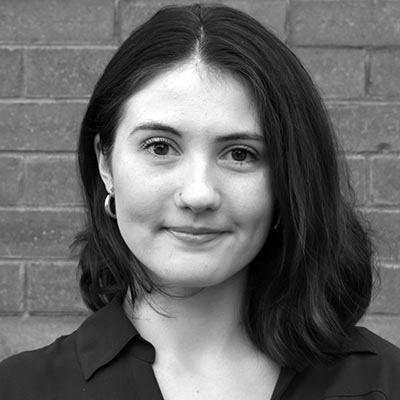

In the open race to fill Vermont’s lone seat in the U.S. House, state Sen. Kesha Ram Hinsdale, D-Chittenden, significantly outraised her competitors in the first quarter of 2022, hauling in roughly $440,697 since launching her campaign in mid-January.
Vermont has not seen an open congressional race since 2006, and with less than four months to go before the primaries, the competition is heating up.
The Federal Election Commission’s most recent filing deadline was Friday, allowing Vermonters to get their first look at how the declared candidates’ campaign finances compare.
Friday’s reports cover candidates’ donations, expenditures and ending cash-on-hand from Jan. 1 to March 31. All four of the Democratic candidates have vowed not to accept donations from corporate political action committees, or PACs.
Bolstered by large, pooled union donations, Ram Hinsdale outpaced her closest competitor, state Senate President Pro Tempore Becca Balint, D-Windham, by tens of thousands of dollars.
Ram Hinsdale’s camp is also spending big, recording $222,006 in expenditures between January and the end of March. She ended the quarter with $218,691 cash-on-hand.
Balint brought in the second-highest sum of the four Democrats, $368,350, and spent $126,036 between January and March. She dominated her competitors with the most cash-on-hand in her campaign account by the end of March: $432,598.
Lt. Gov. Molly Gray, the early fundraising frontrunner, came in third this quarter, reporting $309,650 in contributions. Having spent $153,741 in three months, Gray’s camp ended March with $404,369 in her account.
Behind Ram Hinsdale, Balint and Gray was Sianay Chase Clifford, a former aide to U.S. Rep. Ayanna Pressley, D-Mass. Chase Clifford launched her campaign March 15, and last quarter’s reporting period ended March 31. In those roughly two weeks, she brought in $7,349, spent $1,289 and closed out the quarter with $6,060 in her account.
Ram Hinsdale and Chase Clifford both launched their bids after the FEC’s last deadline in January, making Friday the first opportunity to compare the finances of all four of the Democratic candidates vying to replace U.S. Rep. Peter Welch, D-Vt., in the House.
Only Gray and Balint had declared their candidacy in time to report their finances for the FEC’s last deadline. At that point, Gray outpaced Balint in donations by nearly $118,000, and ended the quarter with roughly $58,000 more cash-on-hand than Balint. Gray declared her candidacy one week before Balint.
This quarter, Balint surpassed Gray’s donations by nearly $59,000 and finished the quarter with an edge of $28,000 in cash-on-hand.
Gray launched her campaign first among the four candidates, in early December, and has brought in the highest amount this election cycle to date: $627,884. Balint has raised $569,045 in this election cycle to date.
Thus far, the only Republican candidate to enter the U.S. House race is business owner, political YouTuber and former state Senate candidate Ericka Redic of Burlington. According to her filing, Redic raised $2,836 and spent $2,408, ending the three-month cycle with $428 cash-on-hand.
Welch, who is running to replace retiring U.S. Sen. Patrick Leahy, closed out the quarter with a whopping $2.9 million cash-on-hand, according to Friday’s report.
This campaign cycle, Welch swore off contributions from corporate PACs, but he had accepted such donations in previous House elections. Between January and March, he accepted $226,625 in PAC donations, according his filing, many from industry PACs such as the American Health Care Association, American Hotel and Lodging Association PAC, National Association of Realtors, National Grocers Association PAC, National Milk Producers PAC, Retail Industry Leaders Association PAC and others.
When he declared his Senate candidacy, he transferred over his $2.1 million House campaign fund, which included big-dollar donations from corporations like Liberty Mutual Insurance, Land O’ Lakes and General Electric.
In the first three months of 2022, Welch’s Senate campaign boasted more than 2,480 contributions, totaling $839,375 in money raised.
Challenging Welch in the Democratic Senate primary is Gifford Medical Center physician Niki Thran. This quarter, she raised $3,635, spent $9,982 and ended with $5,903 in-hand.
Welch’s likely competitor in the general election, former U.S. Attorney for Vermont Christina Nolan, is lagging behind. Since launching her campaign in late February, the Republican has raised $156,842 in contributions. After spending $55,295, Nolan closed out the quarter with $101,546 in her account.
Crypto-billionaire and former child star Brock Pierce is making his own, largely self-funded run for the Senate as an independent. On Friday, he reported $28,650 raised this quarter, $339,277 spent and $112,921 cash-on-hand.
